With rich history, diverse culture, coastal vibes, and great fishing, New Jersey immediately gets your heart beating. And if you’re an angler, there’s one surprising fish that should maybe catch your attention – the Black Seabass.

This shiny, jet-black fish may not be the biggest species around, but it promises fun fights and tasty filets. Oh, and it’s a real looker! And, as the 2026 NJ Sea Bass season saw an increase in harvest rates, there’s no time like the present to see what all the fuss is about!
Join me as I take you through the ins and outs of the New Jersey Sea Bass fishing season. From regulations to the best times to visit, along with some tips on top spots… Let’s dive in!
New Jersey Black Sea Bass Overview
Despite having Bass in their name, Black Sea Bass are a strictly saltwater species. You’ll only find them in marine waters of NJ, but you can catch them close to shore. As I mentioned above, they have a pretty interesting look. I think they resemble something between a mix of Bass, Snapper, and Grouper. But their standout feature is that jet-black body, with some tanned stripes, along with their tall and flary fins.
NJ Black Sea Bass Regulations
The most important thing to know about New Jersey Black Sea Bass seasons concern the boring stuff. That’s right, I’m talking about regulations.
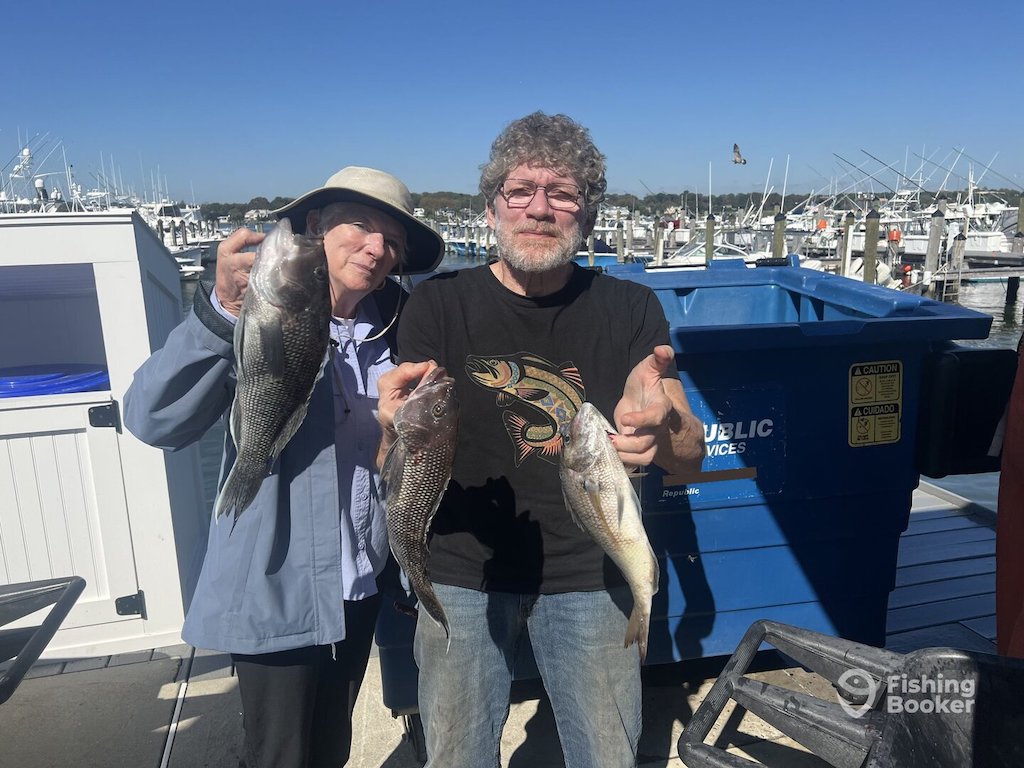
But now for some good news… As they have a stocked population with a high peak, the harvest number has recently increased. It’s clear NJ thinks it does a good job at managing its Black Sea Bass fishery, and so it invites you to take part! Just beware, the NJ Black Sea Bass season has a split harvest:
| Season | Limit (per person) | Minimum Size |
| May 15–June 21 | 10 | 12.5 inches |
| June 22–September 22 | 1 | |
| September 23–October 31 | 10 | |
| November 1–December 31 | 15 |
Before you pick a date, though, you should be aware that New Jersey requires you to be registered to fish in its marine waters. However, the saltwater license is completely free – regardless of whether you’re a resident or visitor! Check out what you need to do at the NJ Saltwater Registry.
When is the best time to fish for NJ Black Sea Bass?
Black Sea Bass in New Jersey have a peak season in late spring and early summer, returning again in late fall and early winter. Their seasonal movement is definitely influenced by temperature and spawning periods, as we’ll see below…

In late spring, they migrate into inshore waters as the ocean warms up. They also spawn around this period and are more fired up, targeting bait. Later in the year, they do the opposite, migrating offshore as the coastal waters cool. They’re just as feisty for food, though, as they prepare for the winter!
Like most species, they bite the most during morning and later evenings, but as they’re mainly a bottom-feeding fish, you can still hook up to them mid-day. Calm conditions are best when targeting them, but a slight current can spice up the bite as they get triggered by passing prey. They like water temperatures around the 70s, so if it’s extra hot out, they may not bite as much.
How to Catch NJ Black Sea Bass: Gear, Bait, and Techniques
It’s all good and well knowing when to show up. But what about really maximizing your chances? These guys can be aggressive fighters at times, but with a typical max size of 25 inches and 10 pounds, these fish aren’t too big. Most of the fight is due to deeper depths and surrounding structure they love to hide in. Because of that all, you can often go for a medium-sized setup, fluorocarbon leader of 30-pounds-plus, and circle hooks starting at 2/0. You won’t go wrong with jigs and lures from 2 ounces and up, either.

When it comes to lures, white, pink, blue, and silver realistic-looking soft plastics and bucktail, diamond, and butterfly jigs, are great options for artificial bait. Live and cut bait work well too, including squid and clam strips, crabs, sand eels, and herring. Black Sea Bass have small mouths, so you’ll want to use little pieces and make sure to wrap them well around the hooks.
As these fish hang around structure and reefs, you’ll want to use a bottom fishing approach. You can throw your live or cut bait down with a heavy sinker to let the Sea Bass come and bite. Or try jigging to entice them to strike. You can also drift over structure to cover more ground. Just be careful, it’s easy for rigs to get snagged!
Keep in mind that Black Sea Bass like to hold close to structure. Make sure to position your bait nearby, and try to keep the boat facing where you can pull them out and away. Due to their smaller size, their bites may feel more like smaller taps, so keep the line tight and balanced. Give the fish a few seconds, and then set the hook and reel. When in deeper waters, it’s possible the Sea Bass can experience barotrauma, so consider a venting or descending device if releasing.
Where to Find Black Sea Bass During New Jersey Season
So know you know when to come and what to do, but where are New Jersey’s Black Sea Bass fishing hotspots? As you also now know, these are structure-oriented fish, preferring hard bottom habitats where they can feed, hide, and ambush prey. Therefore, you’ll find them around rock piles, ledges, shipwrecks, reefs, jetties, bridge pilings, piers, and submerged debris. Depending on the season, Black Sea Bass can be found from 20 to over 200 feet of water, though most reside in the 40–140-foot range around productive bottom structure and bait schools.
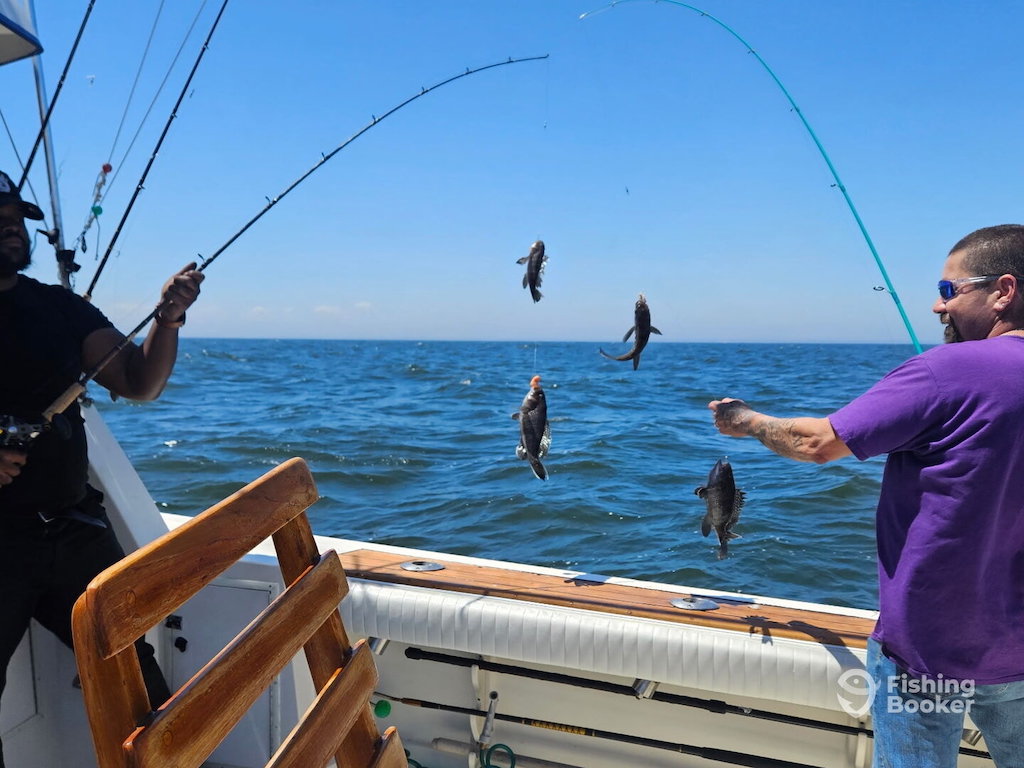
From North Jersey to the southern tip of the state, Black Sea Bass fishing can be productive. In the north, the Raritan Bay provides a mix of channels, harbor waters, inlet systems, and current breaks, where Sea Bass move through during the warmer months. Fishing farther out offshore from this area, even stretching toward Long Island, is also productive. Offshore wrecks and rocky bottom areas hold quality Sea Bass here.
Moving down the coast, ports like Belmar and Point Pleasant, as well as the Manasquan Inlet give you quick access to active nearshore grounds. Many fish, including Black Sea Bass, are caught in roughly 40–100 feet of water here. These areas are significantly influenced by Sea Bass migration routes, making the region especially productive during seasonal movements.
Farther south, Barnegat Light is another well-known launching point, offering consistent action in both nearshore and deeper waters. These waters are especially productive in summer and early fall when schools of Sea Bass migrate. There’s also excellent fishing around Atlantic City and Great Bay, with younger fish sometimes coming closer to the bays and inlets while larger ones stay offshore.
Finally, Cape May and portions of Delaware Bay offer access to near coastal structure and deeper offshore grounds. If you want seruous action, you can head out to the continental shelf, where depths reach over 200 feet pretty quickly. If you’re looking for a potential record-breaker, this is the place to be!
Small to Big: The Black Sea Bass of NJ Await You!
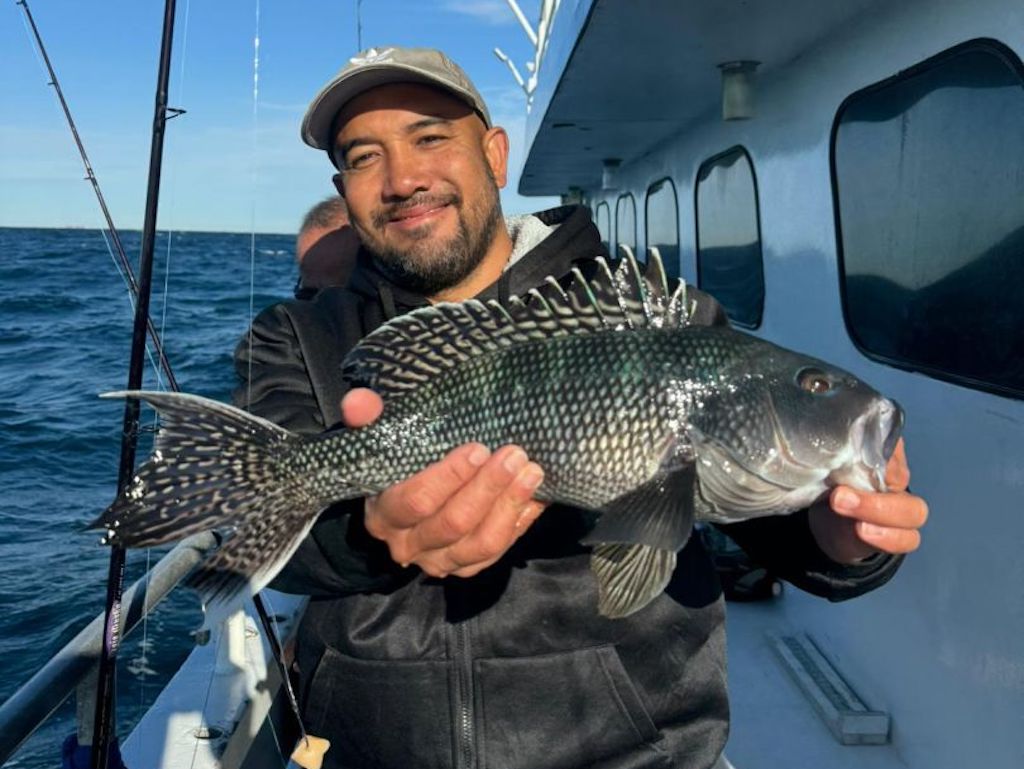
From nearshore structure to wrecks and reefs off the New Jersey coast… From juvenile specimens inshore to monsters offshore… New Jersey’s Black Sea Bass season offers exciting action, whatever you’re looking for. With an understanding of seasonal regulations, Sea Bass preferences, and proven techniques, you’ll be ready to make the most of your time on the water. Rig up and get ready to head out. Your New Jersey Black Sea Bass trip could be one to remember!
Have you ever targeted Black Sea Bass in New Jersey? Where were you fishing from and how did you land it? We’d love to hear about your stories in the comments below!
The post Black Sea Bass Season in New Jersey: An Angler’s Guide for 2026 appeared first on FishingBooker Blog.
https://ift.tt/oZ7QhBU
0 Comments
Enregistrer un commentaire