Washington State has some incredible Salmon fishing, with waters ranging from the Columbia River to the Olympic Peninsula. Rugged coastal mountains and lush river valleys make excellent spawning habitat, and the coastal waters offer boating anglers opportunities for large fish.

The scenery along the Washington coast is amazing and the inland rivers are powerful. There are plenty of options to catch fish year-round, but you’ll want to take note of the Washington Salmon seasons. Limits, quotas, and open dates are set annually based on fish survey data and population estimates. Pay close attention to the regulations for specific zones and rivers – they can change weekly and even daily in some cases!
Marine Area Regulations
If you’re looking for saltwater and coastal Salmon, you’ll be fishing in a “Marine Area.” The state’s ocean-fed fisheries are divided into 13 marine areas, each with its own defined limits for Salmon along with size restrictions. They are:
- Ilwaco
- Westport-Ocean Shores.
- Willapa Bay
- Grays Harbor
- La Push
- Neah Bay
- Sekiu and Pillar Point
- East San Juan de Fuca Strait
- San Juan Islands
- Deception Pass, Hope Island, Skagit Bay
- Ports Susan and Gardner
- Admiralty Inlet
- Seattle-Bremerton Area
- Tacoma-Vashon Island
- Hood Canal
- South Puget Sound
Typically, Chinook have a minimum of 22 inches and Coho a minimum of 16 inches for retention. But this can vary by region.
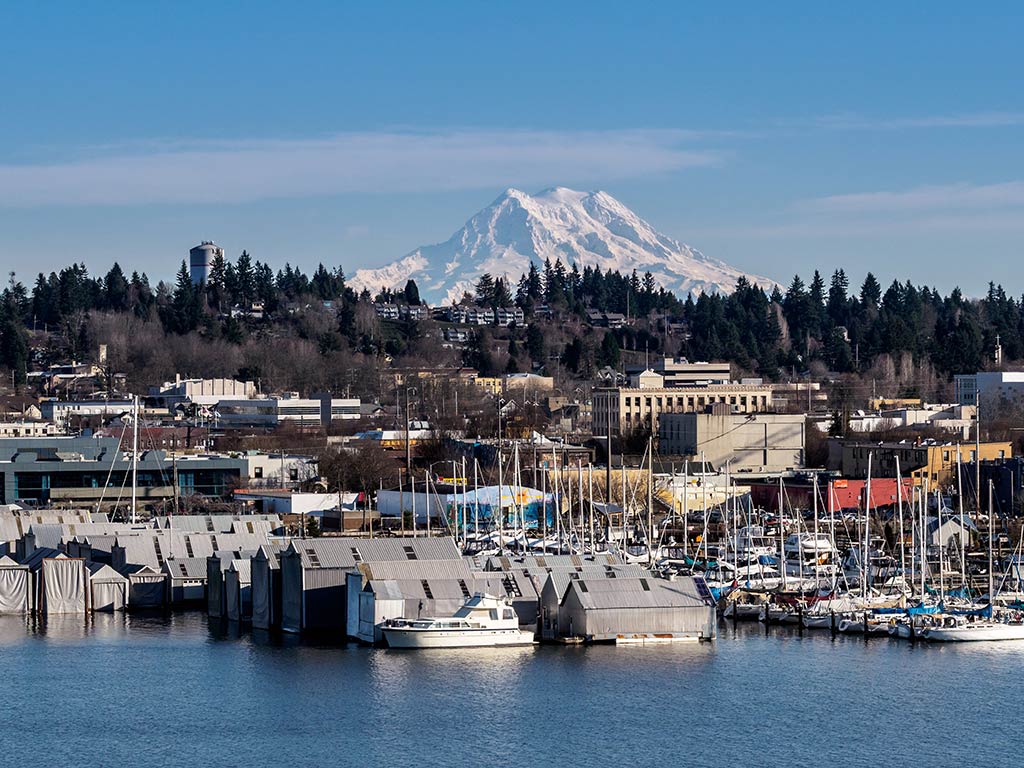
With so many regions and fluid regulations, I won’t list specific harvest limits and dates. You should reference the regulations booklet and cross-check the Washington Department of Fish and Wildlife alerts for emergency closures and real-time updates.
The Salmon run timing varies throughout the year across Washington and each zone has different runs, too. Some runs overlap, crossing zone boundaries where long rivers are present. Use GPS or maps to mark boundaries and know which zone you are fishing in.
Washington Salmon Seasons by Species
All five species of Pacific Salmon are available in Washington, with stronger runs of Pinks and Chum than in California and Oregon. This is largely due to more robust fisheries on the Olympic Peninsula with intact spawning habitat near estuary zones. Let’s take a closer look at each species…
King Salmon Season in Washington

Chinook “King” Salmon are prevalent in spring, summer, and fall in the Evergreen State. “Springers” enter the rivers in March, April, and May, and offer some of the largest specimens caught each season. Spring is a hyped season that’s popular among experienced anglers – it’s almost a rite of passage to catch a big Springer in Washington!
There’s also a summer run, with another wave of big fish entering the rivers from June through August. July is a great month for summer-run Kings in river systems. While these runs are often smaller and more dispersed, they offer great opportunities.
As the summer run fish dwindle, an additional fall run pushes into freshwater, starting in August or September and continuing through October.
But that’s not all…
Washington also boasts some winter-run Chinook. They aren’t present in every river, but the Puget Sound coastal systems can see fish moving all winter. This means you might catch a King Salmon during any month of the year!
Pink Salmon Season in Washington
Strong Pink Salmon runs occur in odd years. Some rivers can fill with Pinks, offering a great chance to fill your limits. While the filets aren’t coveted like those of Kings, Coho, and Sockeye, Pink Salmon are still nutrient-rich and tasty. Many anglers grind or can them for use in a variety of recipes.
Runs are prevalent on the Olympic Peninsula and in Puget Sound, although they aren’t limited to these regions. Unlike California and Oregon, where Pink numbers are low, Washington has some robust fisheries in the right years!
Much of the Pink Salmon fishing happens in tidewater and lower river systems. They eat lures and flies, and are occasionally snagged by accident. Fresh Pinks fight hard and are fun to target.
Chum Salmon Season in Washington
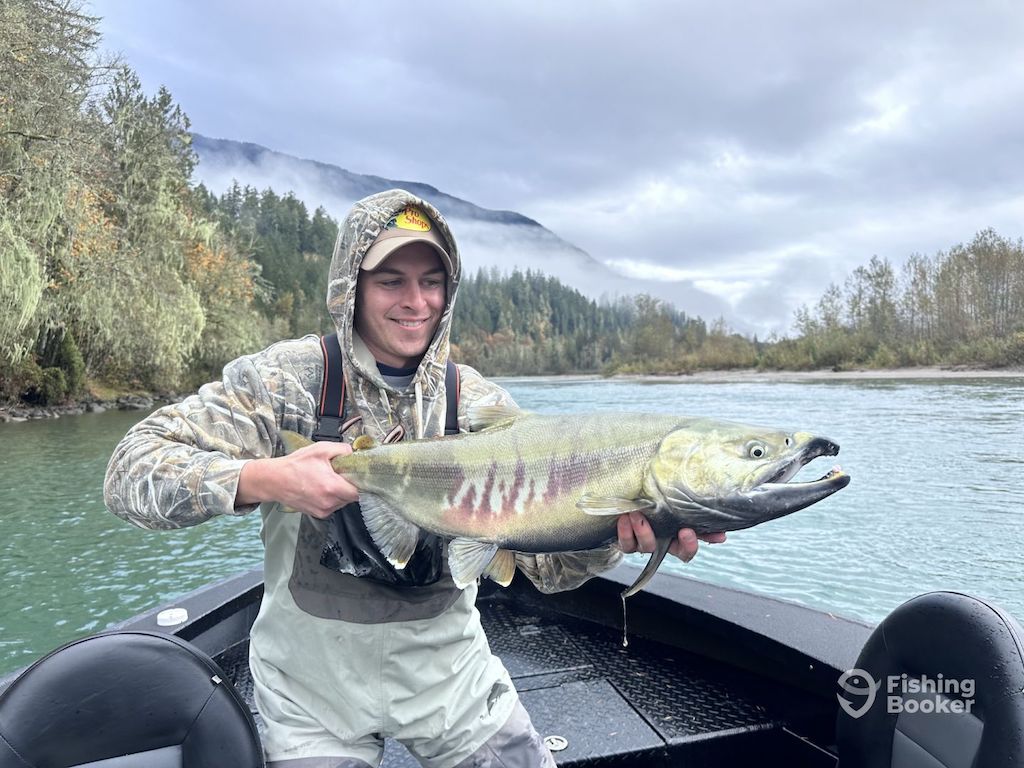
Similarly to Pinks, Chum Salmon aren’t targeted as often by anglers but boast strong numbers in Washington. I love fishing for Chum here, especially in rivers when they’re fresh out of the ocean. They hit hard and put up a great fight. It’s not uncommon to have big jumps from a fresh Chum!
Look to the coastal rivers for fresh Chum, especially during late fall. They also move through bigger river systems but tend to spawn in the lower rivers rather than making long runs. Chum are fleeting, and anglers who catch them are generally in the right place at the right time.
Sockeye Salmon
While nothing in the lower 48 states rivals Alaska, Washington does have some Sockeye runs. These Salmon require lake-connected river systems for spawning, limiting the places they can travel and reproduce.
The Columbia River system offers some of the best opportunities as Sockeye migrate and stage en-route to Idaho. Baker River and Baker Lake are other points of interest, while a few other lake and river systems in the region also produce.
Sockeye are common in late summer and fall but can arrive early or late depending on ocean and river conditions.
Coho Salmon Season in Washington

Silver Coho Salmon are a favorite in Washington, with strong numbers and prevalent hatchery fish – along with some wild populations. Puget Sound is especially robust with strong coastal runs. They enter rivers large and small, creating diverse habitat options.
Catching a hot Coho in a small river or stream is one of the most exciting things an angler can experience. Look to summer and fall for the strongest Coho Salmon runs in Washington, with the Olympic Peninsula supplementing the Puget Sound for awesome fishing!
Columbia River Salmon

The Columbia River is divided down the middle, with Oregon to the south and Washington to the north. Seasons here correlate with specific stretches of the river in Washington, and these change each year.
For 2026, Salmon fishing is open:
- March 1 to April 8: From the mouth (Buoy 10) to Beacon Rock.
- April 1–26: From Tower Island Power Lines to the Washington/Oregon border.
Limits are for combined Steelhead and Salmon with six fish total. Note that only one of those can be a Chinook Salmon. All wild fish must also be released.
The Columbia River has complex regulations, so you must review every detail before fishing. Stay up to date with the Washington Department of Fish and Wildlife, and mark the dividing lines on your maps with GPS to stay within legal boundaries.
Puget Sound and Seattle Area Salmon Seasons

Like the Columbia River, Puget Sound and the Seattle region have specific regulations. Fish populations were once robust in her, but are now at risk. This means regulations are built around protecting populations with high levels of variability year-to-year.
Seattle is unique as a large city with access to great waters. Sportfishing and Crab charters are present throughout the city shoreline. And they can target all species of Salmon right in Puget Sound. Summer is a great time to work the local waters. Lingcod are another favorite species to chase when Salmon are not present in large numbers.
Washington is a Salmon Stronghold: Make the Most of It!
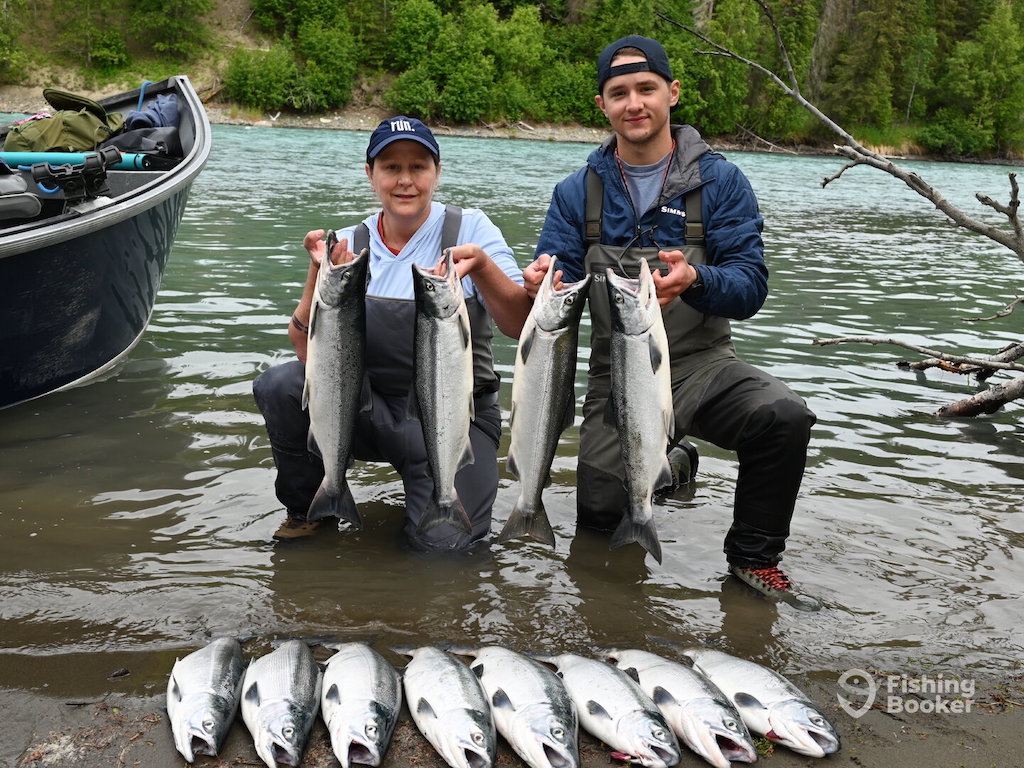
So there you have it! If you want a freezer full of Salmon, Washington has the most robust fisheries in the Lower 48 states. With strong runs from all species of Pacific Salmon, there are more options and longer seasons than anywhere else. You can work the coast or fish the rivers with success. Local knowledge is hard to beat for timing the runs and finding hotspots, but beginners catch plenty of fish as well. Just remember to check the regulations!
Is Washington your home turf? We’d love to hear your tips for catching Salmon throughout the season. Share away in the comments below!
The post Washington Salmon Season: An Angler’s Guide for 2026 appeared first on FishingBooker Blog.
https://ift.tt/352yQbO
0 Comments
Enregistrer un commentaire