Looking for a decent-sized species you can hook into and battle it out with? One that could turn into your next trophy catch? Then you’ll want to go after Striped Bass. Peak Striped Bass season is right around the corner, with late spring and summer bringing some excellent opportunities. Therefore, there’s no time like the present to introduce you to these prized creatures!

You can find these fish across pretty diverse parts of the US. From inshore and nearshore fisheries to freshwater reservoirs, they’re versatile and prized wherever they are! In this article, we’ll dive into a few key locations to make sure you’re prepared and ready for a shot at landing one of these thick inshore beasts…
How to Identify and Fish for Striped Bass
You won’t have any trouble identifying a Striped Bass. Well, most of the time. They kinda look like extra-large Mullet, with a similar striped look, and a long, silver, torpedo-shaped body, often pretty thick and heavy, with distinct horizontal black stripes running along their sides. They can range anywhere from a couple of pounds to over 30, depending on the region you’re fishing in.

When it comes to techniques and fishing methods, versatility is key. Medium-heavy spinning or conventional setups work great. As Striped Bass can range in size, your leader can also range, often in the 20–60-pound range for fluorocarbon leaders. Circle hooks are amongst the best, and 4/0 is a good size. You can go up if you’re targeting larger Bass, especially in rougher conditions, like when you’re surf fishing.
Effective live and cut baits for Striped Bass include live eels, bunker, mullet, herring, worms, clams, shrimp, and crab. Artificial options are also popular, such as plugs, jigs, spoons, swimbaits, and topwater lures.

Low-light conditions, like dawn, dusk, and night, are often the best times to target Stripers. They’re aggressive feeders, especially when bait presence is heavy, and will strike hard when hungry. Once hooked up, expect strong runs and head shakes that’ll test your gear and skills.
You can freeline your bait, throw a lure and let it sink, retrieve steadily or fast, or use jerk-and-stop motions. You can also troll your bait behind a boat or let it drift in the current. They often feed off the bottom, but they’ll come towards the surface to strike on bait as well.
I already mentioned that these fish live in a range of habitats. That’s because they’re actually anadromous, meaning they can survive in fresh and saltwater. They mainly migrate to freshwater rivers during their spawning season, but there are exceptions.
Striped Bass Regulations
Before you cast your line for Striped Bass – or any other species – you’ll need a valid fishing license for the state you’re fishing in. This usually counts whether you’re a local to the area or you’re just visiting for a few days. The Atlantic States Marine Fisheries Commission plays a big role in managing Striped Bass along the East Coast, and they frequently adjust regulations based on population trends. On the West Coast, states manage their own Striped Bass fisheries.
Specific regulations like slot sizes and seasonal closures vary quite a bit by state. Always double-check your local regulations before heading out, because they can also change. Let’s break things down in some of the most popular hotspots…
Virginia Striped Bass Season
Virginia offers one of the most well-known Striped Bass fisheries on the East Coast, largely thanks to the Chesapeake Bay system. Although you should be aware that they’re known as “Rockfish” here!
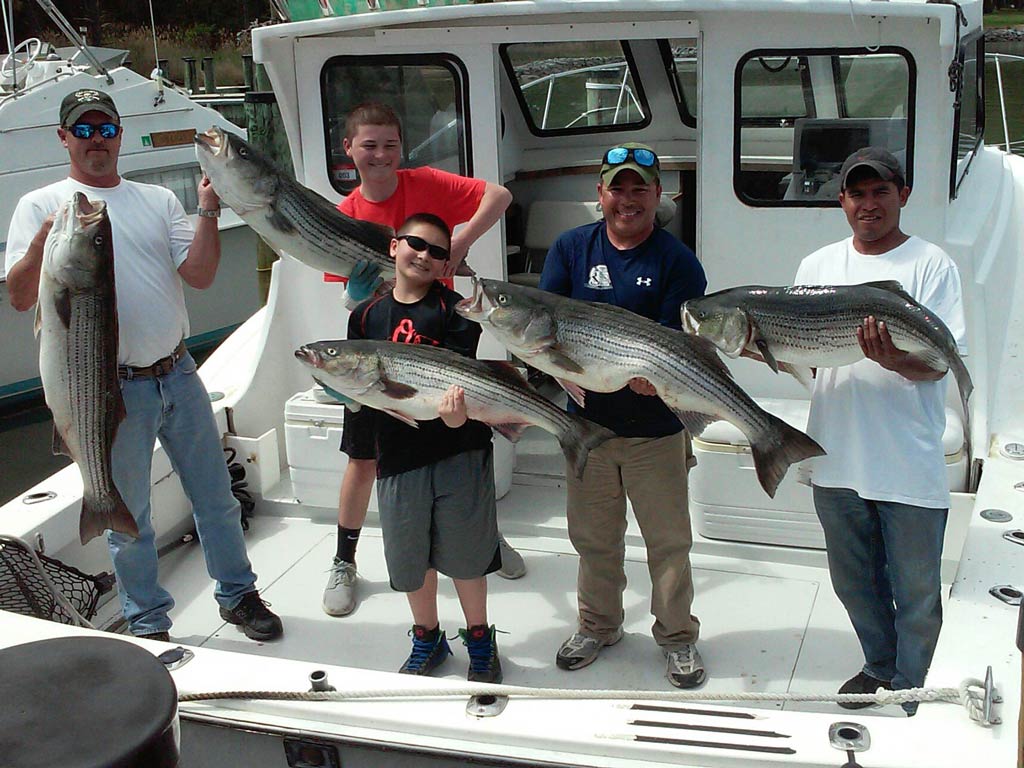
The spring spawning run is a huge highlight, usually kicking off in April through early June, when Stripers push into rivers and freshwater areas. In the fall, another steady bite picks up as fish migrate down the coast and surrounding waters. You’ll find them feeding aggressively on bait in open bay waters, channel edges, and near structure like bridge pilings, reefs, and rocky areas – hence their nickname.
Virginia encourages catch and release of Striped Bass, but you can harvest one per day, with a slot limit of 28–31 inches during these open seasons:
- January 1 – March 31
- May 16 – December 31
Texas Striped Bass Season
In the state where everything’s bigger, Texas has a large variety of Striped Bass fishing. I mentioned Stripers are anadromous and can be found in both saltwater and freshwater. Well, Texas is a perfect example of that, as its biggest Striped Bass fishery is in Lake Texoma!
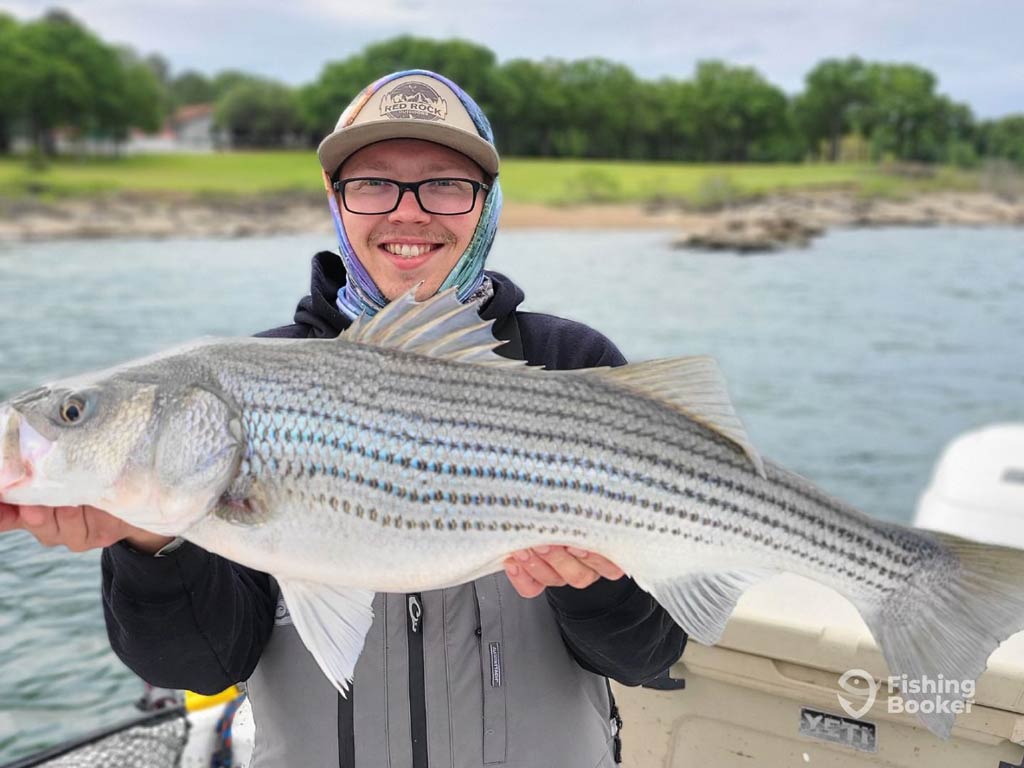
In Lake Texoma, you’ll find Striped Bass moving through current breaks, river channels, shallow feeding zones, lake basins, creek mouths, and areas with submerged structure. While more rare along the coast, some hang around estuaries, bays, bridges, jetties, marshes, and tidal creeks.
Here, the season is open year-round with no minimum size requirements, and a daily bag of 10. However, you can only keep 2 per day that are 20 inches or bigger. Spring is considered prime season, typically from March to May, when Striped Bass make their way into the lake to spawn. Fall also provides good opportunities due to cooler temperatures, higher bait activity, and aggressive feeding habitats.
New Jersey Striped Bass Season
New Jersey is a major player in the migratory Striped Bass run, with fishing really heating up in spring to early summer months, as well as peak fall. Massive schools of Stripers move along the coastline, giving you numerous chances to hook up to some.

The Garden State has a bit of a unique approach to the Striped Bass season. The main season opens May 15 this year, running through December 31. You can keep one fish per day, also between 28–31 inches, just like Virginia. However, they have a bonus program – the SBBP – where you can apply for a permit to keep an additional Striped Bass each day. The fish must measure between 24–28 inches, and you must also report your catch within 24 hours.
From the beaches to the back bays, New Jersey offers versatility. Areas like Raritan Bay and Cape May are known hotspots, with zones like inlets, jetties, and tidal rips being key areas. You’ll find Stripers forcing bait to the surface and feeding on them aggressively in big schools during migratory periods.
North Carolina Striped Bass Season
The Tar Heel State is another popular state to target Striped Bass during the season. The fishery here is unique since it blends both river and coastal systems, providing the best of both worlds.

The Albemarle Sound, Roanoke River, and surrounding lakes are key areas in the spring spawning run, with more coastal areas being better during the summer and fall. You can find fish commonly in river mouths, tidal and grassy flats, along sandy beaches and strong current areas, jetties, and nearby reef structures.
That being said, North Carolina is also a bit more strict, with tighter regulations and mandatory reporting required for all harvesting of Striped Bass. However, regulations vary depending on the specific area you’re fishing:
- Albemarle Sound Management Area: Closed until further notice.
- Central Southern Management Area (CSMA):
- April 1–30 in portions of the Tar-Pamlico and Neuse rivers. One fish per person per day, minimum size of 18 inches, with a harvest block between 22–27 inches.
- Closed in the remaining CSMA waters outside those river sections.
- Atlantic Ocean: year-round. One fish per day, slot size of 28–31 inches.
Massachusetts Striped Bass Season
Massachusetts follows a more conservation-focused approach like the above states, with regulations allowing one fish per day in a slot size of 28–31 inches. However, they don’t have any closed periods as the season is open year-round.
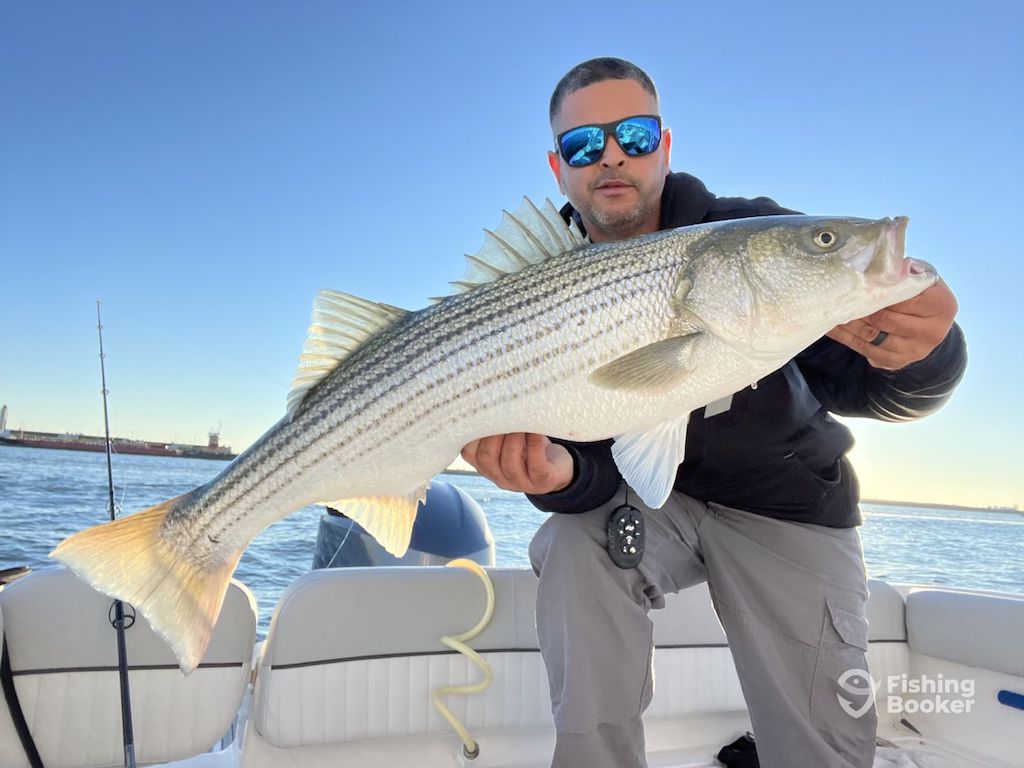
Striped Bass fishing here is highly seasonal, as the fish migrate into the brackish areas and head out towards the coast yearly. They often arrive in May and stick around through October. Places like Cape Cod and Boston Harbor become prime territories during the warmer months. Head to rocky shorelines, beaches, breaking waves, and structure-filled areas to find Striped Bass in Massachusetts. They’ll often be chasing bait like sand eels and bunker.
Maine Striped Bass Season

In Maine, regulations are the same as Massachusetts. Striped Bass are also more seasonal here due to colder waters, with the fishery running mainly from late May through September. Hotspots include Casco Bay and Kennebec River, where Stripers follow bait into estuaries, river mouths, and along coastlines, both rocky and sandy. Mid-summer will be your best bet at locating and hooking up to Striped Bass in Maine.
California Striped Bass Season
Out on the West Coast, California manages its Striped Bass fishery differently than the states above. Regulations are generally more relaxed here, allowing two fish per day instead of one. The minimum size limit is 18 inches and, in the Colorado River District, the Southern District, and New Hogan, San Antonio and Santa Margarita Lakes, it’s even more relaxed, with a daily bag of 10 and no minimum size requirement. Note that these rules can be amended, so always check again before heading out.
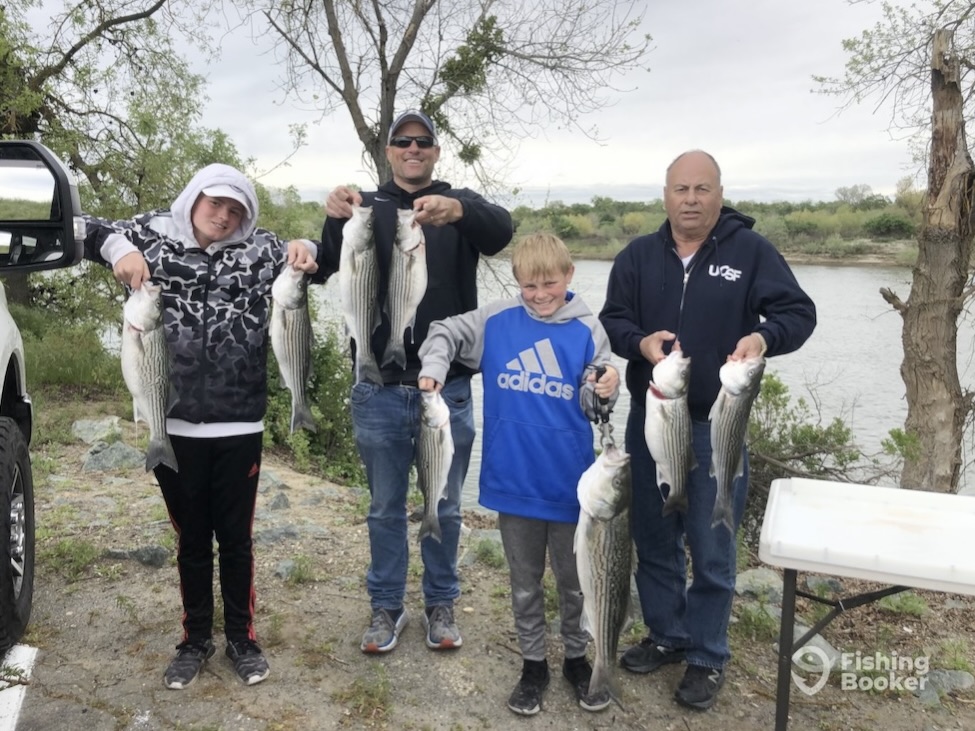
Spots like the San Francisco Bay and Sacramento-San Joaquin Delta are the heart of the action for Striped Bass fishing in California, providing saltwater and freshwater action. Unlike the Atlantic migratory patterns, many of California’s stripers are more resident, meaning you can target them year-round. Hence, the more relaxed regulation approaches.
Even with year-round availability, these fish still see a bit of a peak season, typically in spring and fall. The Stripers get more active around these times because bait is more active and moving too. You’ll find them in channels, current breaks, around structure, and in deep waters.
Striped Bass Season Is Calling You!
Striped Bass are among the most rewarding fish you can target in the US, offering a mix of challenge with a hefty reward. Whether you’re fishing the Chesapeake Bay, casting from a New Jersey beach, or working the deep waters of California, there’s a Striped Bass fishery out there for you.

By understanding your local regulations, dialing in your timing, and matching your approach to seasonal patterns, you’ll be in a great position to land one of these iconic fish.
What’s the biggest Striped Bass you’ve ever caught? Which state were you in and what did you catch them on? Let us know in the comments below!
The post Striped Bass Season: An Angler’s Guide appeared first on FishingBooker Blog.
https://ift.tt/i70WnjA
0 Comments
Enregistrer un commentaire