Known locally as “Dolphin,” Mahi Mahi are an extremely popular and rewarding fish to target in Florida. These colorful, unique-shaped creatures provide beauty, strength, and delicious taste. Some catches are small, but some are big and reach upwards of 80 pounds! But no matter the size, they always provide a fun, acrobatic-filled battle.
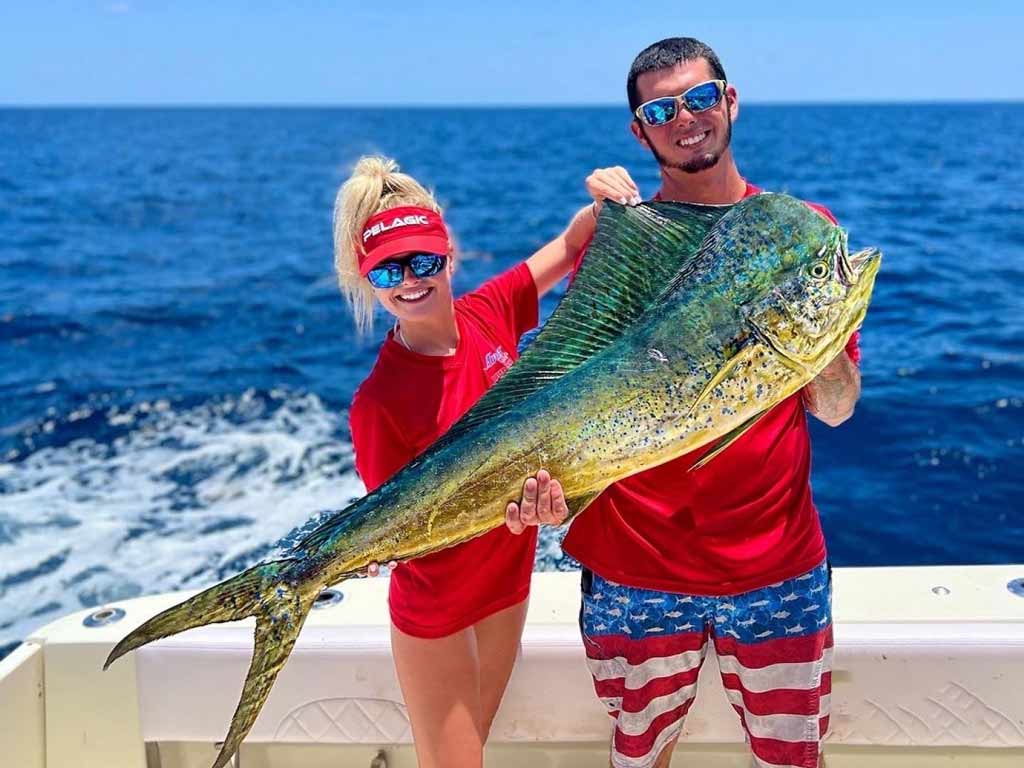
You’ll find Mahi Mahi in various seas – and off different continents – around the world. But Florida is a key hotspot for them. Whether in the Gulf or Atlantic Ocean, you can’t miss them once you spot them. You’ll notice at once that bright greenish-blue and yellow body and long blue dorsal fin followed by a big forked tail, speeding underneath the sea or lunging around at the surface!
If you’re a Florida native who hasn’t caught one yet – or you’re planning a trip to target them – stick around. I’m here to break down all the details of the Florida Mahi Mahi fishing season!
Florida Mahi Mahi Season Regulations
Mahi Mahi has an open harvest year-round, but the regulations differ a bit between the Gulf of Mexico and Atlantic Ocean. Regardless of where you fish in Florida, you’ll need a valid saltwater fishing license to fish for and harvest Mahi Mahi unless you’re fishing on a registered charter. You should also know that you can only use hook and line or catch them by spearfishing.
On the Gulf side, there is no minimum size requirement. The daily bag limit is either 10 per person, or 60 per vessel.
The Atlantic side on the other hand, has a minimum fork length size of 20 inches. The bag limit is split in two – with different limits for private recreational fishing and for-hire recreational fishing. The private daily limit is 5 fish per person or 30 per vessel. For-hire is 5 per person, regardless of the size of the watercraft.
When is Florida Mahi Mahi season?
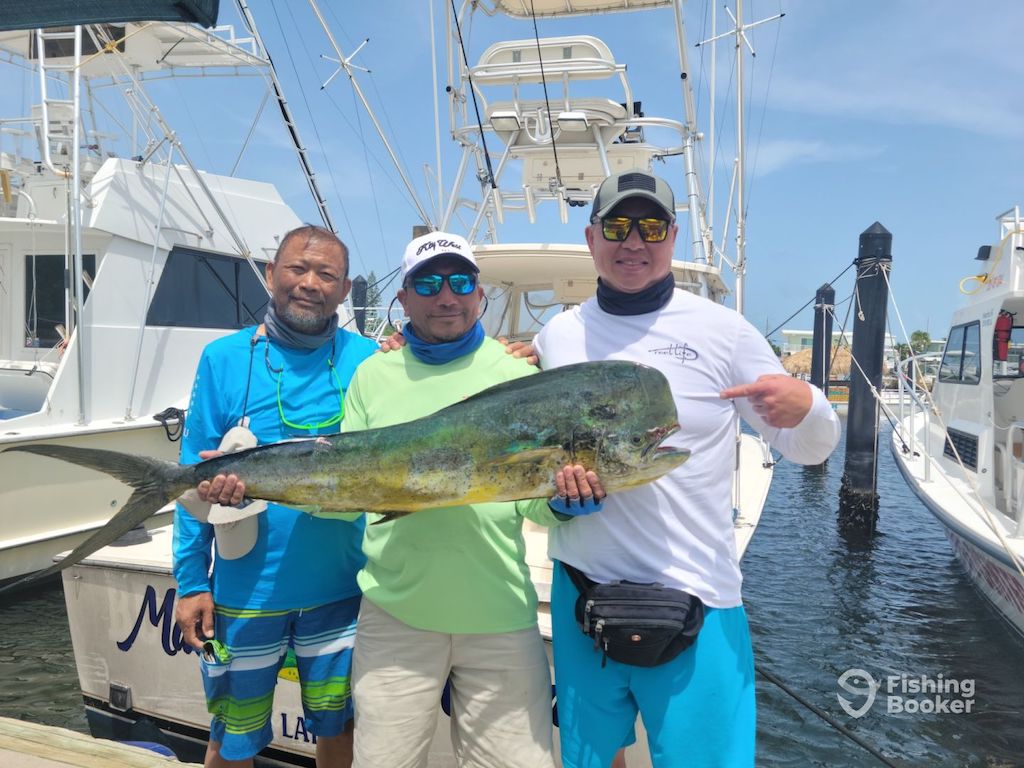
Mahi Mahi are warmwater lovers that inhabit the Florida coast year-round. You can catch them throughout the year, depending on where you are. But peak season occurs between spring and fall, with the summer months being the most productive time of year. The warm, tropical waters keep them active and feeding, while spring spawning gets them fired up.
Golden hour, along with peak sunrise and sunset, are the best times to fish for Mahi Mahi in Florida. They’ll also bite for a couple of hours after morning, as well as a few hours before nightfall, especially if there’s a good current flowing. While the hottest parts of the day usually see a drop in activity, it’s still possible to hook up to some. Just make sure that the waters are calm, so that you can spot them more easily. This also makes sure you won’t be rocking too much as you hit the deep waters where these fish live!
Mahi Mahi Hotspots in Florida
Florida offers no shortage of Mahi Mahi action. In fact, it’s one of the best states for Mahi fishing in the country – and maybe the world. But knowing where to focus can make all the difference in your next trip. Let’s take a look at some of Florida’s top Mahi Mahi fishing hotspots…
Florida Keys
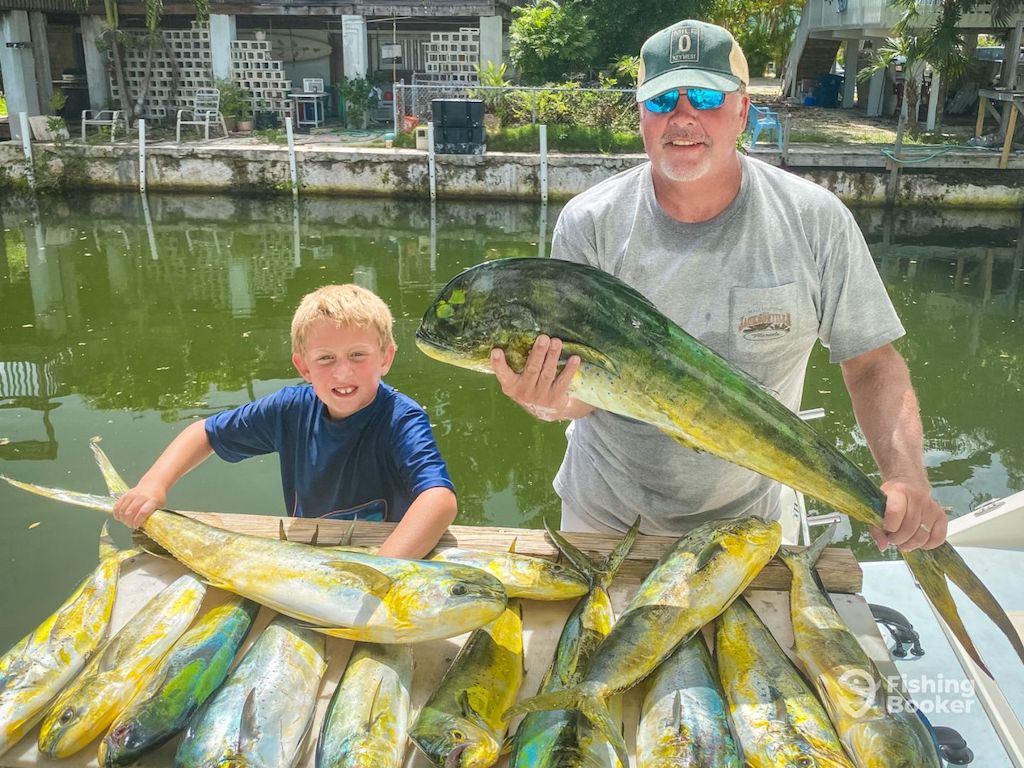
It should come as no surprise that the Florida Keys are first on my list here. It’s not even that I’m biased because they’re local to me! The Keys consistently range among the top fishing destinations in the world. And with quick access to deep offshore waters, as well as access to both the Gulf and Atlantic sides, they’re a Mahi Mahi hotspot, too.
Starting out of Key Largo and Islamorada, you can hit weed lines, current edges, and floating debris just a few miles out where Mahi Mahi like to feed. Further down in Marathon, the humps and deeper drop-offs hold consistent fish and schools of these hungry critters. And, of course, at the most southern point of the US, Key West offers access to warm, deep, tropical waters where diving birds, seaweed patches, and moving currents attract tons of Mahi Mahi.
Atlantic Coast/East Florida

Considering Mahi Mahi are popular all along the East Coast, there’s no wonder Florida’s Atlantic coast is another hotspot. And, thanks to the Gulf Stream pushing warm, blue water close to shore, it’s one of the best places in the country! Palm Beach and Fort Lauderdale are especially productive, offering shorter runs offshore. Further north, Cape Canaveral and Daytona Beach see strong seasonal Mahi action. Weed lines, floating debris, and bait fish presence are top signals for Mahi Mahi schools awaiting action here.
Gulf Coast and the Panhandle
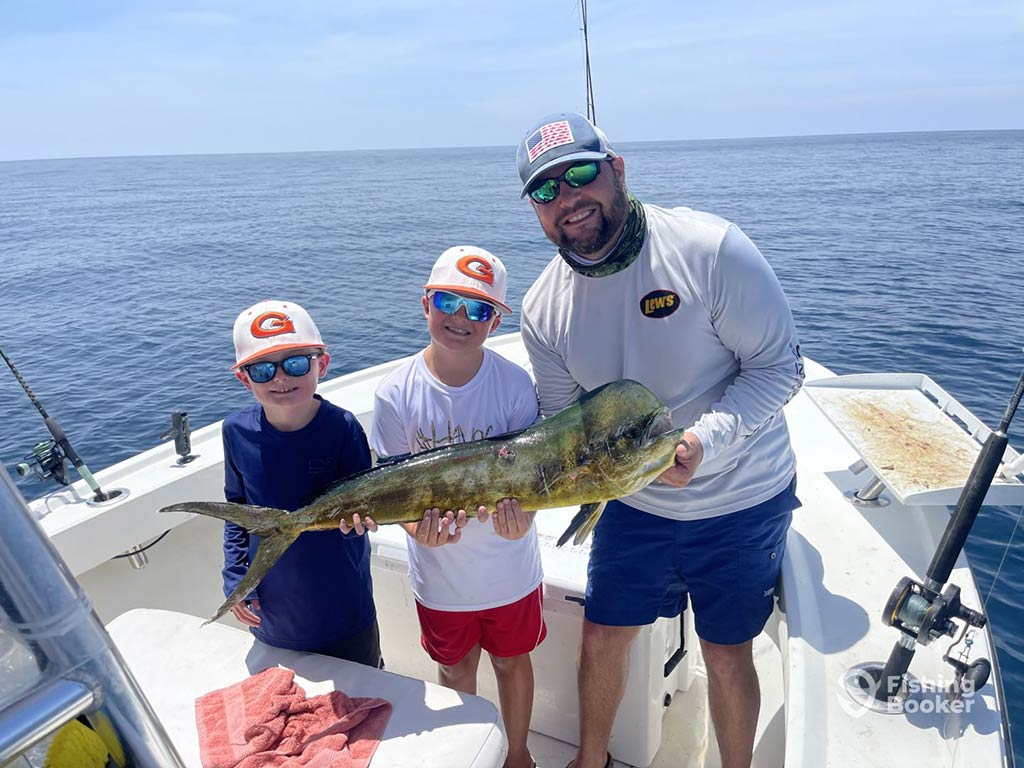
On the Gulf side, from the southwest up to the Panhandle, you’ll find Mahi Mahi further offshore. The waters here are shallower and it takes a bit to get to deeper waters. Areas like Pensacola, Panama City, and Tampa serve as key porting regions. But you can also head out from southern locations, such as Naples during the summer.
If you’re ready for a serious adventure, you can also head really far offshore to hit the offshore rigs, as well as seaweed patches and floating debris. All of these attract bait and hold Mahi Mahi close. While you may need to plan a little more, the Gulf still boasts productive Mahi Mahi fishing.
How to Target Mahi Mahi in Florida
It’s all well and good knowing when to come. But what about the techniques you’ll want to use? Fear not becuase, before we wrap up, I’ll let you in on all you need to know. From gear and baits to methods, let me talk you through what’s what…
Gear

Mahi Mahi are tough and energetic fighters. Add that to offshore conditions, and you’ll need sturdy gear that can withstand it all. Therefore, a heavy-action rod will be best, with a long fluorocarbon leader of 40 pounds or more. But, while you can rely on a one-size stick, you should have various leader and hook sizes on board because these fish can differ in size. A 6/0 circle hook is a good starting point, and lures of 6.5–12 inches are what anglers use most.
Bait and Methods
Depending on your technique, you’ll want various types and plenty of choice when it comes to bait and lures. If you want to free line live or cut bait, ballyhoo and squid are amongst the top choices for Mahi Mahi in Florida. A key method is to look for any floating debris, seaweed lines, or circling birds, and throw your bait or lure nearby. Mahi Mahi often swim and hunt in schools, so if you can get their attention, you may even get a little frenzy action!
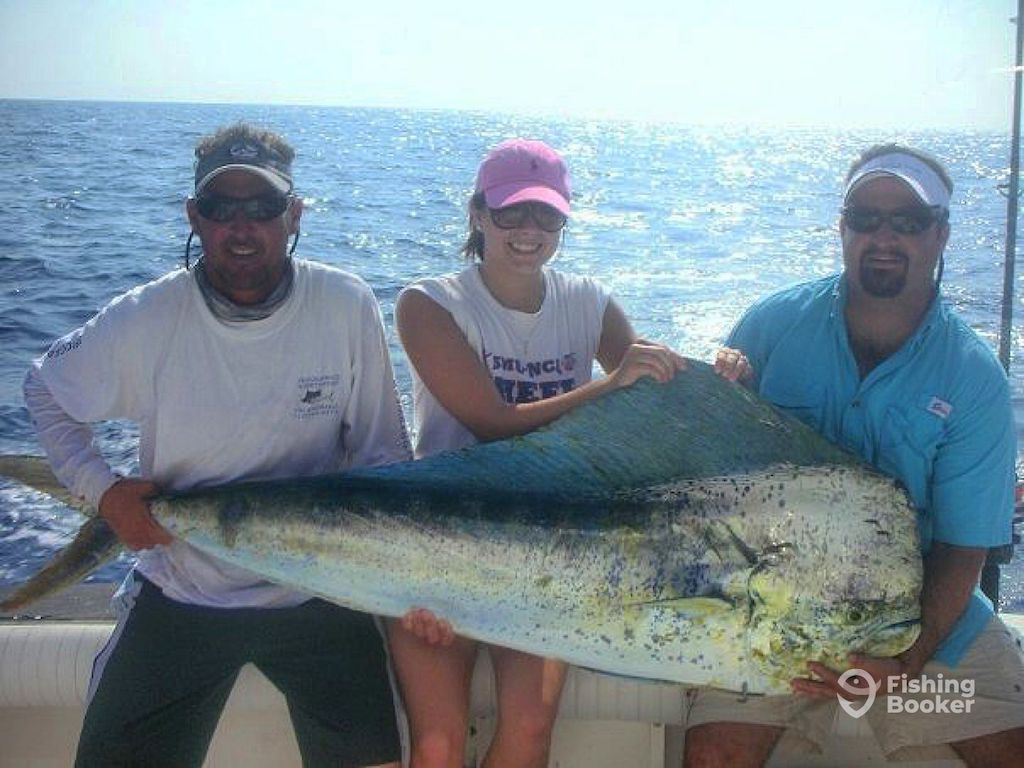
Trolling is another popular technique for Mahi Mahi fishing in Florida. This allows you to cover large areas of water and set out multiple lines. Rigged ballyhoo – either naked or skirted – is a great option, as is using artificial lures like feathers, jigs, squid chains, or plugs. You’ll want to have your line out the back of the boat, usually over 50 feet, at a trolling speed of 6–10 knots. From there, you set the rod in the holder, keep the drag loose, and wait. You can also chum up the water with live or cut bait to keep the school fired up.
Once you’re hooked up, be ready! Mahi Mahi are known for their explosive runs and high-flying jumps, often putting on a full show right behind the boat. If your line is out far, it may take a minute to reel them in, especially if you have a big one on the line. Keep the line pressure steady, try to keep slight boat movement, and maybe even toss out more bait to hold the rest of the school’s attention. If you have a number of lines out at once, multiple hookups can occur. Trust me, it’s quite the scene when you see them all trashing at the surface!
Other Considerations
Don’t forget – this is the Sunshine State! Bring good sun protection, like hats, buffs, sunglasses, and UPF+ shirts. It’s also fishing on the open water, so don’t shirk on some motion sickness pills. The day can get long, so plenty of food and drinks are a must. For everything else, your captain should have you covered.
Mahi Mahi Season in Florida: Fun-Filled Fishing!

Now you know when to come and what to expect, it’s time to get ready for your next fishing adventure. Mahi Mahi season in Florida awaits! Vibrant blue waters, fast-paced action, and the chance to reel in one of the most exciting fish offshore – not to mention the fact that they’re delicious…. This trip is truly one you’ll want to take in your lifetime!
Every moment brings a new thrill and memories that will last long after your trip ends. The season will be peaking soon, so don’t wait! Or, if you can’t make it this year, I’m sure you’ll want to plan for next year. Tight lines!
What’s the biggest Mahi Mahi you’ve ever caught? Which region did you catch it in, and what fishing method did you use? Let us know in the comments below!
The post Florida Mahi Mahi Season: A Local Angler’s Guide for 2026 appeared first on FishingBooker Blog.
https://ift.tt/Tj8frvV
0 Comments
Enregistrer un commentaire