If you’re irrevocably hooked on all things fish, this article is for you! We’ve carefully curated a list of the most interesting, weird, and fun facts about fish we could think of. From quirky habits to mysteries surrounding how they age, live, breathe, and talk, we’ve reeled in answers to some of the questions you were most curious about.
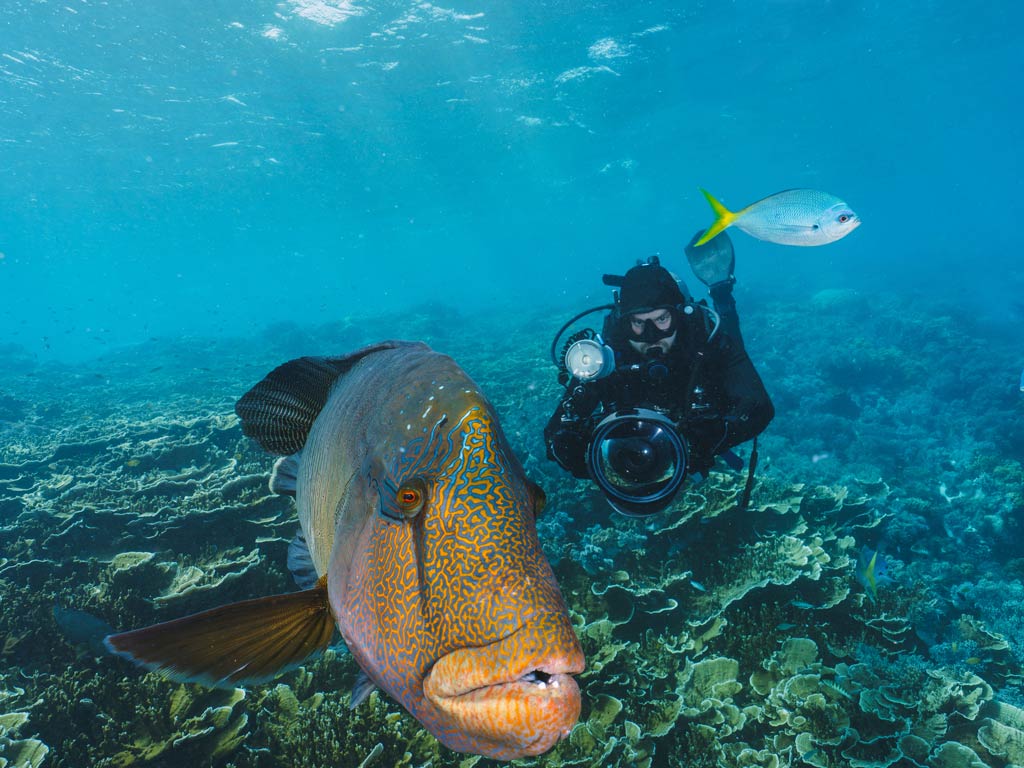
We know you probably have more questions on your mind. But here’s the cool part – you can always ask us! We’re happy to dive into your fish dilemmas. Plus, we’re counting on our fish fandom to join the conversation and share silly information they’ve been keeping for themselves – until now.
So, enjoy the article and don’t hesitate to join the never-ending fish facts conversation in the comments section below this article.
Fish Have Superpowers: Surprising Things Fish Can Do
1. Can fish walk?
Yes, fish can walk, and it’s more common than you probably think. Scientists believe that there are at least 11 fish species in the world that have the ability to walk. The majority is limited to the seafloor, but some can also stroll on land above the water.

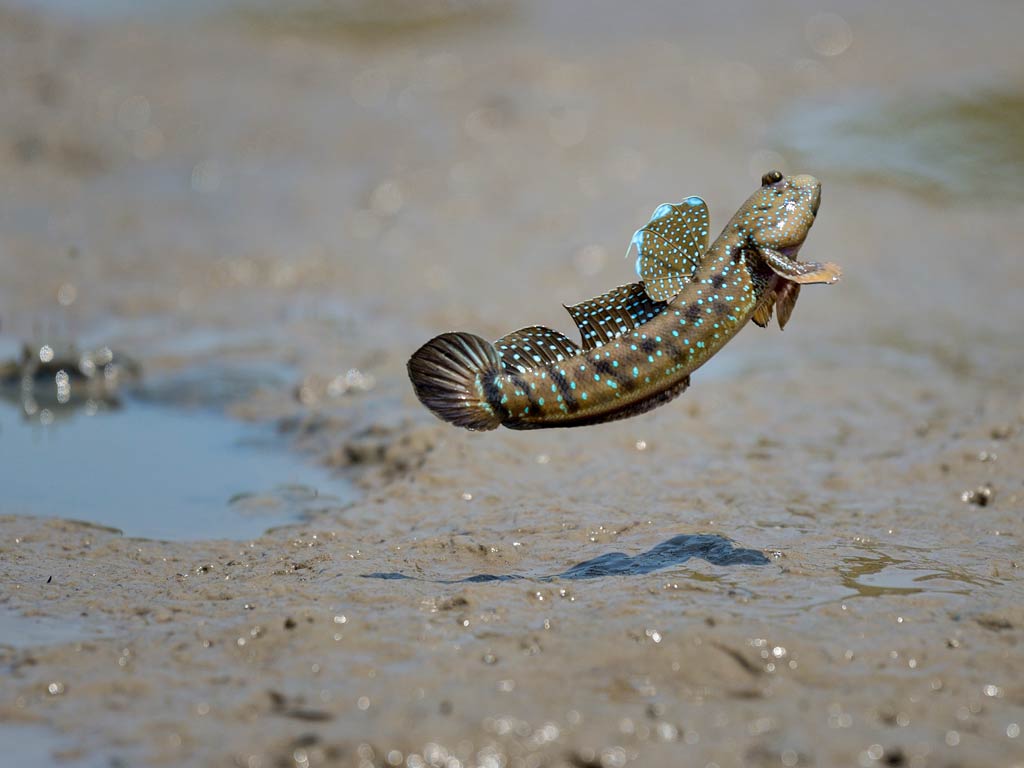
Instead of swimming, species like Handfish and Sea Toad use their funny-shaped fins to move along the bottom. These bottom-dwellers live on the seafloor and never venture out of the water. Mudskippers, on the other hand, are quite famous for their land-walking skills. The secret to their smooth transition from water to land is mud. It keeps them cool and moist, and allows them to easily move around – even jump!
2. Can fish fly?
If some fish can walk, why can’t others fly? Jokes aside, the notion that some fish can fly is only partly accurate. Namely, there are species with wing-like fins that appear to be gliding above the water, but they aren’t actually flying. The most famous example is the Flying Fish.
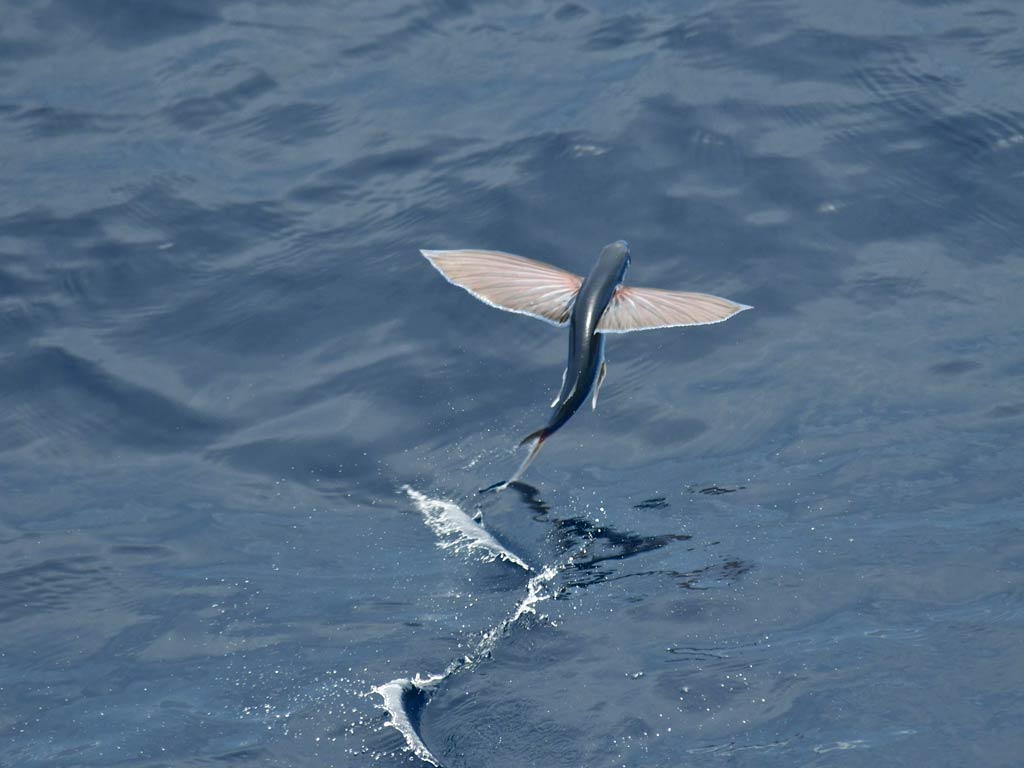
Flying Fish launch themselves out of the water, spread their wings, and travel above the surface, looking airborne. Having in mind that they can pass up to 650 feet like that, it’s no wonder you’d think they have bird-like abilities. But the truth lies somewhere in between. Sure, they spread their fins to catch air, but they actually propel themselves with their tails. It’s the rapid movement of the tail against the water that enables them to “fly.”
3. Can fish breathe air?
Now that you know about Mudskippers, the answer to this shouldn’t come as a surprise. This fun fact is true – some fish species can breathe air. Mudskippers, for example, spend a lot of their time on land, so naturally their bodies have adjusted to their lifestyle. They can breathe air through their skin and absorb oxygen through their mouths. But they aren’t the only fish to breathe air.
Some creatures, like Lungfish, literally have lungs! These unusual freshwater residents are more closely related to us than their underwater counterparts. Others, such as aquarium fish Bettas, use special labyrinth organs to extract oxygen. The list of air-breathing fish goes on to include Tarpon, Bull Sharks, and even Catfish.
4. Can fish produce electricity?
We know that several fish species can emit light. These include Anglerfish that use bioluminescence to lure prey and Pinecone fish that rely on special organs called photophores to glow. But what about actual electricity?
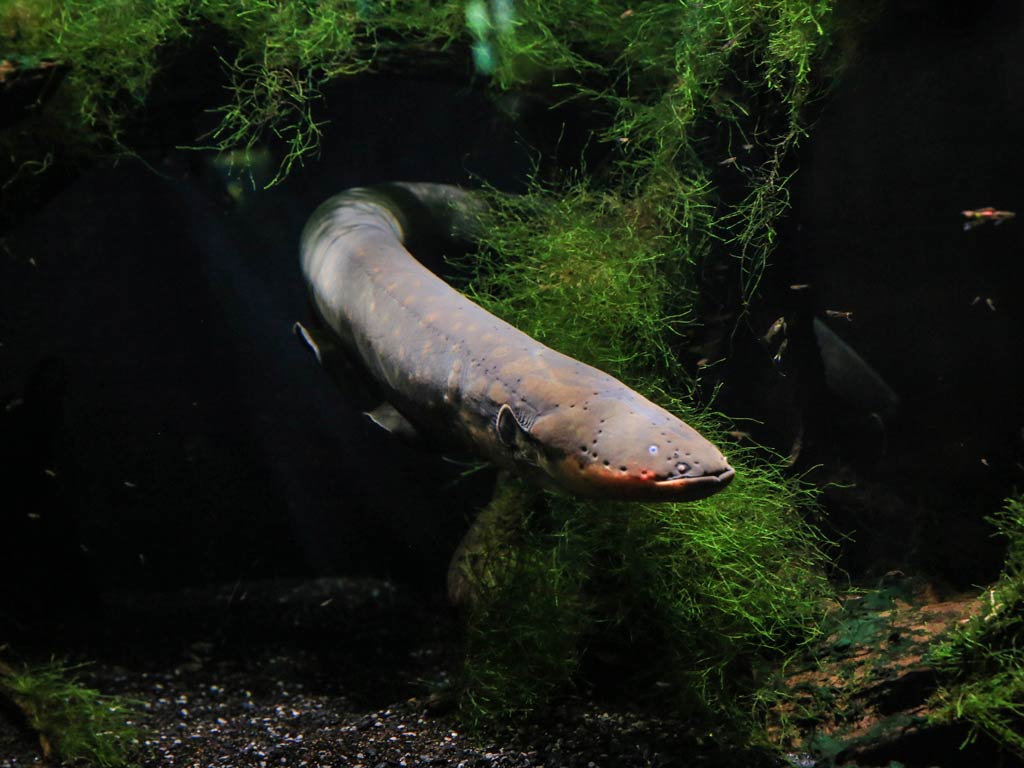
Electric Eels are known for their ability to produce electricity. They can generate more than 800 volts, which is enough to light up several LED bulbs for a few seconds. It’s also the highest voltage an animal can release. Elephantnose Fish are less famous and not as powerful as Electric Eels, but equally capable of electric discharges. Both species use their incredible skills to hunt and stun.
5. Can fish survive depths that would crush humans?
How do depths of nearly 28,000 feet sound to you? We’re asking because this is where a species of Snailfish was found thriving in 2022 – and this is deeper than any other fish recorded! To illustrate how extreme this sunless abyss is, imagine more than 15 Empire State Buildings piled one on top of the other beneath the ocean’s surface.
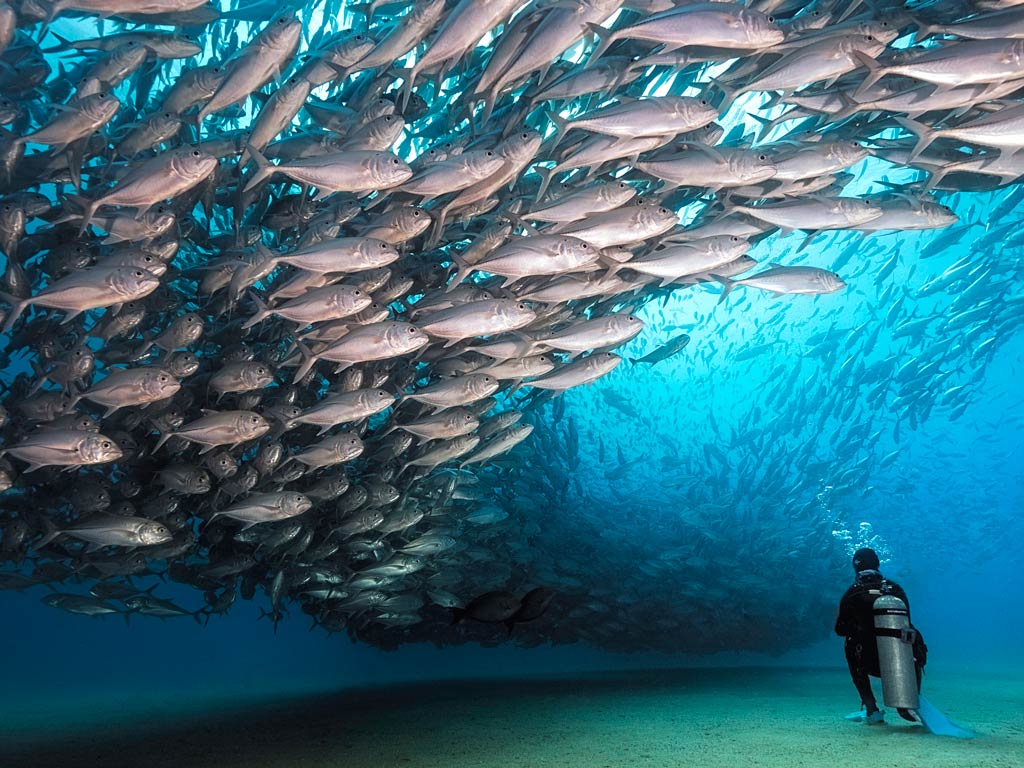
Humans don’t have the slightest chance of surviving there. Our lungs would be crushed almost instantly. But Snailfish don’t have any air pockets or gas cavities, so the horrid pressure doesn’t affect them.
6. How do fish sense things they can’t see?
Much like a bear can smell a distant carcass, fish can sense the movement of an underwater creature from miles away. How? Using an organ called the lateral line.
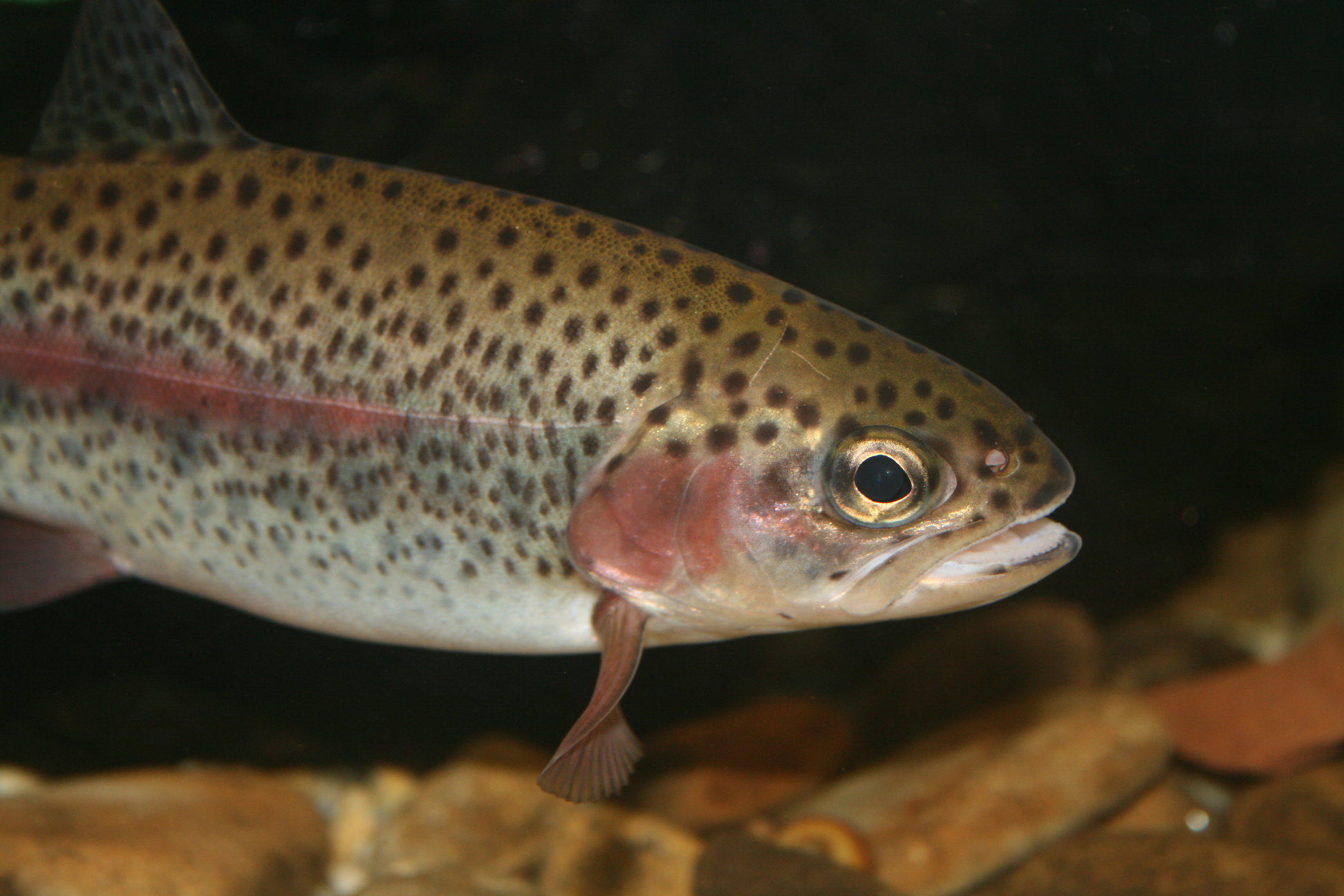
Not to get too scientific, the lateral line is basically a series of sensory cells running along the side of a fish. Using these cells, fish can detect the slightest vibrations in the water and turn them into electrical impulses. Fish are actually so sensitive that they’re able to differentiate between predators, prey, and even potential mates without even spotting them.
Here’s a crazy theory for you. The reason why so many fish species move in schools is that they’re trying to “jam the radar.” When lots of fish move together, they’re literally creating vibrations that their predators’ lateral lines can’t understand.
How Fish Hunt: It’s Stranger Than You’d Think
7. How do Anglerfish lure their prey?
It takes one look at an Anglerfish to see that it’s not winning any beauty contests. Well, unless “underwater demon” becomes a thing, that is. But it’s not the looks that make these fish special. Anglerfish are unique in the way they hunt.
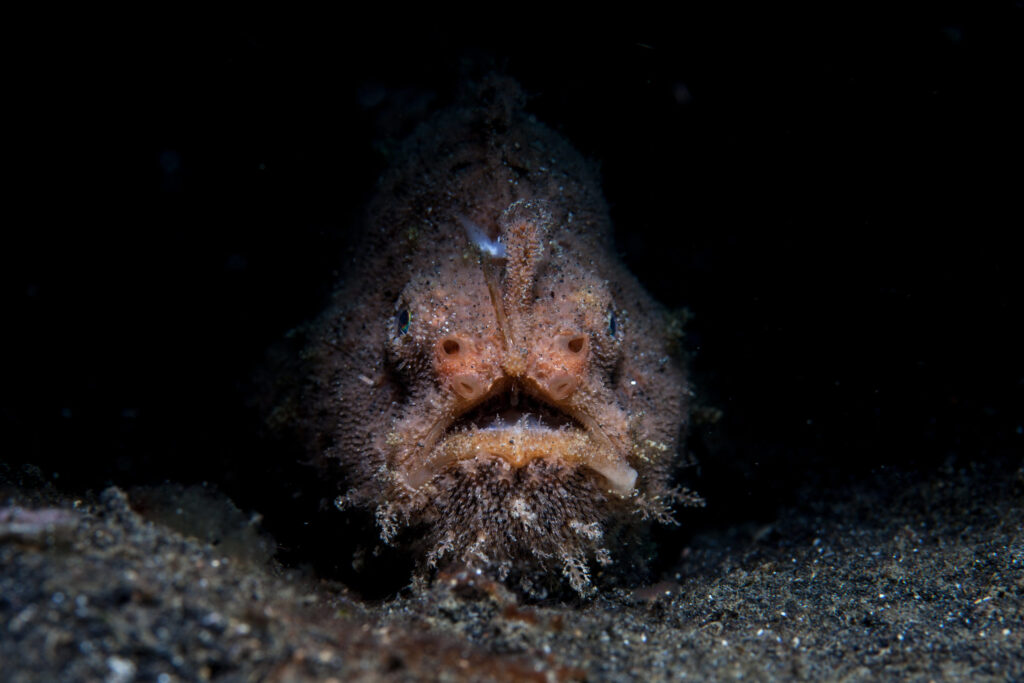
Using a glowing antler with a piece of dangling meat on top, Anglerfish bait their prey much like an angler would. They patiently wait until their prey gets close and then – zap! Quick as lightning, they move in to bite their unsuspecting victim.
8. How do Archerfish hunt above the water?
While Anglerfish and Eels use light and electricity to hunt, Archerfish hunt by relying on their remarkable shooting skills. Yes, you read that correctly. These tiny fish are true hitmen. But that’s not all. These aptly named shooters don’t pursue underwater targets but hunt above the water!
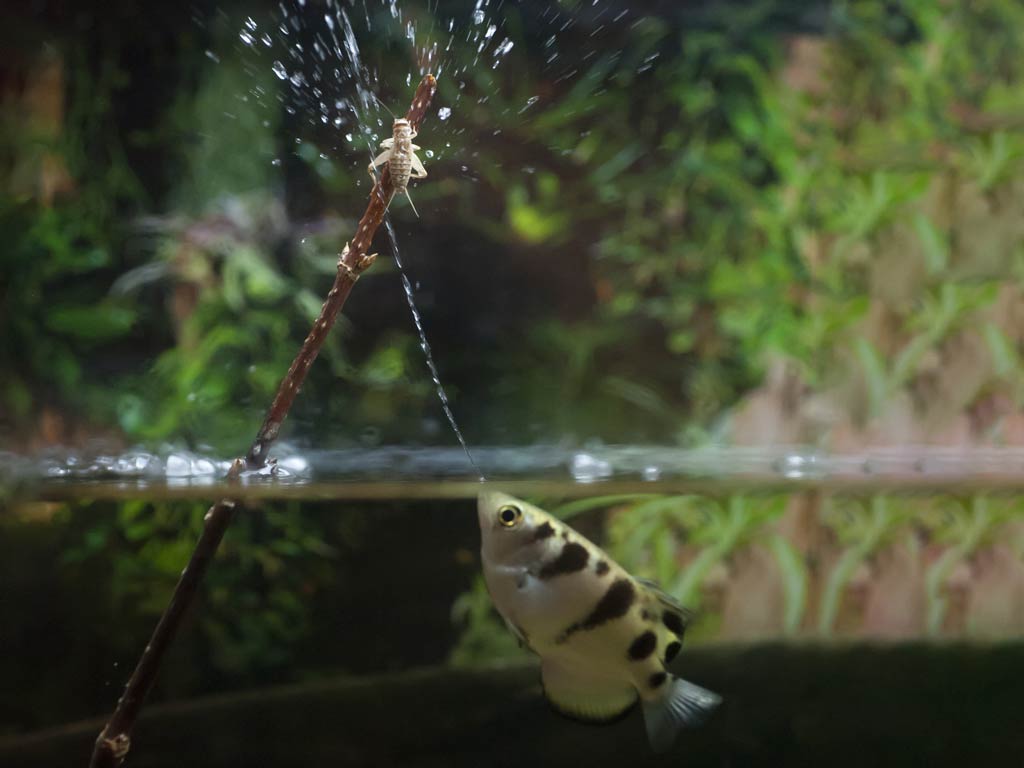
Archerfish, famous for recognizing human faces, hunt by spitting – the same and quite precise method they used to tell humans on the computer apart (more on that later). They release a powerful stream of water from their mouths and hit insects, spiders, and even small animals that they notice on the plants above the water.
9. Why do Yellowjacket Cichlid play dead?
Some fish are fierce predators, pursuing their prey with speed and precision. Others take a much lazier, and honestly hilarious, approach – they play dead! Instead of chasing a meal, these sneaky fish stay perfectly still and wait for their prey to swim right to them. Meet Yellowjacket Cichlid.
Yellowjacket Cichlid pretend to be dead, so that they can attract smaller fish to feast on their bodies. And when their guests don’t suspect anything, they spring back to life and snatch them!
10. What does a fish’s mouth shape tell you about how it hunts?
From the fang-filled jaws of a Barracuda, to the huge gulpers of a Basking Shark, fish mouths are as diverse as it gets. How could it be, then, that all the thousands of fish species have one of just three mouth types? The answer lies in where they find their food.
Depending on where in the water column they’re hunting, fish mouths can be upward-facing (superior), downward-facing (inferior), or forward-facing (terminal).
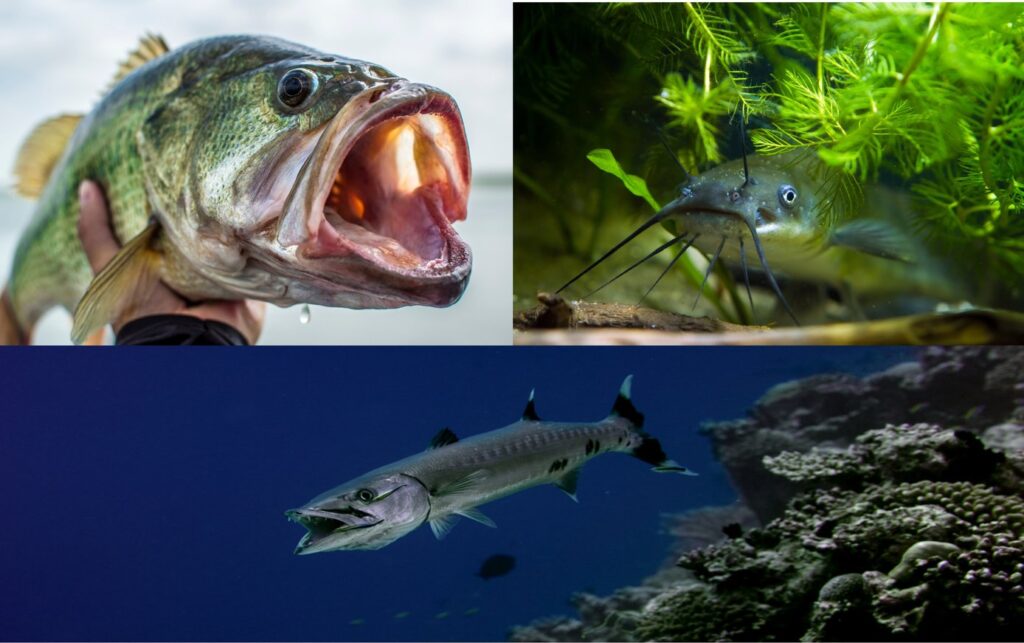
Species like Bass have upward-facing mouths because they’re used to creeping up to their prey from below. Catfish, on the other hand, are bottom feeders, and their mouths point downwards. Fish with forward-facing mouths hunt their prey all over the water column – these are your pelagic predators like Tuna, Barracuda, and so forth.
As Tony Montana would say, “The mouth, Chico, it never lies”. Or something like that.
How Fish Talk: It’s Funnier Than You’d Think
11. Can fish fart?
One of the funniest fish facts is that fish can fart, and each fart tells a story. You see, breaking wind in fish isn’t about digestion as it is in humans. It’s more a form of communication and buoyancy control.
Some species, like Herring, release gas from their swim bladders to send messages (and tiny bubbles). Others, such as Sand Tiger Sharks, emit gas to adjust their buoyancy and sink more easily.
12. Can fish sing?
Maybe not in a way humans or birds can, but fish most certainly can produce various sounds we can interpret as singing. Grunting, croaking, humming, drumming… Fish have their own acoustic language, which they use to communicate different things, from courting to warning.
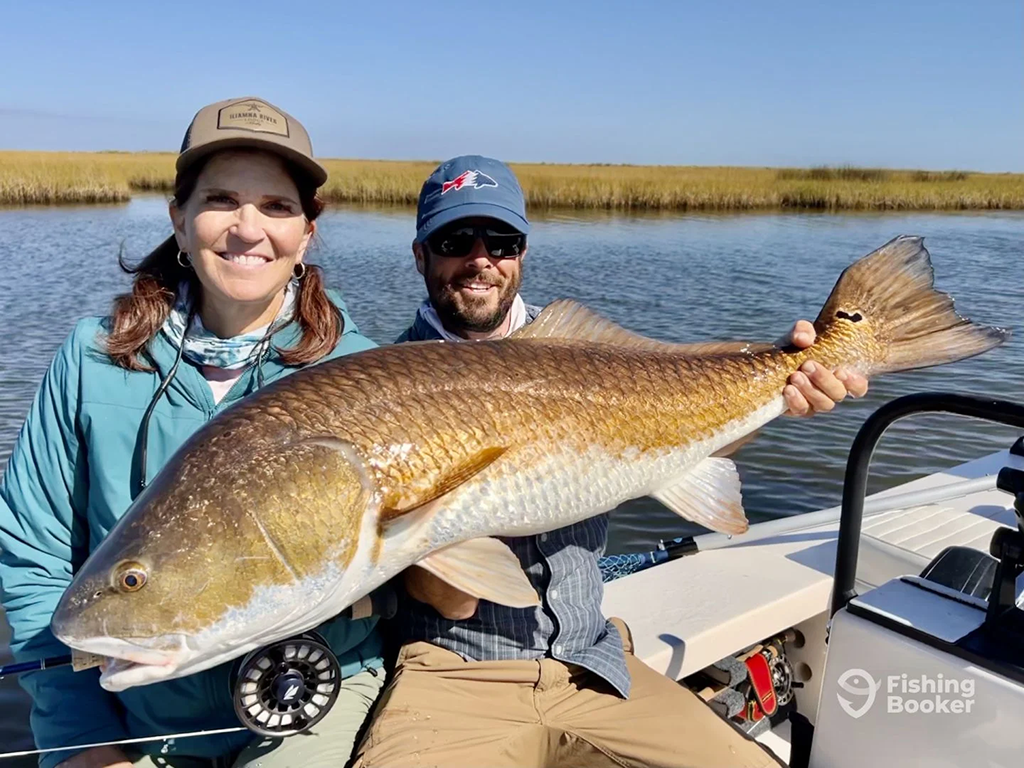
Through their vibrating swim bladders, Red and Black Drums create the low-pitched drumming sounds they’re named after. Atlantic Croaker, Toadfish, and some Catfish can also brag about singing abilities.
But the award for the best singers goes to Plainfin Midshipmen. They produce continuous humming melodies that remind us of a chorus of Buddhist monks. These meditative chants are so loud, they’re easily heard by people.
13. Can fish create art?
Believe it or not, fish are creatures with many talents. Much like with singing, fish are also capable of creating mesmerizing shapes that are nothing short of artistic. And they do this to communicate, or should we say to court. Take Pufferfish, for example.
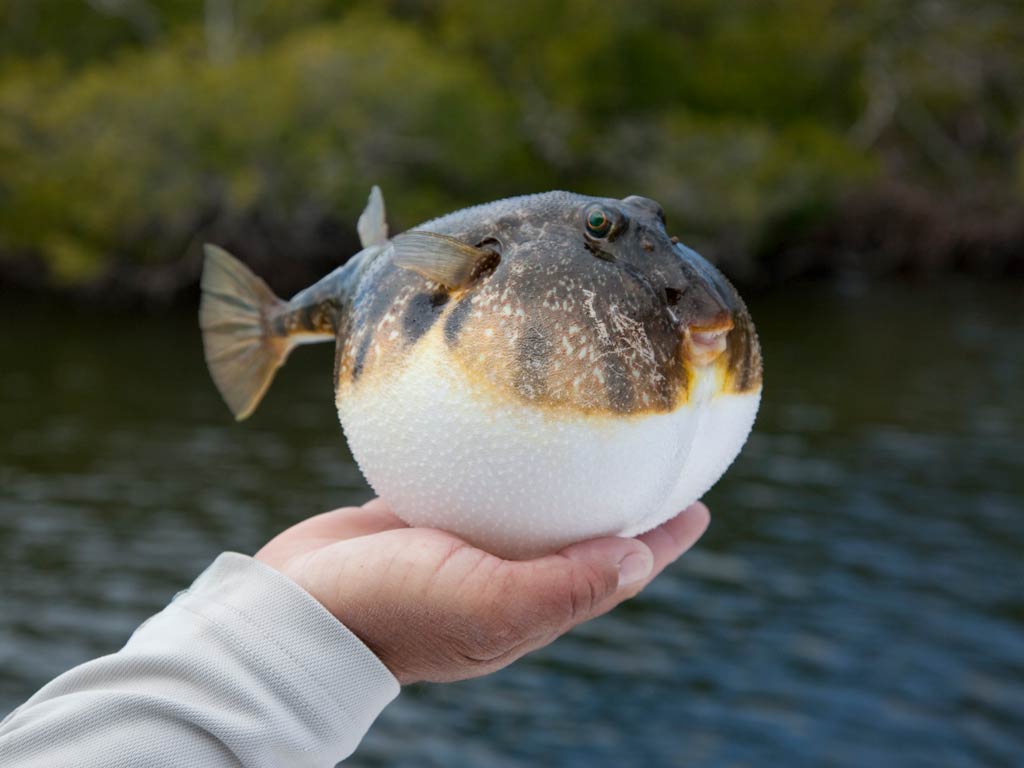
Pufferfish males design intricate sand patterns to impress females. They practically build art masterpieces as part of their mating ritual. They even decorate their sand sculptures with shells in an attempt to flirt. How’s that for a fish fact?
14. Can fish recognize human faces?
Remember Archerfish? Well, not only do they know how to hunt by spitting, but they also know how to communicate by spitting.
Research led by Dr Ulrike Siebeck in 2016 demonstrated that fish are able to distinguish human faces. During the study, they trained Archerfish to respond to a particular face. The fish were rewarded each time they picked the correct answer. And when they were given 44 new faces, they were able to identify the exact face they were trained to with an average accuracy of around 84%! So, it’s safe to say that fish can recognize human faces.
And if you want to see them communicating in action, check out how Archerfish actually picked the faces.
Weird Fish Facts: Bizarre Things Fish Do
15. How do fish mate?
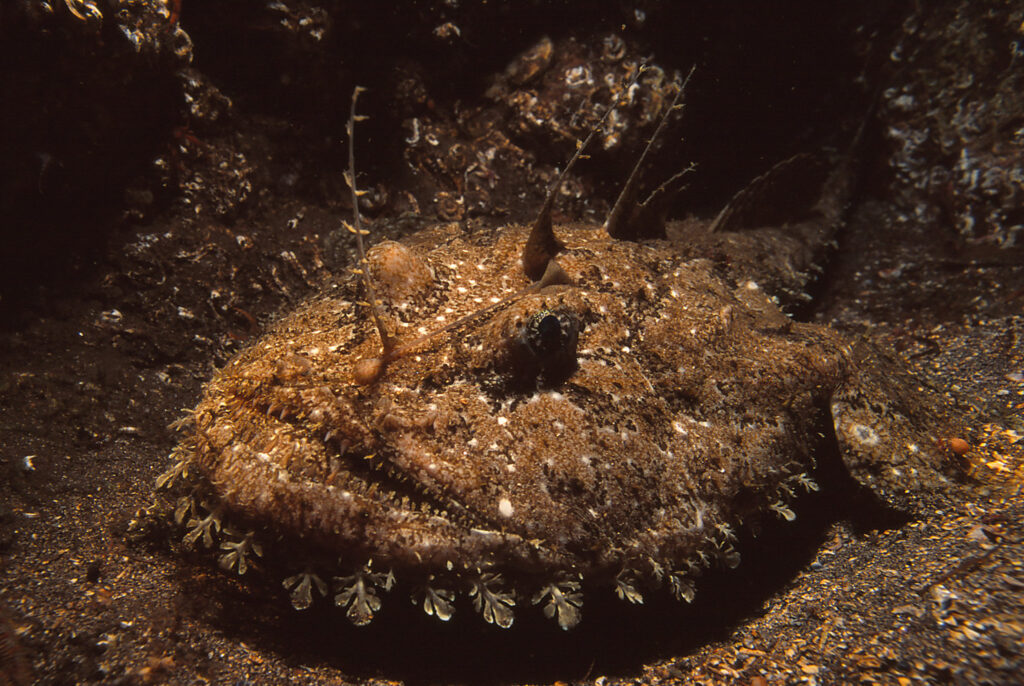
Another fascinating thing about Anglerfish, besides how they hunt, is the way they mate. To make babies, smaller male Anglerfish fuse with the large female, becoming one until the rest of their days. Romantic, isn’t it? Wrong! The males end up losing their brains, hearts, and eyes in the process, leaving only a pair of testes to be used when needed. We bet you didn’t see this coming when you started reading.
But if you’re looking for a “happily ever after,” we can share a fairytale story, too. By now, you’ve realized that fish can court, but can they mate for life? In some cases, yes. Several species of fish practice monogamous relationships, and a few form lifelong bonds. Fish that are believed to mate for life include some species of Seahorses, Butterflyfish, and French Angelfish.
16. Why do Parrotfish sleep in mucus?
If you’re a fish, there’s nothing more irritating than a blood-sucking parasite stopping you from having a good night’s sleep. That’s exactly why Parrotfish go to extreme lengths to prevent this from happening – their idea of a safe and sound sleep is a bed made out of mucus.
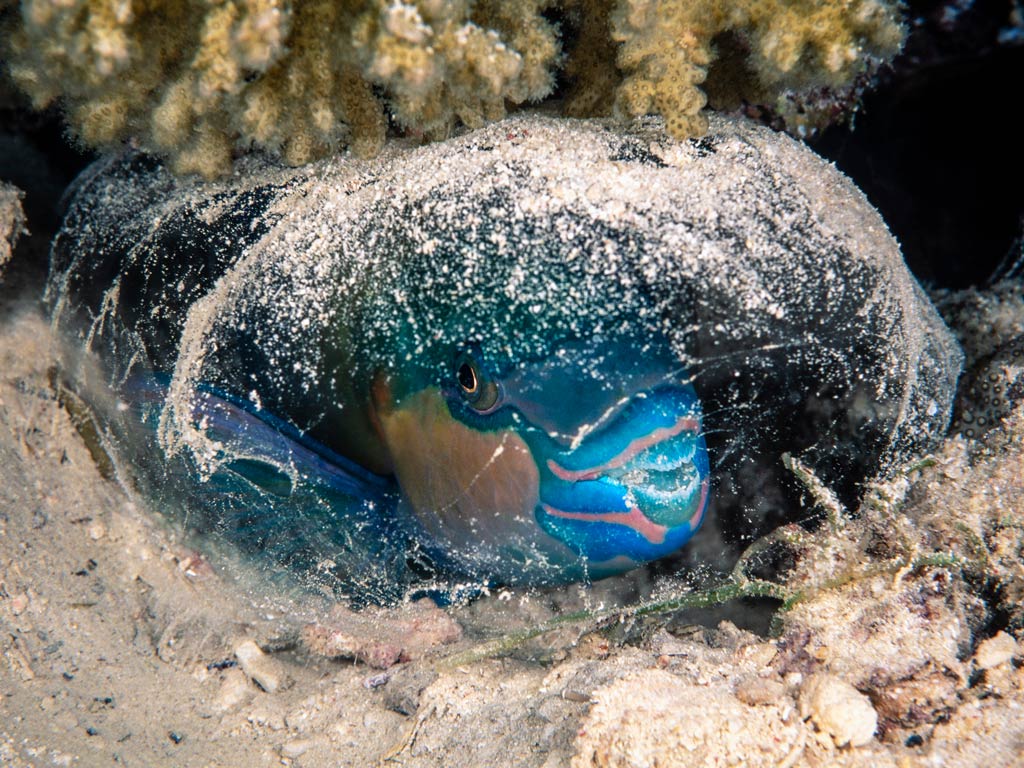
Every night before going to sleep, Parrotfish secrete a mucus cocoon that envelops their entire bodies with a protective biopolymer – something similar to a mosquito net. The genius thing about it is that this net lets small molecules pass through, but blocks anything larger, such as bloodsucking parasites.
Oh, and the whole process only takes Parrotfish around 2.5% of their daily energy budget. Not too pricey for a good night’s sleep!
17. Where do Pearlfish hide?
While Parrotfish are cozily nestled inside their mucus cocoons, Pearlfish have the habit of seeking shelter in the butts of Sea Cucumbers. You read that right – they reside inside these poor creatures!
They actually slide through the Sea Cucumber’s rear opening — which, awkwardly, also serves as its breathing hole. Some Pearlfish species are polite tenants that emerge at night to hunt, while others are 24/7 freeloaders that nibble on their host’s gonads and internal organs while they’re in there. Pretty bizarre, isn’t it?
18. Are Flatfish born flat?
If you’ve ever seen a Flounder or a Halibut, you know how different they look from most other fish. As members of the Flatfish family, these fish have eyes on one side of their pancake-like bodies. But they didn’t start out this way.
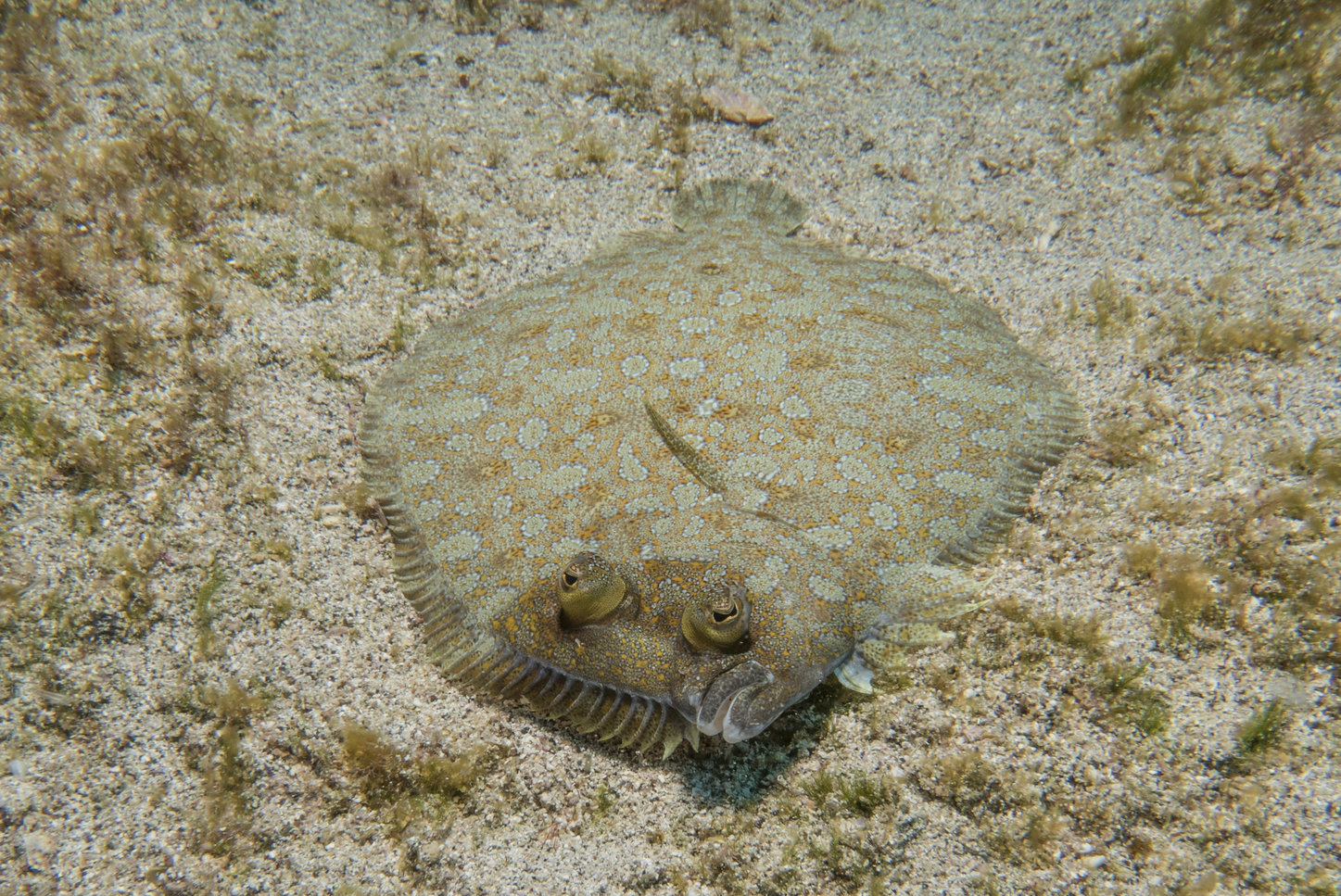
Small and round, Flatfish are born looking just like any other fish. It’s a month or two later that these critters start going through a radical transformation.
First, their skulls start shifting, pulling the eye along with it. As the body starts to flatten, the skin color also changes. They become lighter on the bottom side and darker on the top. Last, as they switch from eating plankton to other fish, their gastrointestinal system starts adapting, too.
19. Can a fish make you hallucinate?
Salema Porgy is a type of Bream native to the East Atlantic and parts of the Mediterranean. Looking at it, you’d say that this guy is as unremarkable as it gets. But you’d be wrong. Dead wrong. If there was ever an epitome for “looks can be deceiving,” this is it.

Translated from Arabic as the “fish that makes dreams,” Salema Porgy can invoke vivid, LSD-like hallucinations. Ancient Romans knew this and actually used the fish as a recreational drug.
Thankfully, the fact that it’s the fish’s head that causes the intoxication means that the odds of you getting poisoned are pretty low. Unless you’re doing it on purpose, that is. In that case, all we can say is you’re in for a totally different kind of “fishing trip.”
20. Why do Salmon swim thousands of miles upstream just to die?
When people search for “facts about Salmon,” they typically expect to find how healthy it is to eat one. But these fish have a lot more to them than just omega-3 and protein. Salmon actually have one of the wildest life stories in the entire animal kingdom.
Salmon are anadromous: they’re born in freshwater, but spend most of their lives at sea. Once they reach the ocean, Salmon spend years feasting on everything the seas have to offer, growing massively and preparing for an epic adventure back home.
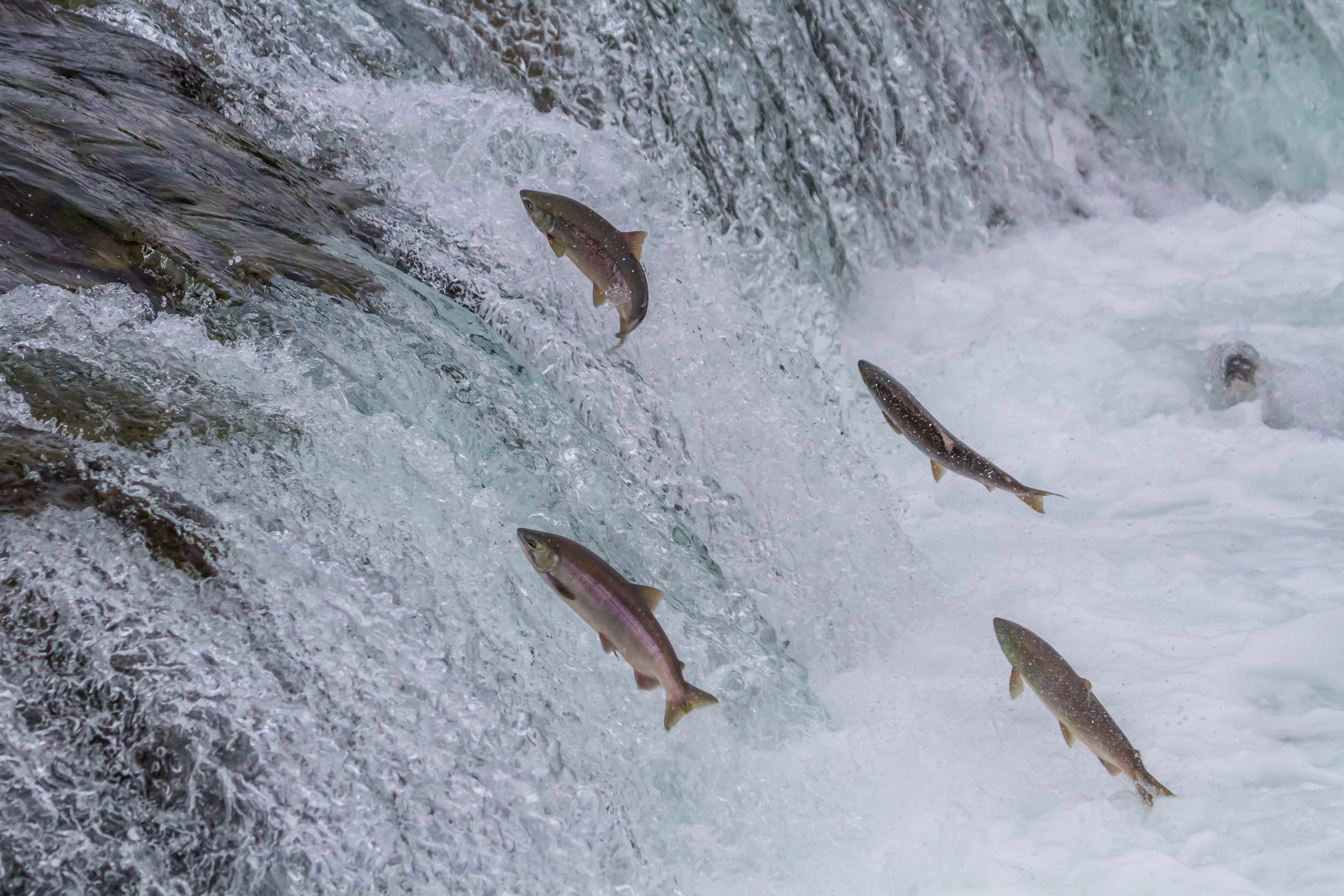
To fulfill their life cycle, Salmon make the journey back to their natal waters to spawn. Scientists believe they navigate upstream using their sense of smell and Earth’s magnetic field as their GPS. But it’s what happens to Salmon along the way that takes the cake here.
As they make their way home, Salmon stop eating and rely on stored fat reserves to fuel the journey. Powered by their muscular tails, they swim or jump upstream – some species can even launch themselves as high as 12 feet!
Male Salmon also go through a dramatic change of skin color, and even change the shape of their head. A male Salmon returning to its natal waters looks like a completely different animal.
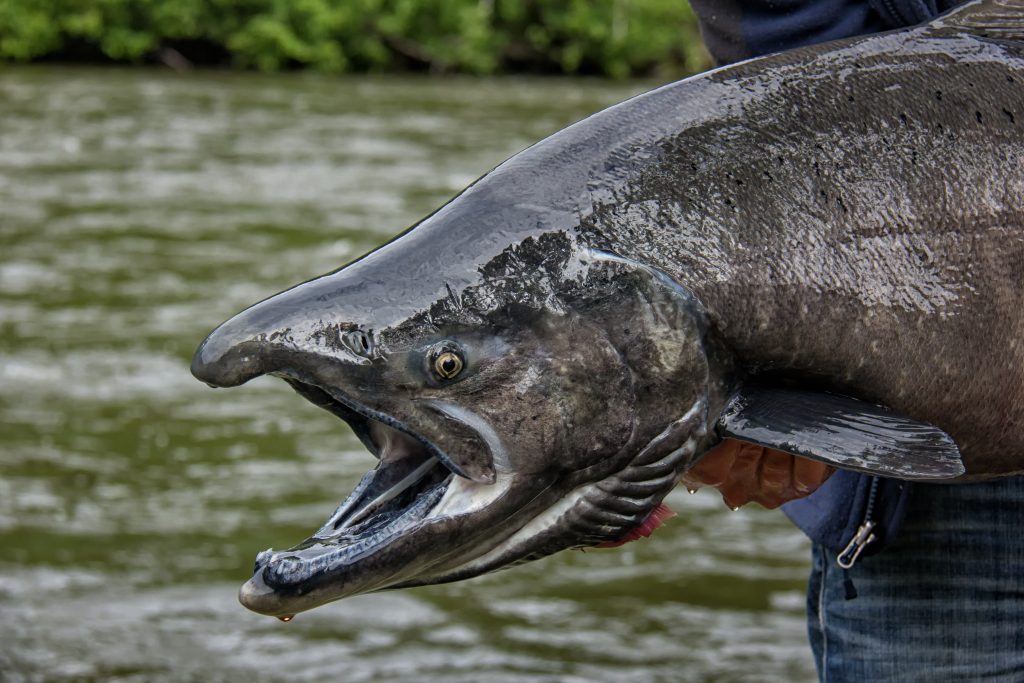
When they finally reach their spawning grounds, Salmon use all their remaining energy to spawn. Females lay the eggs, and males fight off rivals during the spawning frenzy.
And here’s the kicker: once spawning is done, Salmon have given everything they have. Their bodies, exhausted and battered from the journey, begin to deteriorate within days – and almost all of them die soon after. It’s a brutal ending, but it’s also the entire point. Their decomposing bodies fertilize the streams and feed the next generation of Salmon they’ll never meet. Now that’s a story worthy of Hollywood.
The Fish Basics Most People Get Wrong
21. How many fish are there in the world?
While it’s extremely difficult to provide an exact number, we know that scientists have identified over 35,000 different species of fish so far. These include both freshwater and saltwater fish, ranging from tiny minnows to massive Sharks.
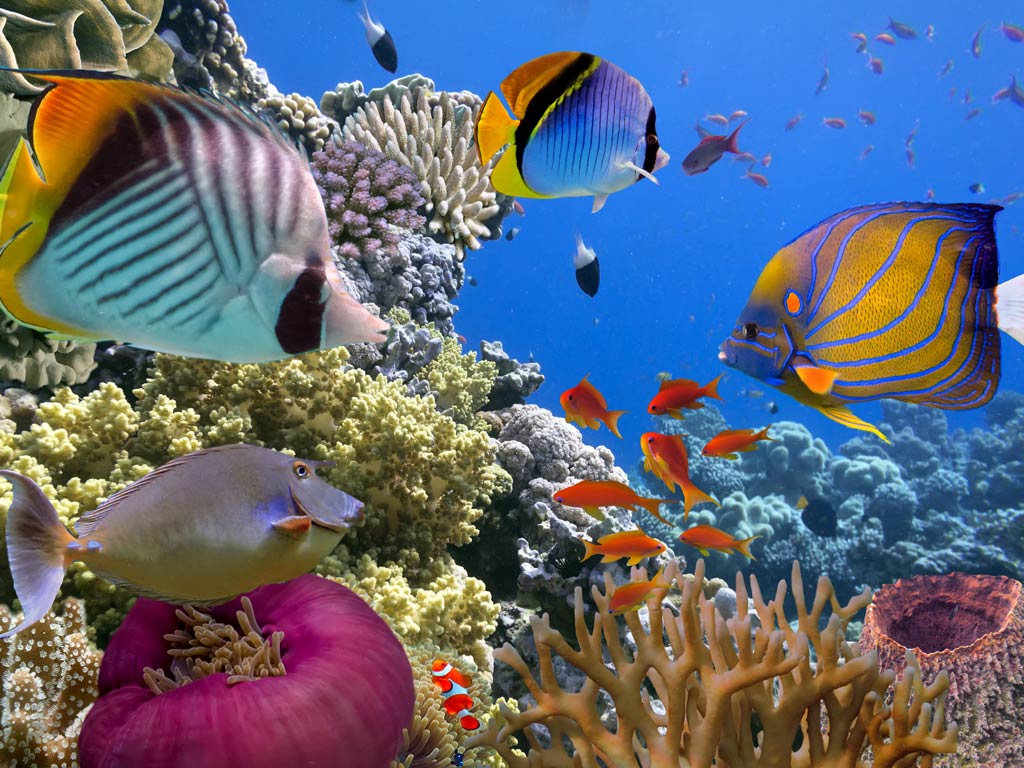
When it comes to the total fish population, these numbers are far less precise. Due to various environmental changes, fluctuations in reproduction, natural predators, and human impact (including fishing), it’s hard to tell how many fish there are. What we can do, however, is give you an estimate. It’s thought that there are around 3.5 trillion fish in the world. That’s roughly 450 fish per person!
22. How long can fish live?
The answer to this question varies tremendously depending on the species. Killifish, for example, are considered the fish with the shortest lifespan – a maximum of 9 months. Goldfish, meanwhile, live 10 years on average. But Tish, the world’s oldest Goldfish, lived 43 years!
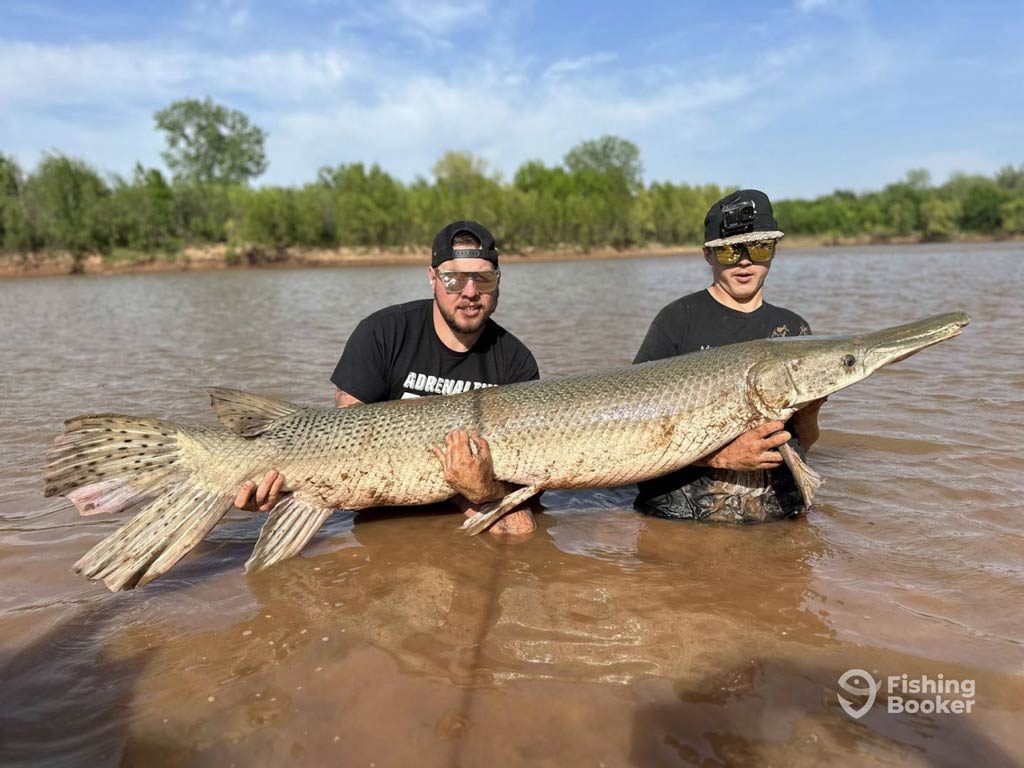
Some fish, such as Alligator Gar, are called “living fossils” because they’ve been around for a long period of time, and they can also live more than 90 years. But the absolute record-holders are Greenland Sharks. Their average lifespan is around 300 years!
23. Do fish sleep?
If you remember what we said about Parrotfish, then you’re familiar with the fact that fish have “sleeping” habits. However, fish do not sleep. Well, at least not in the way we humans do.
Fish don’t fall asleep with their eyes closed. Instead, they rest by slowing down and preserving energy by floating or curling up in safe and cozy places. And this almost motionless state can be interpreted as restorative in the same way that sleep is for people.
24. Do fish pee?
Absolutely! But here’s the real fun fact – saltwater and freshwater fish pee for different reasons. Saltwater fish live in a salt-saturated environment, so they have to pee to get rid of the excess salt. They do this through special gills that help them regulate their hydration levels.
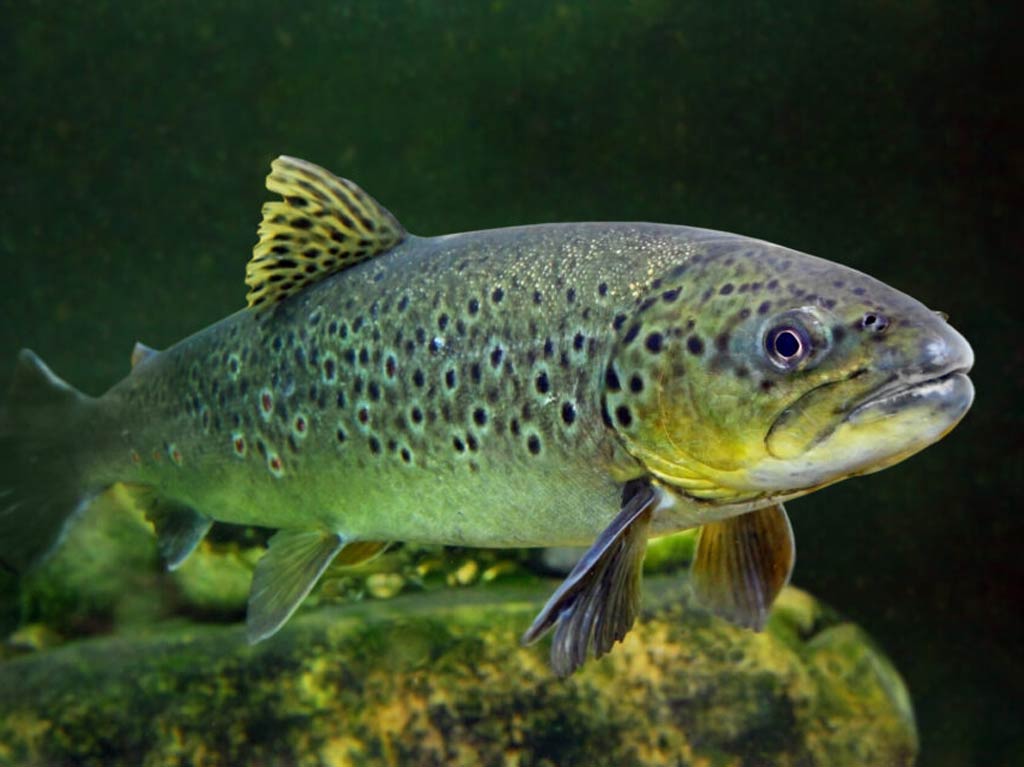
Freshwater fish have the opposite problem. Their bodies are saltier than their surroundings. Therefore, they pee to get rid of the excess water. In fact, to keep themselves from bursting, they almost constantly pee!
But there’s more. Fish also use their urine to communicate with other fish by sending chemical signals and fertilize algae and corals. Who knew fish pee was so interesting?
25. Can fish change gender?
As with many of our fish facts, the answer is – yes. And it’s more common and funnier than you probably think. More than 500 different species have these gender-bending abilities, including Groupers, Clownfish, and Wrasse. But why do they do this?
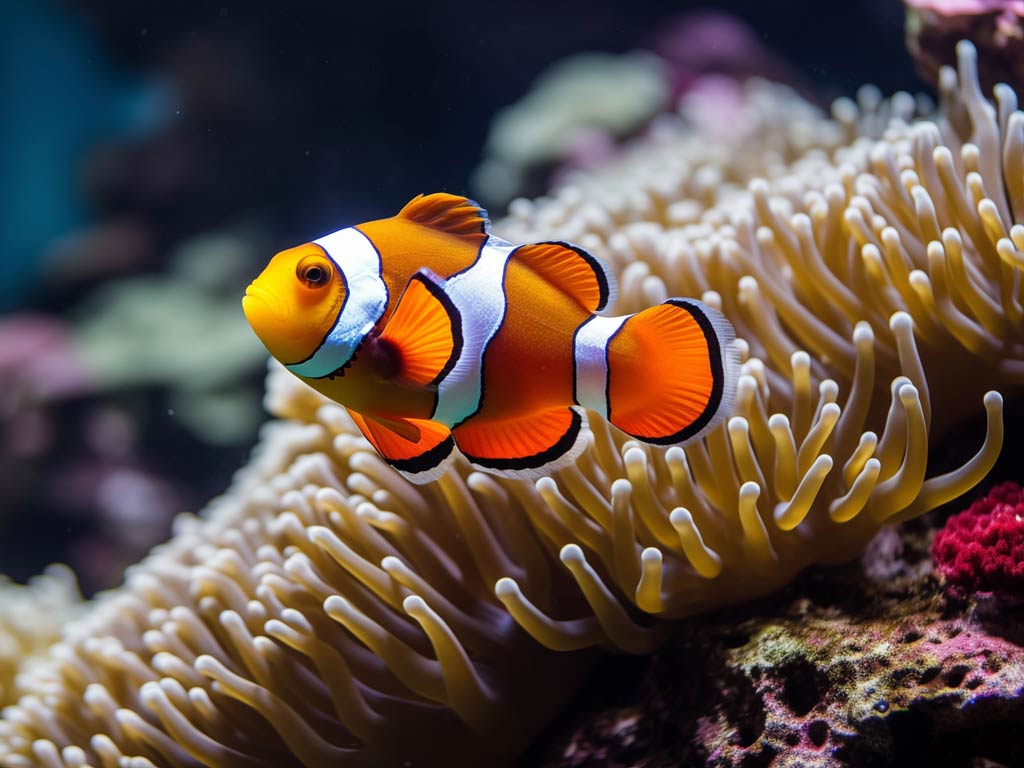
The main reason is reproduction, but there are also cases of changes due to the loss of the dominant male or female in the group. Most species swap gender once, but there are fish like Gobbies that can switch roles multiple times!
Fish Records: Biggest, Smallest, Fastest, and Oldest
26. What is the smallest fish?
There’s a debate over the smallest fish in the world. Apparently, the disagreements revolve around the definition of “small.” But we’re putting this tiniest crown on Indonesian Carp (Paedocypris progenetica). These miniature royals grow to a maximum size of 0.39 inches, which is about the length of a grain of rice. They’re the smallest fully developed fish and, as such, deserve to wear this title.
27. What is the largest fish?
The largest living fish in the world is the Whale Shark. Even though they’re Sharks, they’re completely harmless to humans. These gentle giants can grow 40 feet on average and weigh up to 20 tons. That’s a fish as big as a bus!
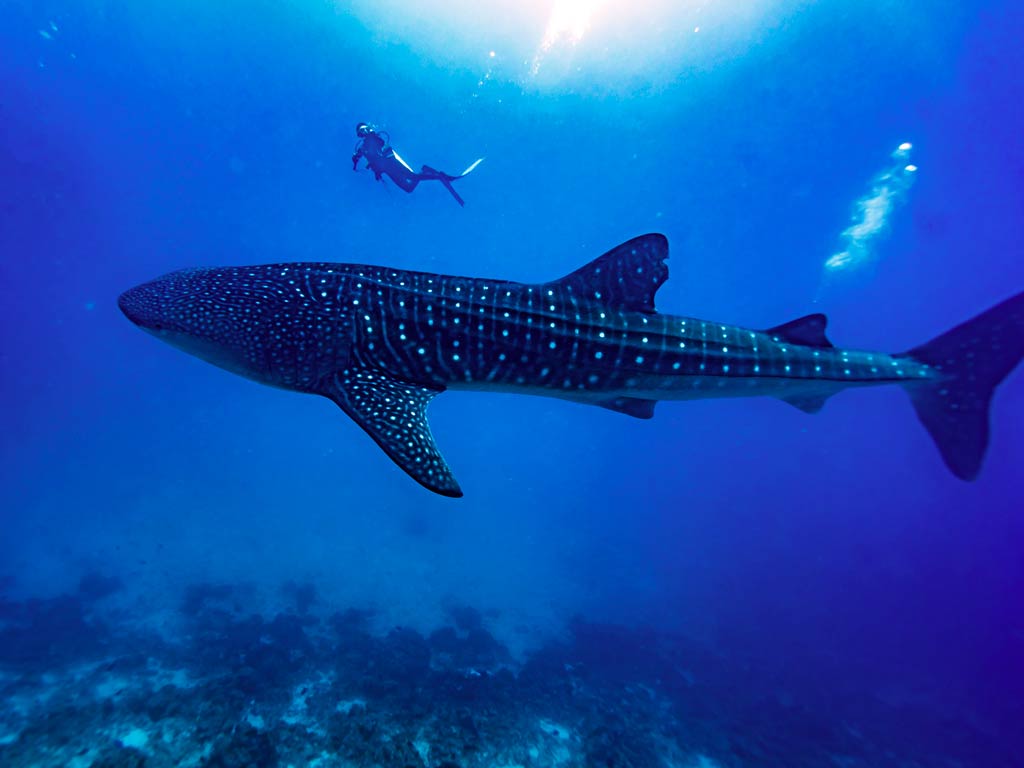
And the largest accurately recorded Whale Shark was even more impressive. That leviathan was found in the Indian Ocean in 2001 and measured 61.8 feet long! A less fun fish fact is that these majestic creatures are listed as endangered.
28. What is the fastest fish?
Let’s get straight to the point – Sailfish are widely regarded as the fastest fish in the world. For a long time, Black Marlin was perceived as the winner of this category, but recent findings suggest it’s actually Sailfish. This topic, however, remains a never-ending source of debate among anglers and marine biologists alike. We’ve even dedicated an entire article to the most famous speedsters in the underwater world!
More Facts about Fish? Ask or Tell Us!
The list of incredible fish facts could go on forever. These creatures are quirky, mysterious, smart, and scary, and everything in between! The crazy thing is, we haven’t even scratched the surface when it comes to discovering all of them. Who knows what else we’ll come across!
We’ve shared our top picks with you for the time being, but we’re curious to see if you have more questions or facts of your own to share with us. So, go ahead, hit that button below, and join the fish facts conversation.
What’s your favorite fish fact from the list? Do you have more interesting fish-related questions? Or perhaps fun or weird facts about fish? Share your thoughts with us in the comment section!
The post 28 Fish Facts You Won’t Believe appeared first on FishingBooker Blog.
https://ift.tt/D7xHndU
0 Comments
Enregistrer un commentaire