Cobia is one of Virginia’s most exciting, powerhouse species of the summer season. Known for their impressive size, tough fights, and curious nature, these fish make their peak appearance in VA’s coastal waters as the temperatures rise.
Whether you’re hoping to land your first or looking to improve your Cobia fishing skills, understanding all the key factors to the Cobia Season in Virginia can make all the difference. Stick around to learn all the tips and tricks as we dive into the regulations and what you need to know!
Virginia Cobia Season Regulations
As for any species, being aware of the regulations is the most important step when it comes to planning and participating in your targeted fishing run. You should also be confident in identifying your catch, especially if you have limited visibility of them while fishing.

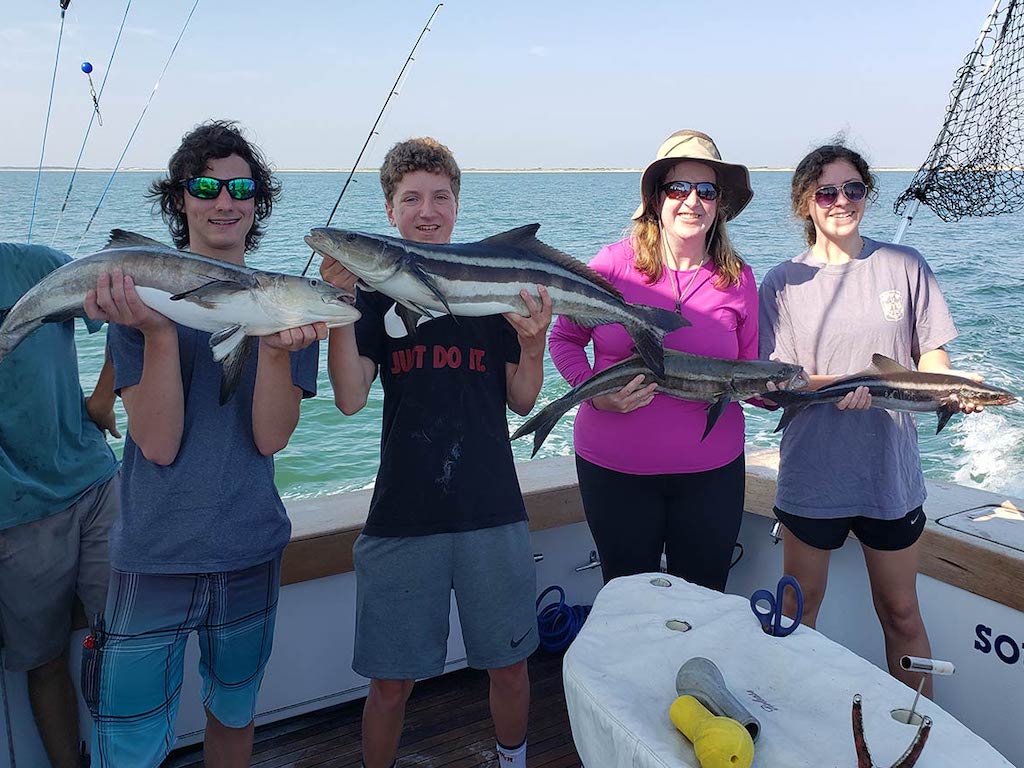
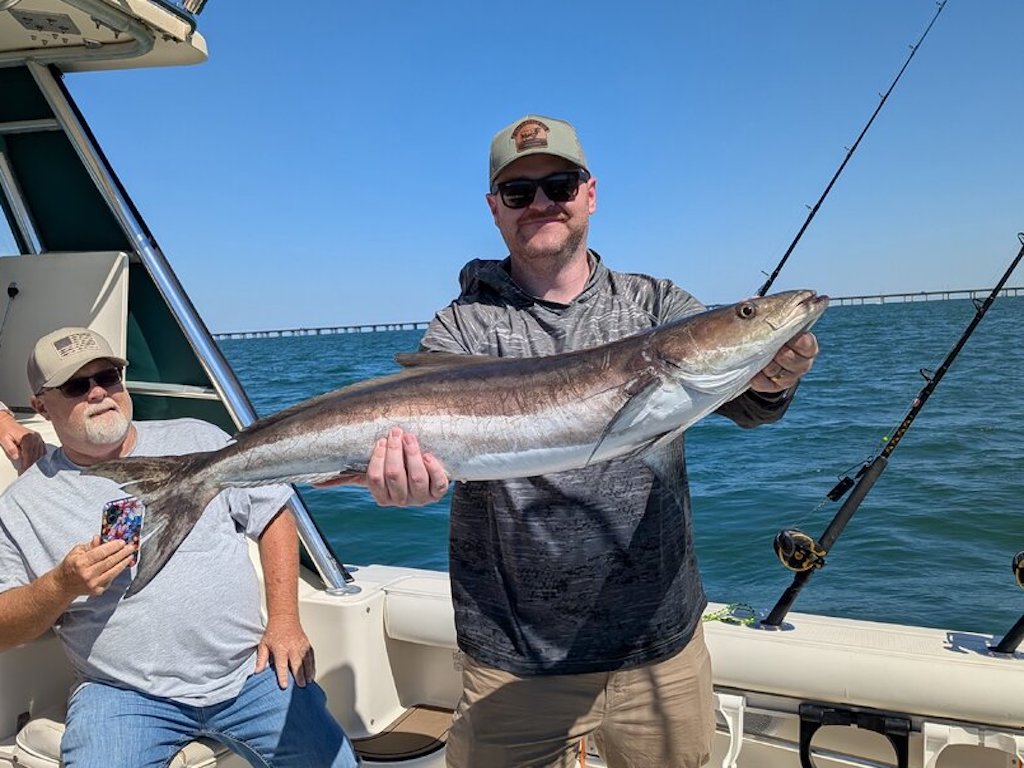
Cobia have long, dark bodies and broad heads that often cause them to be mistaken for small sharks. While a closer look reveals a series of short dorsal spines and a more streamlined profile.
In Virginia, Cobia season is open from June 15 to September 15, a short 3-month window. You can keep one fish per person, per day, or up to two per vessel per day. The minimum size required for harvesting is 43 inches and, while there isn’t a maximum limit, you can only keep one that’s over 50 inches each day. You should also know that gaffing for Cobia is banned, and you’ll need a Virginia saltwater fishing license, unless you’re heading out with a licensed charter.
Peak Season for Cobia Fishing in Virginia
Cobia begin arriving in Virginia’s coastal waters in late spring, but the peak fishing season typically runs from June through August – perfect timing for the harvesting period! During these months, water temperatures warm and bait fish become abundant, drawing in hungry Cobia.
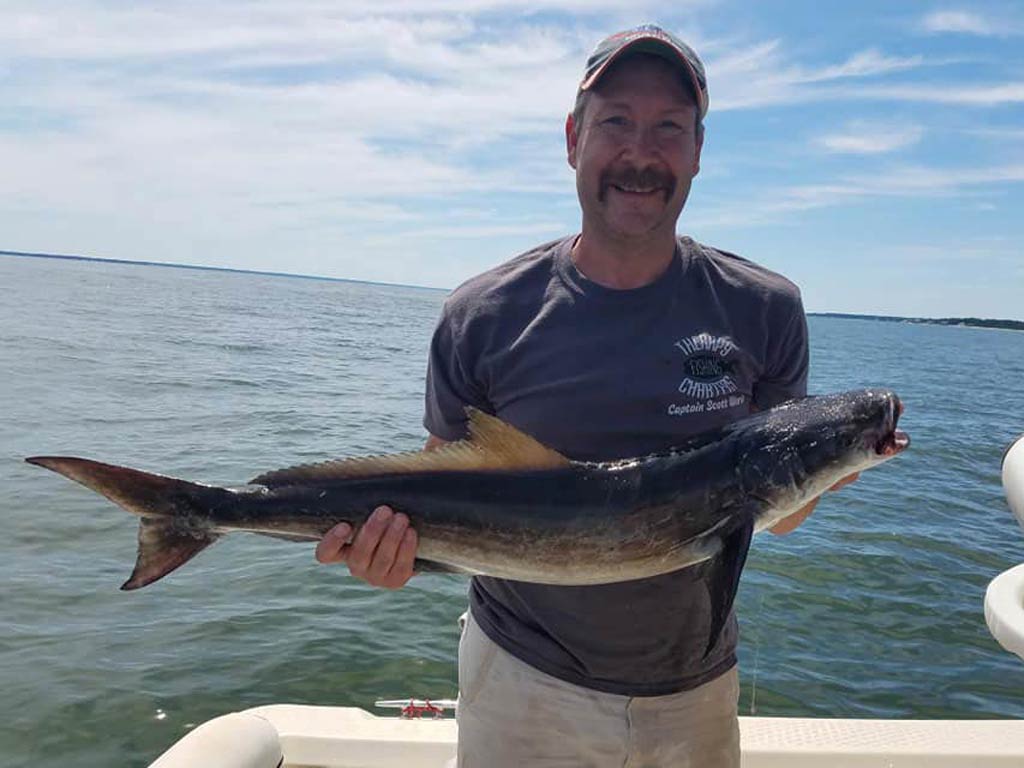
Calm weather can create excellent sight-fishing conditions, allowing you to spot Cobia cruising along the surface around buoys, channel markers, wrecks, structure, and even out in the open.
Early mornings are generally favored since they often provide calmer seas and better visibility for locating them. While mornings are best, you can catch Cobia later in the day when conditions line up and fish remain active.
Where to Catch Cobia During the Virginia Season
Now let’s talk about where to find some of these beasts. Knowing when to head out there is a big factor. But if you’re not sure where to go, it can make for a long day…
I already mentioned that key Cobia habitats include buoys, channel markers, wrecks, reefs, and other offshore structure. However, these fish aren’t limited to offshore waters. During the peak summer months, you can sometimes find them throughout the lower Chesapeake Bay and cruising nearshore open water. They tend to follow schools of bait fish, patrolling shoals, flats, and channel edges.

As they’re naturally curious fish, they often swim alongside rays, sea turtles, floating debris, and even slow-moving boats. You can therefore encounter them almost anywhere that offers food, structure, or something to follow along! When it comes to hotspots, the Chesapeake Bay Bridge-Tunnel is one of Virginia’s most famous Cobia fisheries. The big structure provides shade, current breaks, and plenty of forage, making it a seasonal summer hotspot for Cobia.
The mouth of the bay, where fish move to and from the Atlantic Ocean, is another great region to fish. Target the waters around Cape Charles, Cape Henry, Fishermans Island, and the surrounding shoals, particularly when bait is present. For some additional key fishing areas, check out York Spit and Latimer Shoal, as well as the open waters of the lower Bay.
For those venturing farther offshore, you can find nice Cobia at the nearshore wrecks, artificial reefs, and tower structures, such as the Chesapeake Light Tower along Virginia Beach‘s coastline. These hotspots produce excellent action throughout the Virginia Cobia season, attracting bait fish and marine life, and creating prime feeding opportunities.
Gear, Bait, and Techniques for VA Cobia Season
Cobia are powerful fish, often topping 50 pounds in Virginia. That means you’ll want a medium-heavy to heavy setup. Thirty pounds of braided line paired with a fluorocarbon leader of 50 pounds or more will provide the strength needed to handle their hard runs and stubborn fights. When rigging natural baits, 5/0 hooks and larger will match the size of the offerings and the fish themselves. Plus, Cobia have large and broad mouths, so you’ll want a good hookset.
When it comes to bait, live eels are the top choice for Virginia Cobia and have earned a reputation for consistently drawing strikes. Other productive offerings include menhaden, spot, croaker, pilchards, and pinfish. Cobia also will readily strike a variety of artificial lures, such as bucktail jigs, soft plastics, swimbaits, twitch baits, topwater lures, and poppers.
One of the most popular techniques during Virginia’s Cobia season is sight fishing. As these fish hang towards the surface, you can easily spot and cast in front of them. When fishing around structure, you can also drift or slow-troll your bait to entice them. Sometimes, you can drop your bait a bit deeper and they’ll bite if they’re close
No matter your approach, a mix of patience, accurate presentation, skill, and strength is key to turning a Cobia sighting into a successful hookup.
Virginia Cobia Season Awaits You!
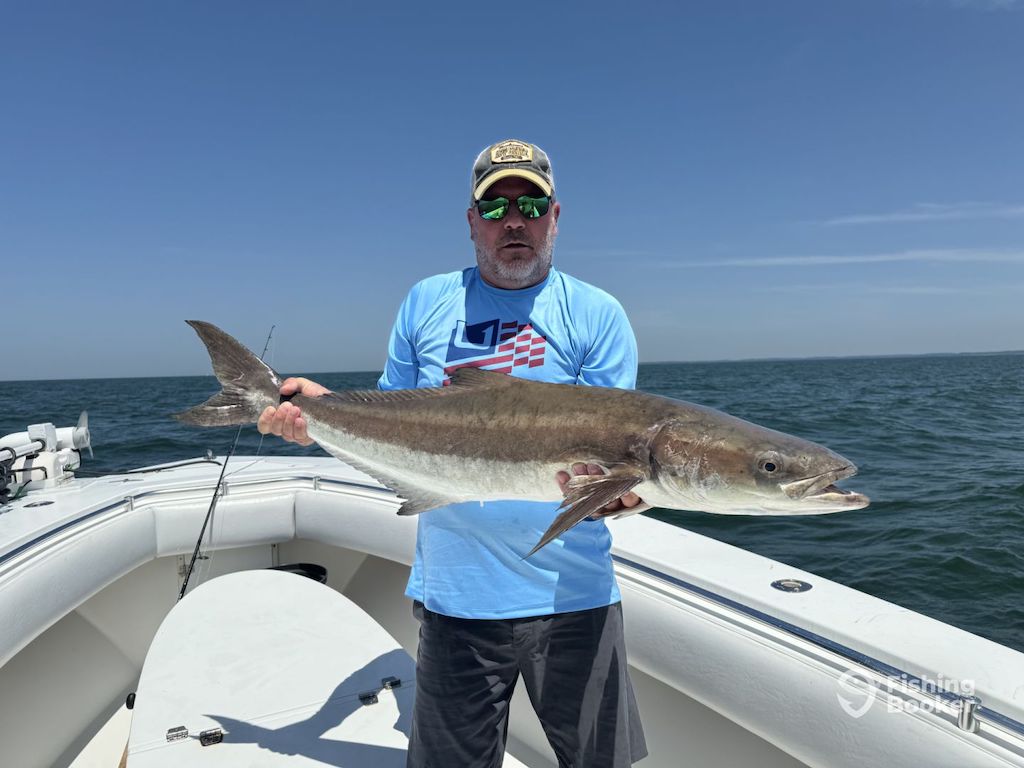
Few species generate as much anticipation among Virginia anglers and its visitors than the summer arrival of Cobia. Their annual migration brings thrilling sight-fishing opportunities, powerful battles, and the chance to land a true trophy fish. With your new knowledge, you’re already well-prepared to make the most of one of Virginia’s most celebrated summer targets.
Have you fished for Cobia in Virginia before? How was your experience like? Share your stories with us in the comments below!
The post Cobia Season in Virginia: An Angler’s Guide for 2026 appeared first on FishingBooker Blog.
https://ift.tt/yp7dHwj
0 Comments
Enregistrer un commentaire