Along the Gulf and southern Atlantic coasts, Red Snapper rule, especially during the summer. In a good spot, it seldom takes very long to catch a limit of Snapper, but people can fill the remainder of their day by catching so many other species.
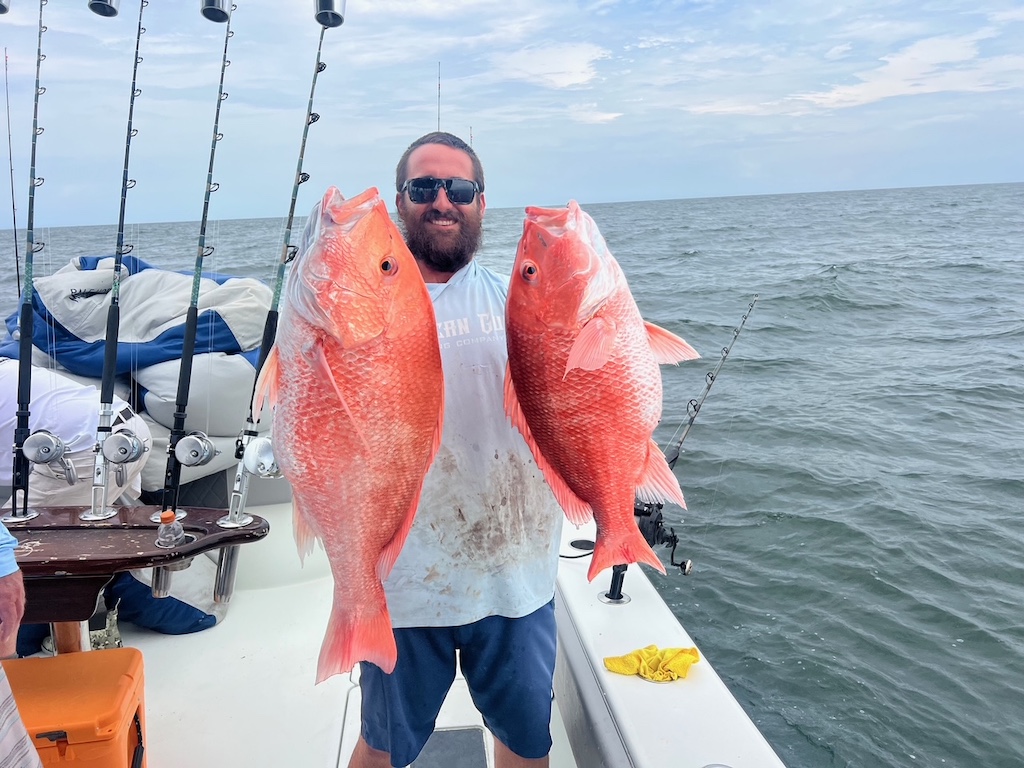
“We have had some unbelievable days of fishing offshore,” recalls Kevin Beach of the Mexican Gulf Fishing Company who runs out of Venice, Louisiana. “One day, we caught Blue Marlin, White Marlin, Yellowfin, Blackfin, and Skipjack Tuna, Wahoo, and Mahi. We came closer to shore and caught Red Snapper, Mangroves, Cobia, Jack Crevalle, Bluefish, Scamp, Gag Grouper, and some other species.”
Offshore Variety

Depending on the location in the Gulf or off the southern Atlantic coasts and what anglers do, they might land Cobia, Dolphin fish (aka Mahi Mahi), Gray Triggerfish, King or Spanish Mackerel, Pompano, several Shark species, Spadefish, Tripletail, Blackfin and Yellowfin Tuna, or Wahoo. Dropping a bait or jig to the bottom in deep water could produce Amberjack, Cubera Snapper, several Grouper or Grunt species, Hogfish, Queen Triggerfish, Tilefish, Sea Bass, and other fish.
“We catch a variety of fish,” reports James Grebe with All American Fishing Charters out of Sneads Ferry, NC. “We target Black Sea Bass, Grunt, Ringtail Porgy, Grouper, and different Snapper species. We also troll for King Mackerel and other species, possibly Cobia.”
Gulf Action
Off the Texas and Louisiana coasts, most people fish near oil rigs. But you can find natural reef formations holding fish. Many states, such as Alabama and Mississippi, have established numerous artificial reefs – everything from a few concrete blocks to entire ships.

“We still have a lot of rigs offshore in my part of Louisiana. But we’re seeing a lot fewer of them,” explains Joey Maciasz with Down the Bayou Charters in Fourchon, LA. “The rigs get a lot of pressure because people can see them for miles. We use the electronics to find hard structure on the bottom.”
Running out of Cocodrie, with Eric Pellegrin at the helm one day, we stopped at a petroleum platform to catch Red Snapper. We tossed some chum in the water to get them excited. We also caught Mangrove Snapper, Gag Grouper, Spadefish, Triggerfish, and several Shark species.
Anglers bottom-bouncing artificial or natural baits here can also catch many other Snapper species. These include Dog, Mutton, and Lane – also called Candy – Snappers. Typically found with Red Snapper, Vermilion Snapper (aka “Beeliners”) look very similar to small Reds, but average less than 1 pound. These beauties can provide incredible action on light tackle!
Fooling Finicky Mangroves
Probably second in popularity only to Red Snappers, Mangrove – or Grey – Snappers typically weigh less than 10 pounds. But they can exceed 18 pounds. Many people consider Mangroves the smartest and most challenging members of the Snapper family to catch! Notorious bait stealers, they’ll eat almost anything that swims. But they cunningly avoid hooks while slurping bait.
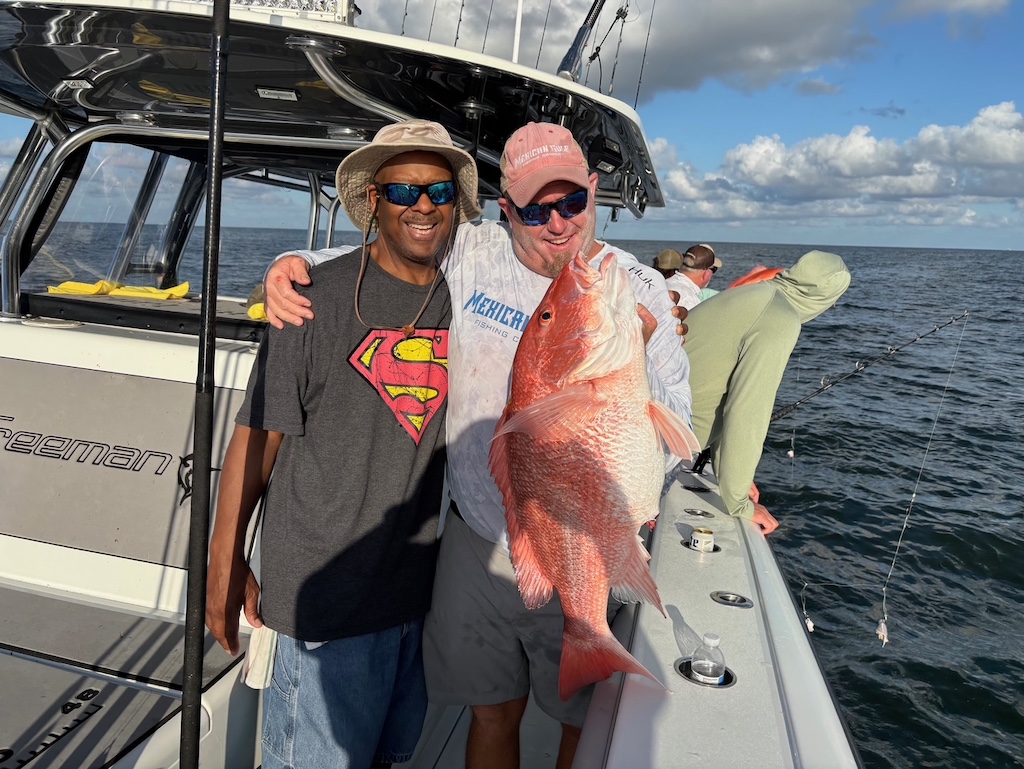
Mangroves might hit flies, soft plastics, spoons, and other artificials, but prefer live baits. They love croakers and menhaden – locally called pogies. These fish lurk in the thickest cover. To pull them from their lairs, tempt them with juicy menhaden morsels or other chum.
“The Snapper fishing off the Mississippi coast is great,” remarks Joseph Allen with Side Bet Sport Fishing Charters in Biloxi, Mississippi. “If we have live bait, we’ll go catching Mangrove Snapper after we catch our Red Snapper limit. When we don’t have live bait, we hide the hook in pogies and we can usually catch Mangroves like that. We scale down our tackle. We use 20 lb test leaders and a 3/0 circle hook for Mangroves backed by strong main line.”
Pulling the Trigger
Persnickety Triggerfish regularly annoy Snapper anglers by stealing their bait. But they can provide hours of fun on light tackle and taste great. With their small mouths and voracious appetites, toothy Triggerfish can easily pick a hook clean long before it reaches the bottom, leaving Snapper snatchers fishing on credit.
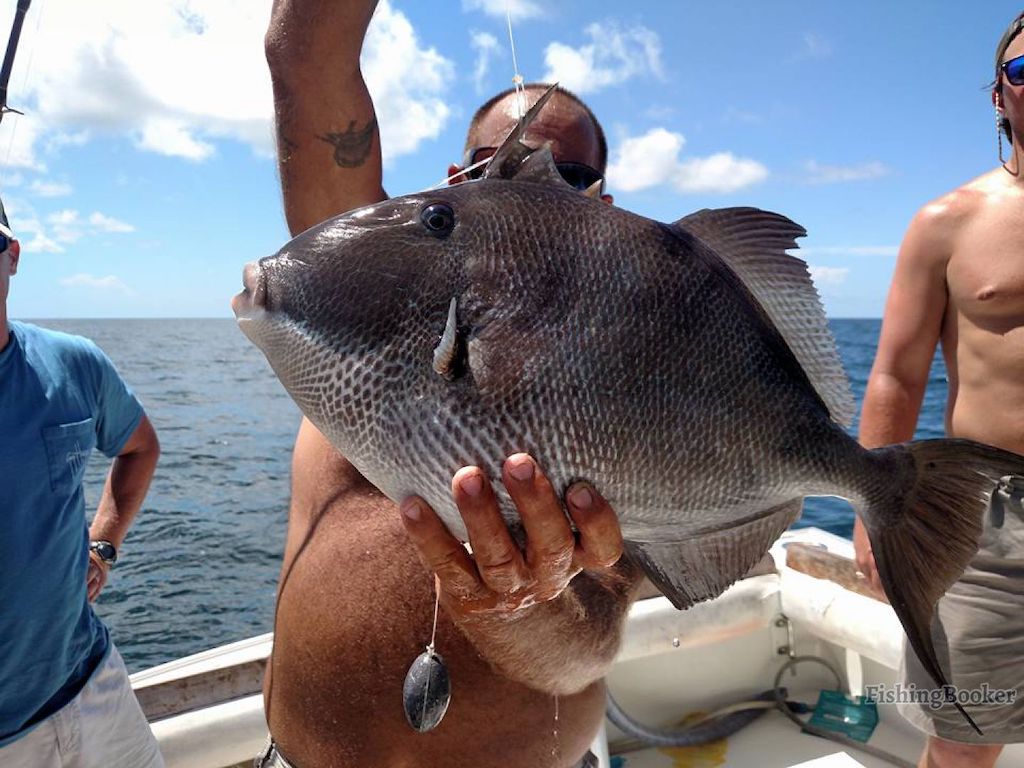
“For catching Triggerfish, use a small weight, perhaps 2–3 ounces, with a small hook,” Pellegrin advises. “Put on a small chunk of bluefish, hardtail, or other bait fish with a hard skin that won’t come off easily. Drop it down for only about 5 seconds. Triggerfish often suspend in the water and frequently follow baits up to the surface.”
Getting the Drift of It
While dropping baits to the bottom, set a drift line. Toss some chum in the water and place rods in holders. Engage the reel clickers to make noise when something pulls the line. With no added weight, put a live bait or fish chunk in the chum slick. Depending on the location and depth, a struggling live bait might attract King Mackerel, Cobia, and other predators. If you’re lucky, perhaps even a Wahoo, Tuna, Sailfish, or Marlin might take the bait! Drift lines also tend to produce bigger Snapper that rise to the chum and hang higher in the water column.
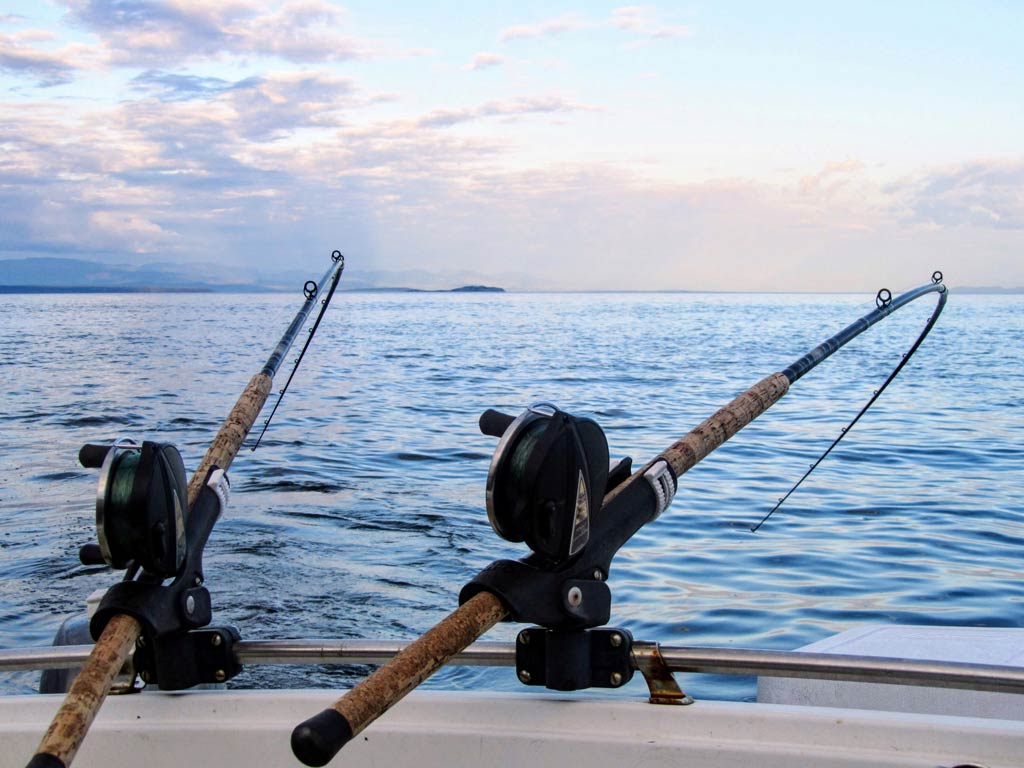
“Early in the Snapper season, I go looking for Mangrove Snapper or Cobia after we catch our Red Snapper limit,” Beach says. “We start chumming to see what comes up. Even when targeting Cobia or Mangroves, we catch quality Red Snapper. For Cobia, we use bigger baits, so we’ll also catch bigger Red Snapper. I always keep at least one jig ready or have a live bait ready to pitch to a Cobia.”
Curious Cobia
Curious fish, Cobia might pop up anywhere at any time. Among the most vicious and tasty fish in the Gulf, Cobia eat almost anything, including hardhead catfish! But they especially love eels.
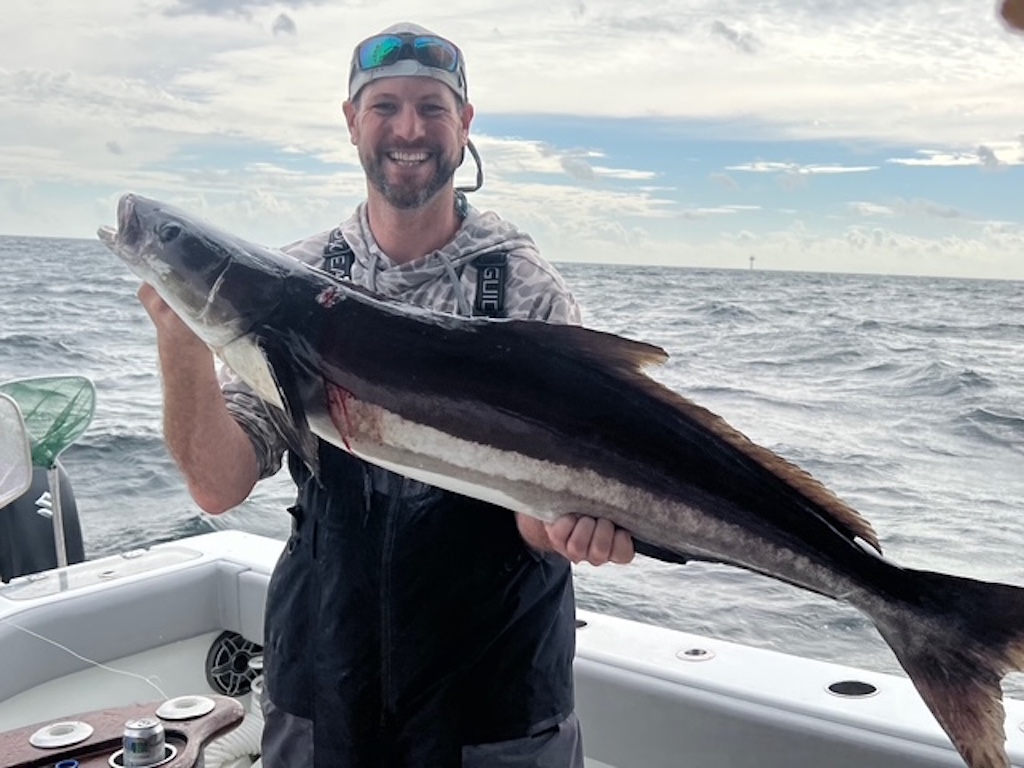
“When we chum fish up to the surface, fish get in a feeding frenzy,” comments Kurt Tillman with Captain Kurt Charters on Dauphin Island, Alabama. “It’s always a good idea to keep a line ready to cast a piece of bait if we see Cobia come up to the boat to check out what’s going on.”
Sometimes Cobia turn finicky and won’t hit anything. Tease it into biting. Pitch a jig sweetened with a chartreuse or white soft-plastic curly-tailed trailer that mimics an eel. Throw it about 8 feet in front of a Cobia on the surface. When the fish comes toward it, jerk the bait away from the Cobia.
“Often, a Cobia comes charging at a bait and the angler thinks the Cobia will nail it, but it will stop and just nose it,” Pellegrin explains. “When it comes to sniff the bait, jerk it away from it. Keep teasing the fish until it can’t stand it any longer and comes charging in looking for blood. When it gets so fired upm nobody can jerk fast enough to escape it!”
Balloons and Kites
Some people dangle live baits from balloons to attract King Mackerel and other fish. The balloon holds the bait near the surface and serves as a strike indicator. Ravenous sea wolves, toothy King Mackerel roam the Gulf and Atlantic looking to devour anything they can catch.

“We set out a small hardtail on a drift line,” Allen says. “We rig it with a wire line and a tail hook and suspend it about 6 feet under a balloon for King Mackerel.”
Off Florida, many anglers use kites to get their baits away from the boat while bottom fishing. The kite holds the bait fish near the surface. Big predators spot the struggling bait and attack. With this method, you might catch Yellowtail Snapper, Sailfish, King Mackerel, Grouper, and other fish.
Shrimp Boat Fun
On our Louisiana trip, Captain Pellegrin next headed to deeper water where we caught Amberjack and more Grouper species. Then, we pulled up behind an anchored Shrimp boat. Shrimpers in large offshore craft traditionally trawl all night and anchor at dawn. Before going to sleep, they toss anything they can’t sell over the side. An abundance of free protein suddenly hitting the water puts everything into a feeding frenzy!
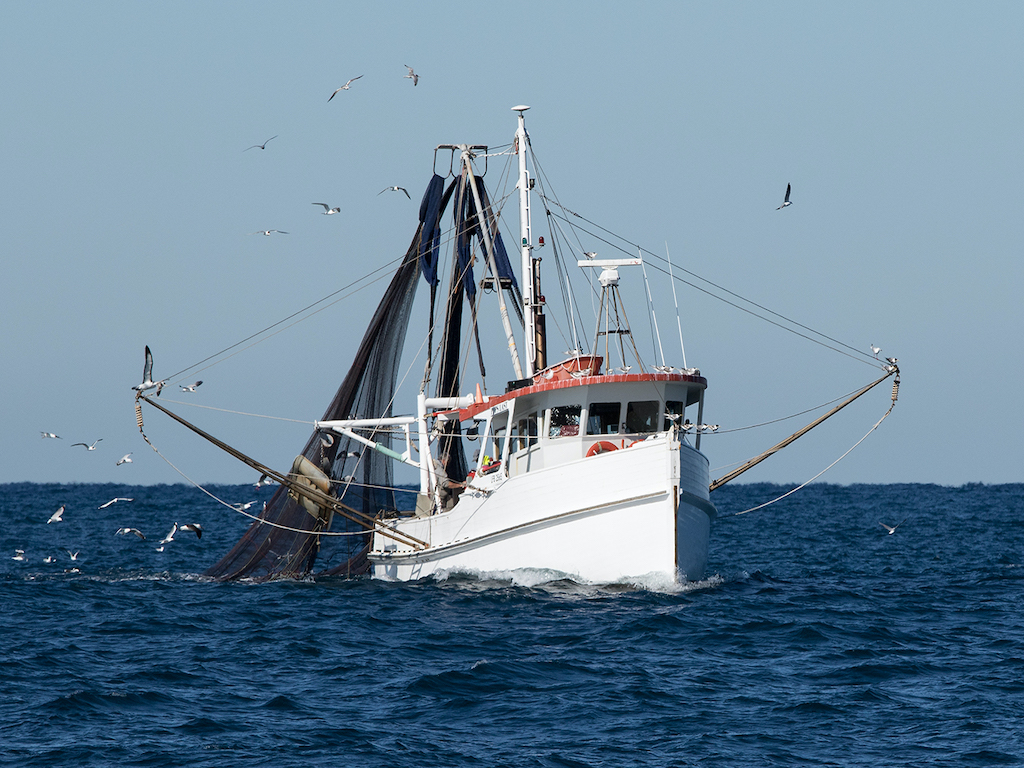
Big fish hang around anchored Shrimp boats waiting for their next handout. We cut up some bait fish and tossed it into the water for chum. Then, the captain slowly moved our boat away from the Shrimp boat. As long as we tossed chum into the water, fish followed us.
“We don’t want to feed the fish with our chum,” Pellegrin advises. “We only want to get them excited. It doesn’t take a lot of bait to keep Tuna on the surface if there’s nothing else for them to eat. Now, the real fun begins!”
The water erupted as Blackfin Tuna, Cobia, various Sharks, and other frenzied species slashed at the chum. At point-blank range, we targeted specific fish with what Pellegrin calls “cane-poling.” Using less than 10 feet of line, we dangled baits over the surface until we spotted the fish we wanted to catch. Then, we dropped succulent morsels in front of it.
Trolling for Whoppers
Next, we headed farther offshore to catch Yellowfin Tuna. When running from place to place, we made good use of our time by trolling. You can do so too, by setting up a few trolling rods with various natural or artificial baits. It might take longer to go from spot to spot, but trolling covers vast territory and can produce the best bites of the day.

Spoons, feather jigs, squids, diving baits, or live baits attract Spanish and King Mackerel, Cobia, Mahi Mahi, and even large Snapper, Grouper, and Amberjack. Farther out in blue water, you might encounter Wahoo, Sailfish, Yellowfin or Blackfin Tuna, or even Blue or White Marlin.
“On trips farther offshore, we mainly target Mahi or do some high-speed trolling for Wahoo,” Grebe details. “Out that deep, we never know what we might catch. The catch also might include Sailfish or African Pompano, which is one of the best table fare out there.”
By trolling, anglers can discover a new secret honey hole. If you receive enough strikes in one area, you might forget about heading to the next spot altogether! After making several passes through the hot spot, stop to chum or drop drift lines to see what bites.
“After we catch our Snapper, we might go trolling for King Mackerel and other fish,” Tillman remarks. “Sometimes, we’ll run across something floating and it will have Mahi on it – or maybe a Tripletail.”
Flotsam Fun
Cobia, Mahi Mahi, and Tripletail commonly drift along with floating debris like a wooden plank or other flotsam. They also hang around channel buoys or cruise weed lines. Big fish don’t necessarily need large objects. Sometimes, Tripletail lurk under something as tiny as a drink can, water bottle, or wooden block. Sometimes, the big ones just sun themselves in open water!

Also called Blackfish, Tripletail can exceed 40 pounds, but most fall in the 5–15 lb range. While cruising around, run relatively close to floating objects. Wear polarized glasses and watch for any dark creatures lurking under a buoy or other object.
“Tripletails are kind of a ‘now you see them, now you don’t,’ fish,” quips Erik Rue of Calcasieu Charter Service in Lake Charles, Louisiana. “It’s sight fishing, almost like hunting. We must see them before we can catch them. If we find a grass patch with lots of bait and activity, that’s where Tripletail will be.”
After spotting a fish, approach from upwind. Use the wind or tide to drift toward them as silently as possible. Bait placement matters more than selection. Make the first cast count. Don’t throw right on top of the fish! Throw beyond the fish if possible and bring the bait past its nose. Tripletail hit various natural and artificial baits including flies, but mostly favor live shrimp, squid pieces, and crabs the best.
Sporty Powerhouses
For pure sport, such ordinary critters as Barracuda and Bonito, as well as False Albacore, can mangle tackle. Normally considered a source for fresh cut bait, blue runners (also called hardtails or hardtail jacks) might hit a variety of small artificial or natural temptations and provide incredible sport on light tackle. Sometimes, anglers spot Tarpon rolling on the surface, even close to shore!
Although anglers seldom specifically chase them, few fish fight harder than Jack Crevalle. Jacks savagely smash baits with shocking power and rip off line in lightning runs. Ranging from inshore to blue water, they ravage bait schools. When attacking bait fish, they hit almost anything, including topwater baits, spoons, and other lures.
Be Prepared – and the Sky’s the Limit!
To put more fish in the boat, it all comes down to staying prepared. Keep a variety of tackle and bait options handy to take advantage of any opportunities that arise. Most people only venture offshore on rare occasions, so maximize the experience by staying flexible and trying different things.

“I don’t build a whole trip around Snapper,” Maciasz says. “We start around 80 miles out of Fourchon for Tuna and Grouper, and work our way back fishing for Snapper. For Tuna, we fish with live bait and chum. We also troll. Often in the summer, the rip will be close to where we catch Snappers. We troll all different kinds of lures – some with ballyhoos and some with just small-skirted baits. With that, we catch Mahi and other fish.”
You never know what might yank the other end of your line. The right “bonus” fish can turn an otherwise humdrum day into the trip of a lifetime. Just be sure to check seasons, daily limits, and other regulations before heading out. They change by species and state, so always check the regulations before keeping anything!
Have you ever been offshore fishing? What did you catch? Any tips for maximizing your chances you’d like to share? Let us know in the comments below!
The post Maximize Offshore Fishing Action: Tips to Catch Different Fish appeared first on FishingBooker Blog.
https://ift.tt/BSYv6bQ
0 Comments
Enregistrer un commentaire