If you’re ready to take on a toothy predator with a mean attitude, put Pickerel in your crosshairs ASAP.
Pickerel may be smaller than their cousins like Northern Pike and Muskellunge, but like all fish in the Esox family, they pack a pair of jaws lined with razor-sharp teeth — and have a vicious attitude to match. These ambush predators are experts at hiding in weedbeds and next to deadfall. Here, they wait to pounce on just about anything that swims by. They’ve been known to grab lures over half the length of their own torpedo-shaped bodies. In lakes where Pickerel are prevalent, it’s not uncommon to catch Bluegills, Crappie, and Bass that are missing half a tail or have bite marks taken out of their backs.
Pickerel Particulars
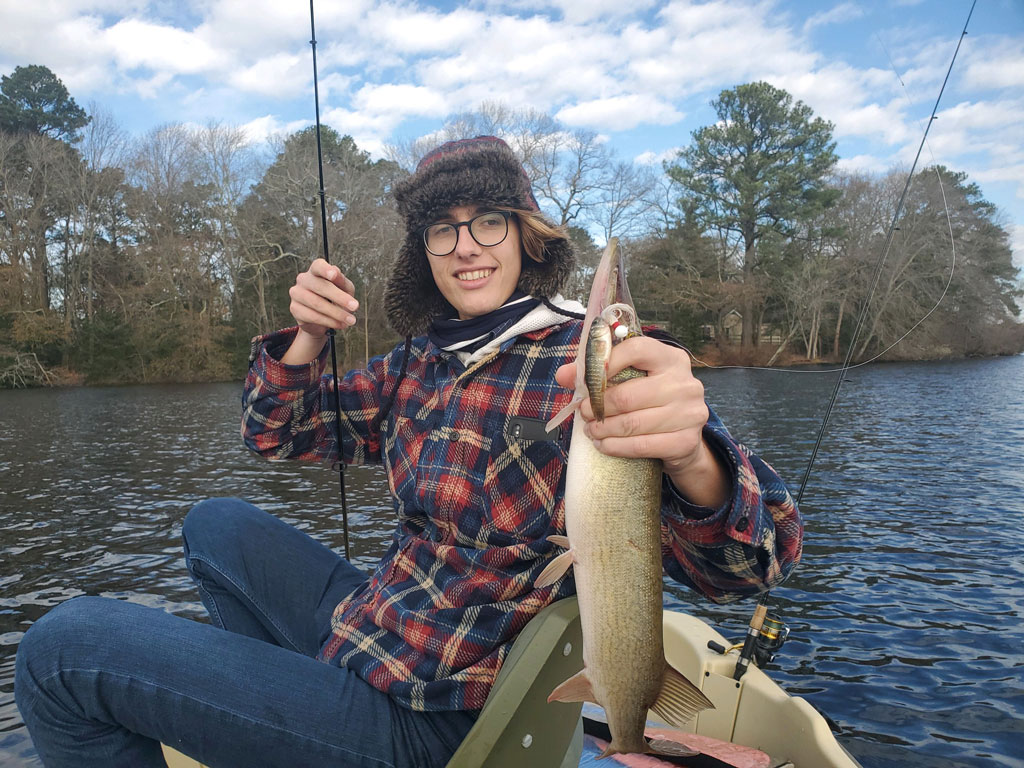
There are several types of Pickerel living in both fresh and brackish waterways. However, the largest, most widespread, and most sought after by anglers is the Chain Pickerel. These fish have a chain-like pattern running down their greenish flanks, which helps them blend in, particularly in weedy environments. They can live eight to ten years and generally grow to around 24 inches, although trophies up to 28 inches are occasionally caught. Their average weight is three to four pounds, with real lunkers pushing over six or seven pounds. The world record, caught in Georgia, weighed a whopping nine pounds, six ounces and measured an impressive 30 inches.
Pickerel feed mostly on other finfish, but when a large Pickerel comes across a small amphibian, reptile, or even a mammal, it won’t hesitate to strike. And that strike is awesome. Pickerel lunge at their prey in a burst of speed too fast for the eye to follow, then clamp down with their long, toothy jaws. It usually doesn’t take long for their unfortunate victims to bleed out.
Note that if you’re fishing for dinner, Pickerel might not be your first choice. They’re very bony fish, and cleaning them is a challenge. As a result, most anglers who specifically target Pickerel practice catch and release.
Prime Time Pickerel
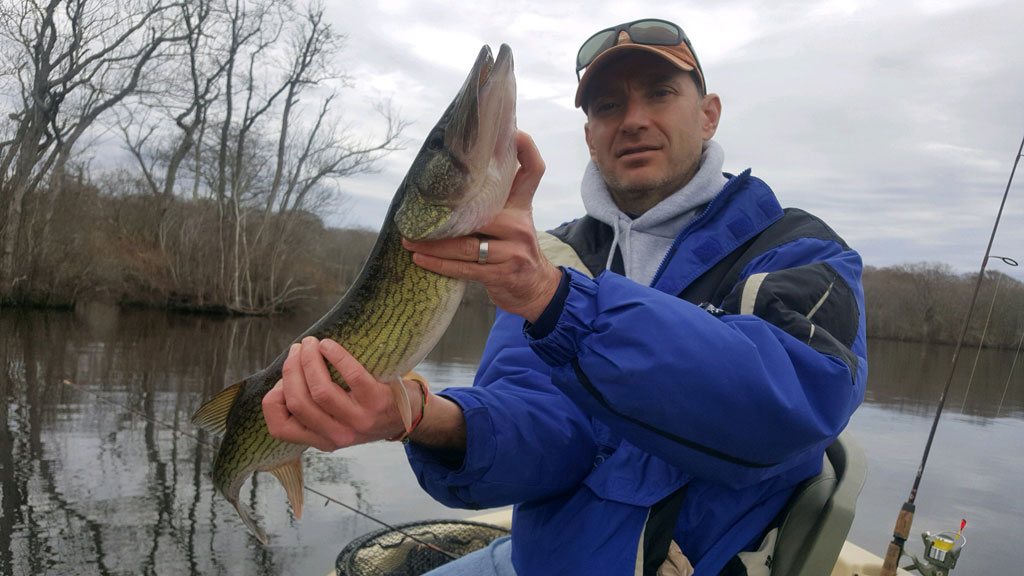
begin to bud. (Courtesy of Lenny Rudow)
You can catch Pickerel at any time of year, but one of the things that makes this species special is that it remains very active when most other fish are still shaking off the chill of winter. In fact, late winter and early spring are prime time. That’s because Pickerel spawn earlier than most other species, often when water temperatures are still in the mid-40s. They also start getting very aggressive before the spawning begins.
Depending on where you live, that means these fish can kick into high gear as early as February, and they’ll likely keep chomping hard through March and into April. In more northern climates, the best bite might not start until March. In that case, it’s likely to continue well into — or through — April. Of course, the exact timing for prime-time Pickerel depends on what the weather does in any given area during any given season. Compared to many other species anglers target in early spring, however, Pickerel are often the first to begin their pre-spawn feeding binge.
How to Fish for Pre-Spawn Pickerel
Fishing for Pickerel with minnows or small Bluegills is popular. It’s important that bait is alive and wiggling to be effective, because these fish rarely strike something that isn’t moving. In shallow areas of lakes and ponds, many anglers suspend baitfish under a bobber using a bare hook, shad dart, or marabou jig. This technique is particularly effective around weedbeds where letting the bait sink to the bottom would result in snagging weeds.
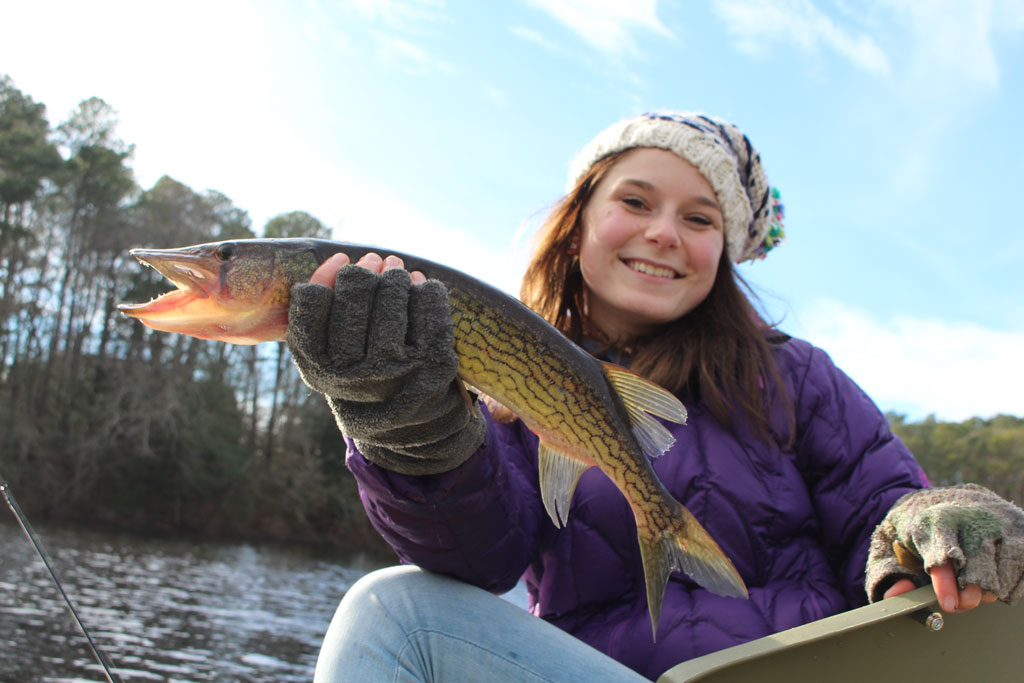
On windy days, anglers will often allow the bobber to drift naturally. In calm conditions, however, always give that bobber a slow retrieve. Remember, these fish are ambush predators that spend most of their time sitting in one spot and waiting for prey to pass by. When your bobber sits still in calm water, it simply isn’t covering enough ground to draw many strikes.
Also remember that Pickerel are extremely toothy, and those teeth are incredibly sharp. Obviously, you’ll never want their mouth anywhere near your fingers. But you’ll also need to account for those teeth when rigging up. Even when using a long-shank hook or jig and setting the hook quickly, Pickerel can bite through relatively light line with ease. Many anglers use a rugged 20-pound fluorocarbon leader when fishing for them, while others add a six-inch trace of wire leader to prevent bite-offs.
Pickerel will also hit a wide variety of lures that mimic baitfish, but a few options stand out. Pickerel respond well to flash. This makes inline spinners one of the most well-known lures for triggering strikes from this species. Underspin lures can also be effective and are often cast and retrieved while paired with a minnow or a soft-plastic trailer. Standard plastic paddletails work well, too, although if the plastic isn’t tooth-proof you can bet it will get shredded quickly. Diving plugs can also prove effective at times.
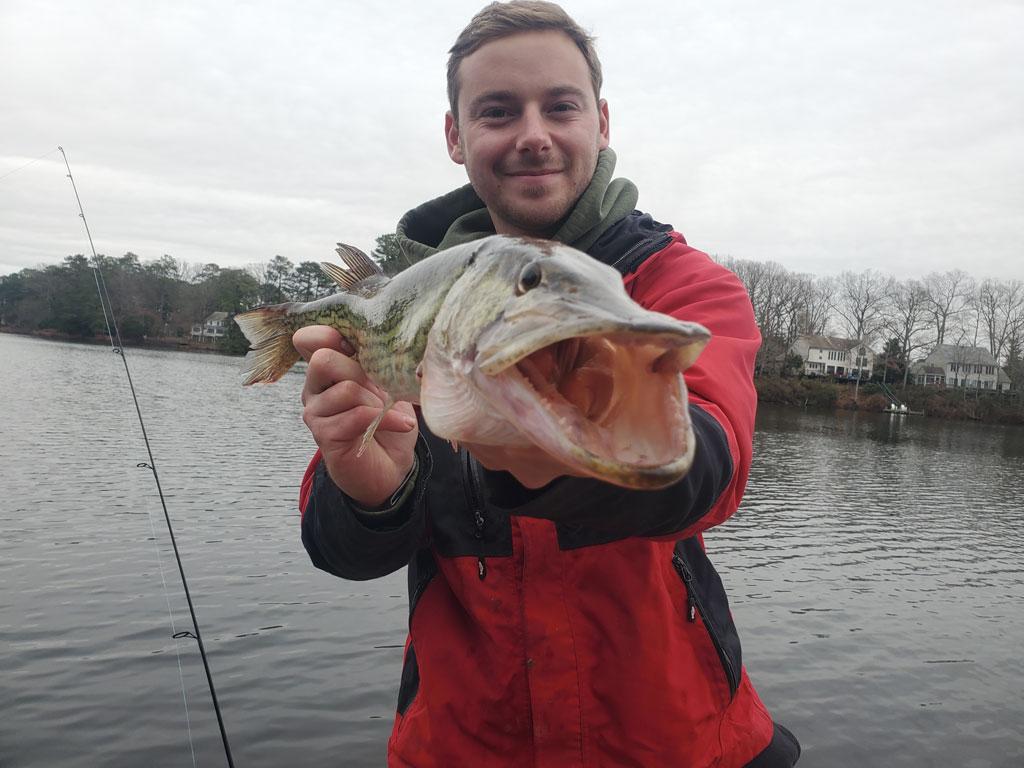
When fishing these lures from a boat or kayak around submerged weedbeds, a great tactic is slow trolling. This isn’t as easy as it sounds, and fishing with a pro who guides for Pickerel to learn the technique before trying it yourself can be a good move. The trick lies in matching your speed with the line length and lure weight so your offering tracks along just above the weeds.
The best way to find the right speed is to go slower and slower until you start snagging weeds constantly. Then, you can increase your speed just enough to stop snagging all the time. You’ll probably still snag weeds occasionally, but that’s actually a good thing. It means your lure is creeping along right where those Pickerel are hunting.
So where will those hunting areas be during prime-time Pickerel season? Look for places with moderate flow, weedbeds, and other structure the fish might hide around, such as stump fields, fallen trees, or docks. Areas where streams or creeks enter the main body of water are especially productive. The fish will often hold just outside where the creek or stream enters, sometimes even within casting distance. But in water where the current has slowed down — even a half- to quarter-knot of current is enough.
Find an area like this with weedbeds, docks, or fallen trees, and there’s a very good chance you’ll find plenty of Pickerel ready to pounce.
Do you have another spring favorite you’re planning to target soon? Is there a reason you love Pickerel fishing that we forgot to mention? Let us know in the comments below.
The post Prime Time Pickerel Fishing: An Expert’s Guide appeared first on FishingBooker Blog.
https://ift.tt/UznMHWP
0 Comments
Enregistrer un commentaire