John N. Felsher is an avid angler and has contributed to more than 160 different outdoor magazines with his texts and photos. Below, he shares his recent Tuna fishing adventure in Venice, Louisiana.
“Tuna Town” Offers Gateway to Great Fishing
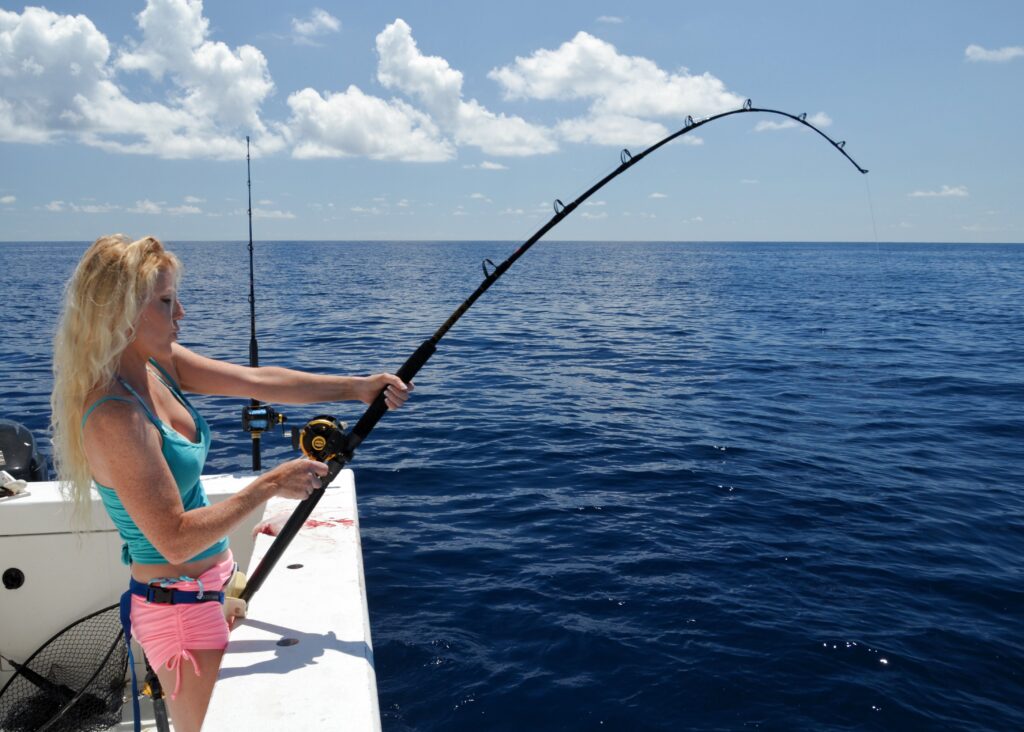
Hundreds of yards away across open water, pelicans and other birds swooped low over the surface or dived into the melee, pockmarked by explosions disrupting the water about 12 miles offshore.
On that frigid January 16, 2026, these “explosions” didn’t come from man-made sources. They came from 200-pound-class Yellowfin Tuna smashing menhaden, locally called pogies, on the surface. Birds attacked from above.
“We were running and gunning, looking for bait in 300 feet of water,” advised Eddie Brown, captain of the Down and Dirty, a 39ST Contender with triple 350-horsepower Honda outboards who runs for Fish Venice Charters and Lodging in Venice, Louisiana. “The way these fish feed on top, we’ll see explosions of white water in the distance with birds diving. We throw topwater poppers and start retrieving them fast across the surface.”
A Record Yellowfin
As the boat slowly approached the commotion, Jeff Tomaloff from Vero Beach, Florida, threw a topwater popper into the maelstrom. Soon after the lure landed, it disappeared in an eruption of water, foam, and spray.
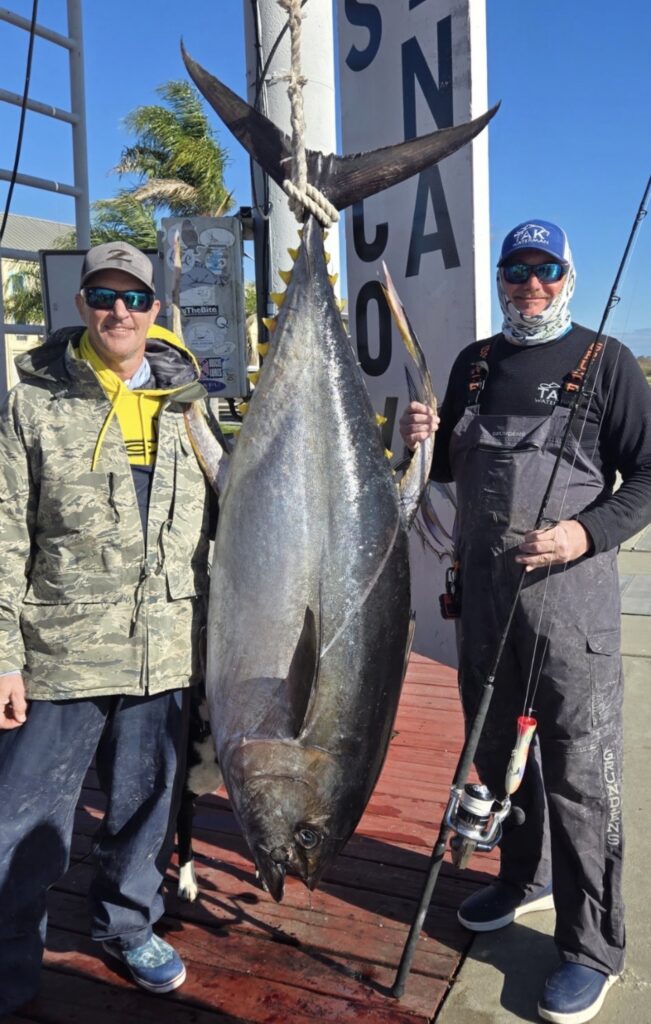
“It was straight chaos out there,” Tomaloff remarked. “When we roll up to where all the birds are diving in the water and seeing all these explosions from Tuna on the surface, it’s awesome. I’ve seen videos like that, but seeing it in person is just crazy. It doesn’t even look real. It was just unbelievable.”
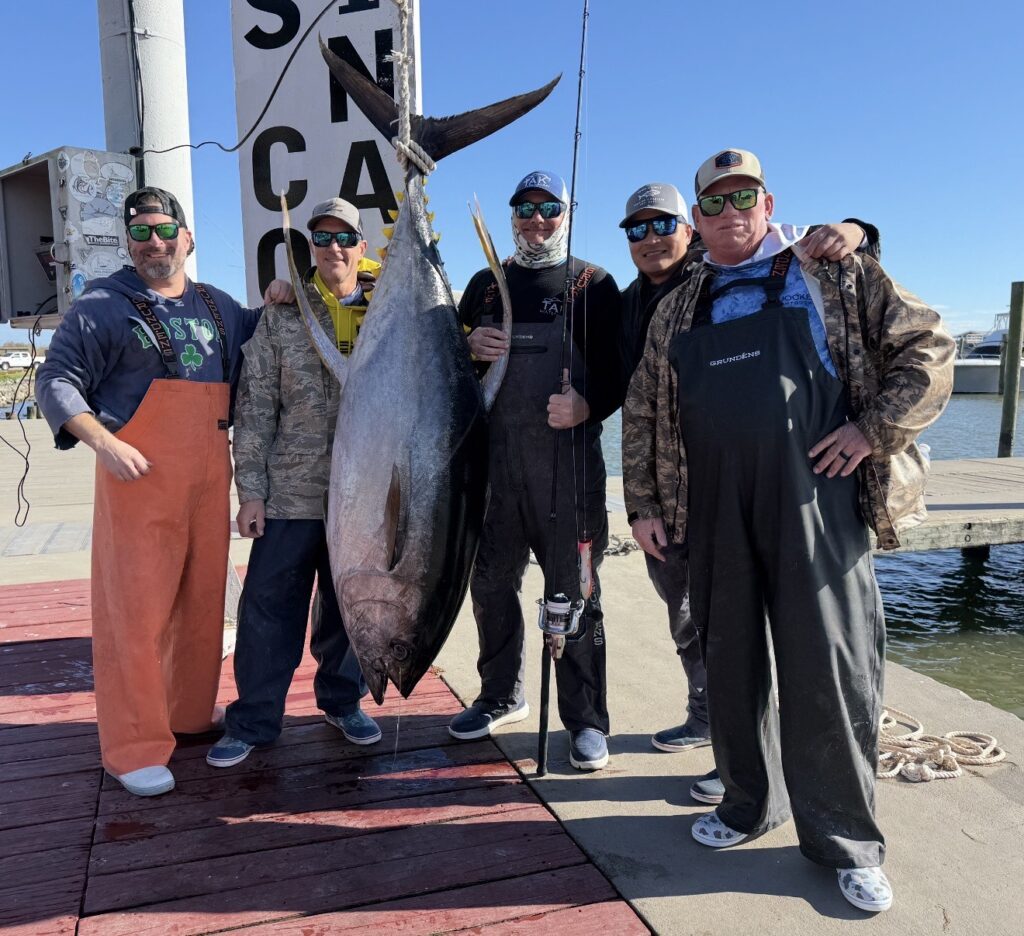
Finally, after fighting the leviathan for about 30 minutes, the retired Air Force master sergeant landed a pending Louisiana state-record Yellowfin Tuna weighing 256 pounds. The immense beast measured 71 inches long with a 54-inch girth.
Popping for Tuna
“I like to fish topwater baits,” Tomaloff confirmed. “I never thought I’d catch a fish that big, especially on top. I’ve caught 35- to 40-pound Jack Crevalle on topwaters, but nothing like this Tuna. When those monsters come out of the water, they are like Volkswagens. This was the trip of a lifetime! I can’t wait to go back to Venice.”
That record-setting day, Brown’s crew also caught a 165- and a 207-pounder. The next day, the crew caught a 110- and a 120-pound Yellowfin, all on topwater baits. Tomaloff’s giant Tuna beat the 251-pounder Elliot Sale caught in 2012.
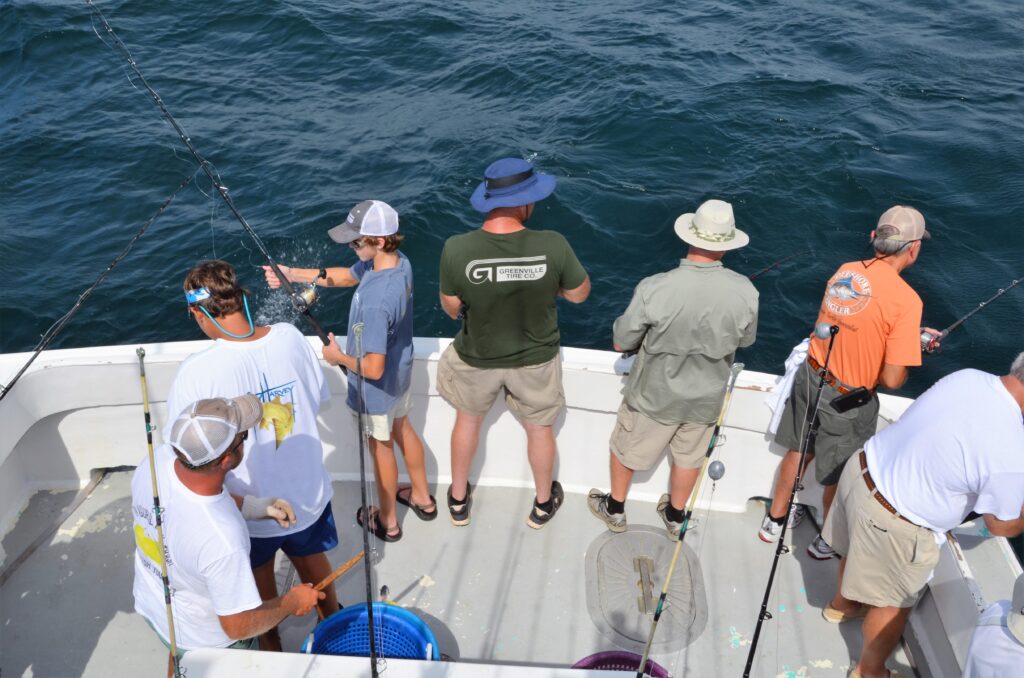
Tomaloff tossed a clear 170-gram, 7-inch Madd Mantis topwater popper. Other good lures include Berkley Frenzy Poppers and No Live Bait Needed Lures paddle-tails. Large stickbaits, soft-plastic fish imitations, or live bait also work. Some captains throw two or three different poppers, or a mix of bait types, into the school to see what works best, but nothing compares to a colossal Yellowfin blasting a topwater lure.
“Tuna love to attack poppers,” Brown said. “If a person gets excited watching a Redfish hit a topwater, think what a strike from a 200-pound Tuna is like! It’s exhilarating, like throwing dynamite into the water. It must be experienced to be believed. The Louisiana fishery is really second to none.”
A Unique and Rich Fishery
About 80 miles downriver from New Orleans, Venice marks the last outpost reachable by automobile in the Mississippi River Delta. Many people call Venice “Tuna Town” because of its access to superior offshore fishing in the Gulf of Mexico. Anglers can catch Yellowfin and Blackfin Tuna all year long. The catch might also include Wahoo, Blue Marlin, White Marlin, Swordfish, and many other species, mostly thanks to the nutrients pouring out of the most massive firehose in North America.
The Mississippi River system drains 1.245 million square miles, about 41 percent of the contiguous United States and parts of Canada. All that water flows past Venice. This outpouring of rich nutrients creates one of the most fertile and diverse fisheries on the planet for multiple species.
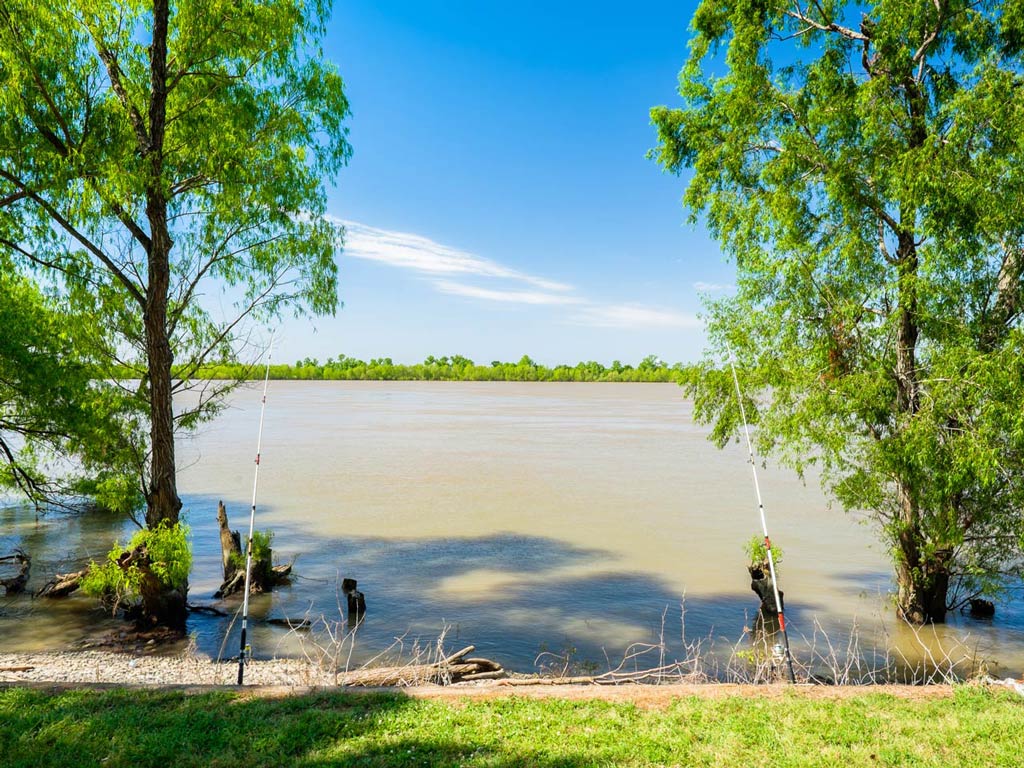
Brown runs out of Cypress Cove Marina in Venice. From Venice, Cypress Cove and Venice Marina provide access to these lush wetlands and the Gulf beyond the southernmost point on the Mississippi River. From either of these marinas, anglers can catch anything that swims in Louisiana waters or the Gulf, from Bass to Marlin.
Over eons, silt deposits carried from the Rocky Mountains to the Appalachians pushed the river almost to the continental shelf. Water drops to more than 4,000 feet deep quickly. The Mississippi Canyon elbows in toward the river, creating exceptional fishing. Anglers might also fish the Green Canyon or De Soto Canyon. These deep trenches create conduits for fish and bait.
“From the mouth of the Mississippi, we go about 12 miles to the Mississippi Canyon,” explained David Morgan with Captain Morgan Charters, who runs out of Venice Marina. “About 18 to 20 miles to the west, we hit the Green Canyon. Toward the east, about 12 miles, we reach the De Soto Canyon. They all come up to a shallower head. That keeps a lot of bait in the area.”
Feeding Frenzy in Fall and Winter
From mid-October through March, enormous Yellowfin come closer to shore. A Yellowfin might swim more than 100 miles in a day. They cruise open waters looking for schools of pogies, mullet, or other baitfish. Tuna herd hapless baitfish to the surface to cut off their escape. Birds quickly spot the activity and dive for their share of protein.

“In the fall and winter, I target big Tuna with topwater baits,” said Brown, who lives in Highlands, New Jersey, but comes down to Venice every winter to charter for Yellowfin. “I use Zach’s Custom Rods spinning tackle with 80-pound-test Cortland C-12 Hollow Core main line tipped with a 220-pound Varivas nylon leader. Catching big Yellowfin on top is quite a challenge, but it’s a very rewarding way to catch big fish.”
To find Tuna at that time, first find the bait. Small fish congregate in immense swirling schools called “bait balls” to protect themselves from predators. From fall through early spring, Tuna typically hunt in water 200 to 400 feet deep, but sometimes out to more than 1,000 feet. Sometimes, anglers catch Tuna in water as shallow as 60 feet during the winter. Most people start looking for Tuna about 12 to 30 miles out of South Pass, one of several major mouths of the Mississippi River.
“The Gulf Stream comes close to the shore out of Venice,” Morgan described. “The current is there all year long, but it moves in and out. Fall and winter are my favorite times to catch Tuna. In the winter, Tuna go shallower and school up on pogie balls. We’ve caught Yellowfin two or three miles offshore in about 200 feet of water.”
Top Yellowfin Tuna Fishing Spots
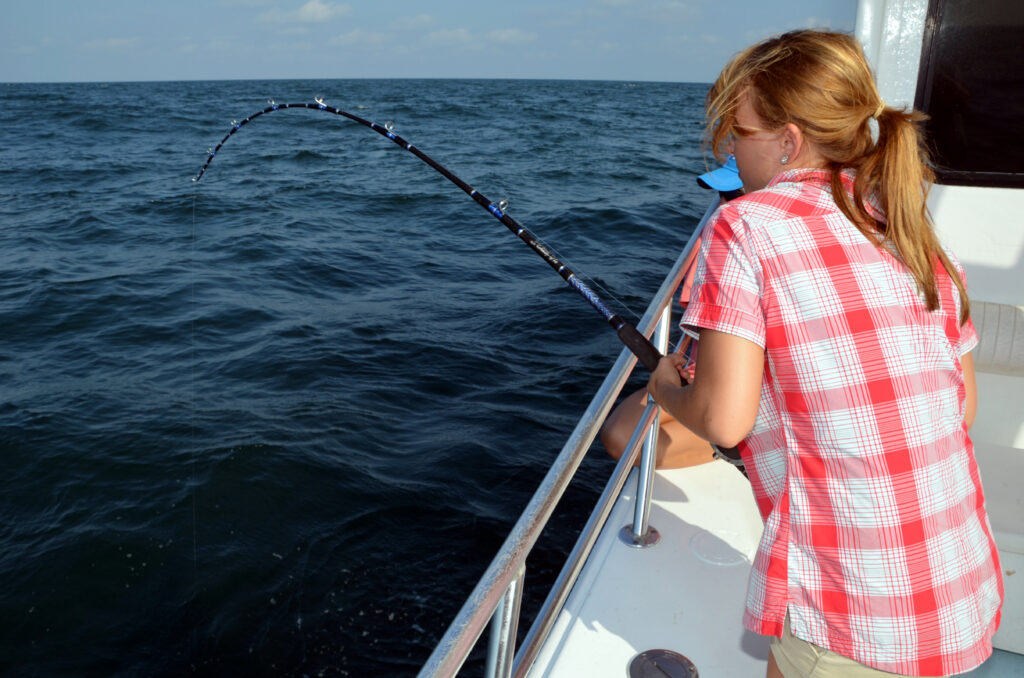
Anglers also find Tuna around the Cognac petroleum platform. The Cognac platform sits in more than 1,000 feet of water about 40 miles southeast of Venice. For another good spot, head east of the river mouth to fish the East Lump, one of several natural sea rises off the Louisiana coast. People also fish Sackett Bank, more commonly called the Midnight Lump. It sits about 12 miles east of Mississippi Canyon and 18 miles south of the river mouth. Midnight Lump rises from about 700 feet deep to crest about 190 feet below the surface.
“We fish the East Lump, also called the Horseshoe Lump,” Morgan said. “It’s 26 miles east out of South Pass or 22 miles out of Pass-a-Loutre. It’s about four to five square miles across.”
When Gulf currents hit the lumps, water pushes plankton upward. Plankton attracts baitfish. Tasty pogies and other baitfish attract big predators. Besides Yellowfin and Blackfin Tuna, anglers might also catch Wahoo, Cobia, King Mackerel, Sharks, and sometimes Blue Marlin, White Marlin, or Sailfish around the lumps.
“For Yellowfin, the lump season lasts until about the third week of March,” Morgan said. “Tuna at the lumps average about 80 pounds, but we get many in the 150-pound range or bigger. Our biggest in the past couple of years weighed 218 pounds.”
Tips for Success: Chumming, Setup, and Shrimpers
Around the lumps, people toss copious amounts of squid, cut-up pogie pieces, and other sumptuous Tuna temptations into the water for chum. Tuna smell oily fish like pogies and come looking for something to eat. Some people also throw light tackle to catch Bonito and cut them up for chum or Tuna bait. After Bonito show up, Tuna usually follow.
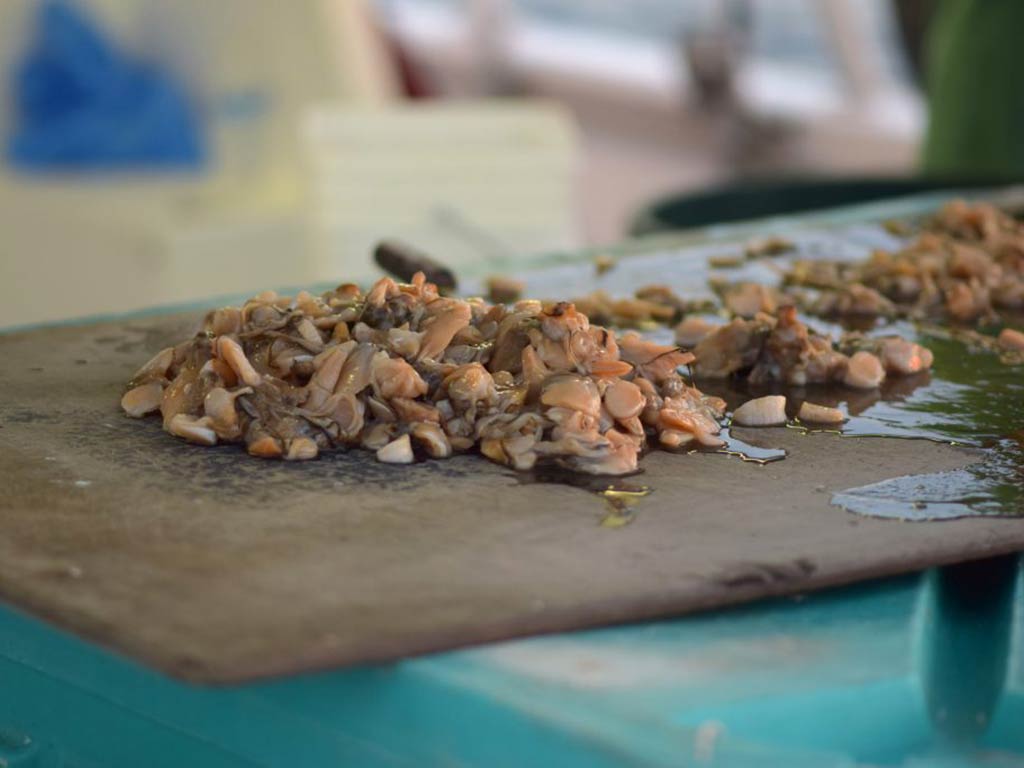
“Chumming is a very effective way to bring fish to the surface,” Morgan commented. “From February to March, we mostly use whole pogies and mullet or pieces of bycatch for bait. We’ll try to find pogie schools. A Yellowfin will eat a third of its body weight every 48 hours. We need to catch them when they are feeding.”
Use 80-pound braid for the main line. Add about six to eight feet of fluorocarbon leader tipped with an 11/0 circle hook. Bury circle hooks into fish chunks so the big eyes on Tuna can’t see the hook. Toss out drift lines.
When chumming, Tuna and other fish get in a feeding frenzy. Action can come swiftly at close range. Frequently, anglers can dangle a bait almost on the nose of any fish they want to catch.
The lumps get serious pressure. Therefore, many people search for large shrimp boats. Anglers might pull baits right behind the nets of a working shrimp boat. Some larger shrimp boats stay out several weeks until they run low on fuel and supplies or fill their holds with crustaceans.
Many shrimpers drag their nets all night when shrimp come out of hiding. They anchor at dawn to sort their catch and get some sleep. When sorting the catch, shrimpers toss anything they can’t sell over the side. That creates a multi-species feeding frenzy. Often, Tuna come right up to the boat waiting for handouts. Some charter captains arrange to meet shrimping captains. They bring cold drinks, ice cream, or other luxuries to barter for baskets of fresh bycatch for chum and bait.
Feeding Time Equals Catching Time
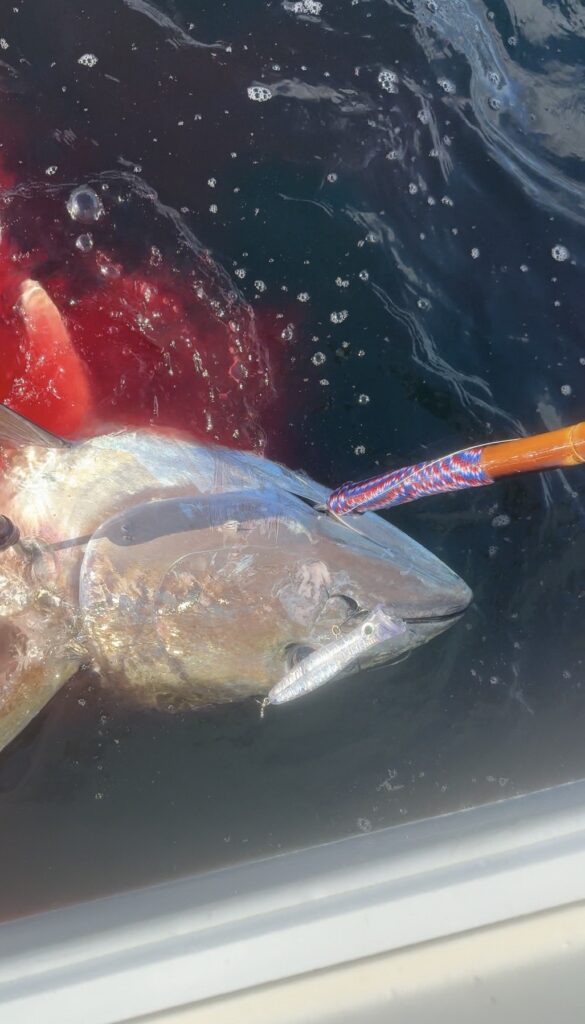
“We’ll talk to the crew,” Morgan said. “If they are cordial, they’ll let one of us get on their boat and scoop out our own chum and bait. That helps them because they are tired and want to get some sleep. We use the best parts for bait and chum with the rest. Ribbonfish are shiny and look like flat eels, but Tuna love them.”
With baskets full of chum, toss out generous handfuls into the water and slowly move the fishing boat away from the shrimp boat. Fish will follow the free food. After the Tuna get into a boiling frenzy, add a circle hook to the “chum” and hang on!
“Sometimes, big Yellowfin come from the stern and quarter off to the bow,” Morgan observed. “They’ll make a circle and come back. Once I see a big fish come through the slick, I keep watching and have a rod ready to go. When I throw the bait out, Bonito start going for it, but they turn away if a big Yellowfin comes around.”
Spring and Summer Yellowfin Fishing
In the spring and summer, Tuna head farther offshore to deeper water. By mid-April, Yellowfin begin to congregate around larger, deeper petroleum platforms along the Mississippi Canyon. The “floaters,” large structures anchored to the bottom but sitting in water too deep for pilings, commonly hold Tuna.
“After lump season, we start going farther offshore to the large floating rigs about 40 to 65 miles out,” Morgan said. “We usually fish those from late spring through the summer.”
Anglers troll around these floating platforms with lures or live bait. Some people drift past the structures or over fish schools. Many anglers bump troll. They put lines baited with live or fresh bait off the stern with little to no weight. Captains keep their motors running in neutral. Periodically, they bump the motors into gear to make baits rise in the water column. Then they slip the engines back into neutral so baits slowly sink. Bumping also keeps baits straight behind the boats so they don’t tangle.
In the summer, anglers throw sabiki rigs to catch live bait around the platforms. At that time, anglers generally catch more Yellowfin, but with smaller averages. Yellowfin might average 50 to 70 pounds, but people could catch some in the 90- to 160-pound range. Also during summer heat, some anglers fish the platforms at night. Lights attract squid, crustaceans, and baitfish that cannot come out during the day without something eating them. Anglers vertically drop diamond jigs.
“We catch hardtails, scads, and disco minnows for bait,” Morgan said. “A disco minnow is kind of oval and very fast, with a neon or purple stripe down its back. It looks similar to a Rainbow Runner, but not the same shape. It looks more like a pogie with a stripe. We also use Threadfin Herring.”
By late summer or early fall, Tuna leave the floaters and head closer to shore. In the fall, mullet migrate out of the marshes and shallow bays to spawn in the Gulf. At that time, Tuna and other fish gorge themselves on mullet.
Both marinas in Venice offer food and lodging. Many charter captains provide food and lodging for their customers. When fishing in Louisiana, make sure you have the correct fishing license.
To book a Venice fishing charter, check out our rich offer here. For Plaquemines Parish information, see plaqueminesparishtourism.com. For Louisiana tourism information, see explorelouisiana.com.
The post Giants of the Gulf: Tuna Fishing in Venica, LA appeared first on FishingBooker Blog.
https://ift.tt/cNhU6a8
0 Comments
Enregistrer un commentaire