Bundled up against the cold and cutting wind, we didn’t want to challenge the Atlantic Ocean or Chesapeake Bay. Thankfully, the Virginia Beach area offers a solid alternative.
Just south of the bay mouth, Rudee Inlet provides the only direct access to the Atlantic from “VB.” The inlet contains two parts – Lake Rudee and the smaller Lake Wesley. The 3,000-acre system looks like an upside-down “Y.” Both lakes merge into Owl Creek, the outlet to the Atlantic Ocean. And plenty of small creeks feed into the system.
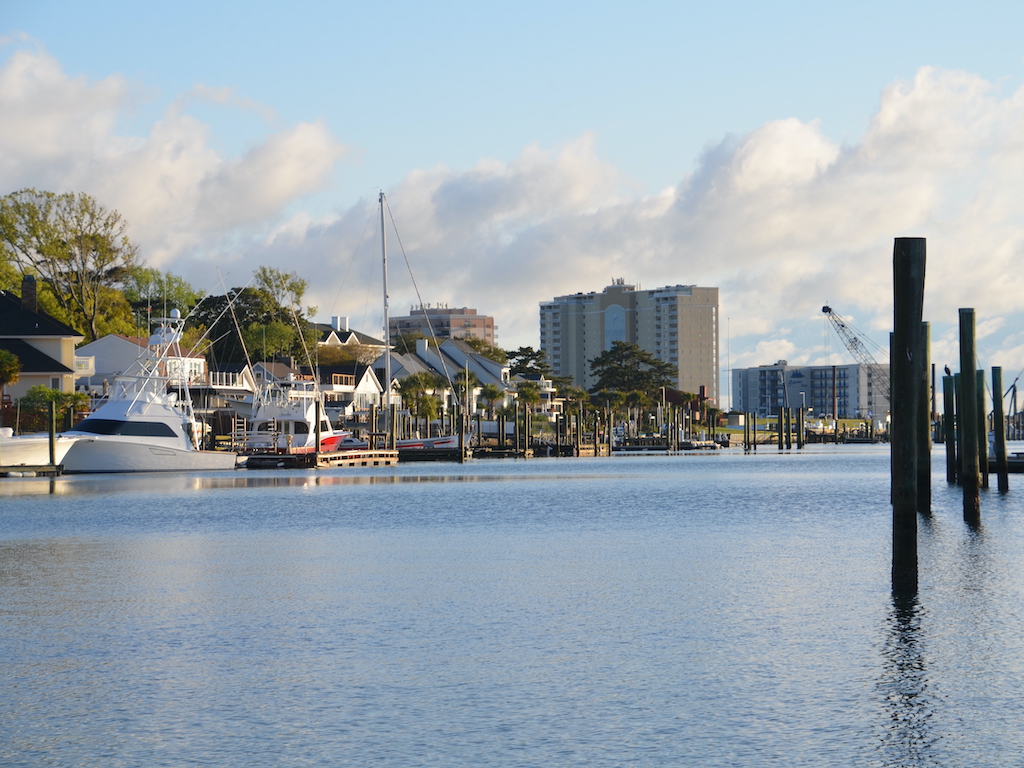
“The great thing about Rudee Inlet is that, since it’s such a confined area, we can hit many spots in protected waters even when the weather turns rough,” explains Josh Bourne, a retired Marine with Wingman Guide Service (910-467-6410) in Virginia Beach. “It’s a very easy place for kayakers to access.”
Rudee Inlet averages about 10–12 feet deep, but some holes drop to about 30 feet. Rocky jetties lining the mouth of Owl Creek direct the water flow in and out of the inlet. Daily tidal fluctuations from the Atlantic periodically recharge the inlet with bait fish and other morsels. Predators follow their groceries. Throughout the year, anglers can catch a variety of species inside or just outside the inlet.
Inshore: Multiple Species, Different Times
“Many species swim in from the ocean at different times of year,” Bourne says. “When we get a bite, we never know what might be on the other end of the line. It’s very common to catch several different species the same day.”
Depending on the season, anglers fishing the inlet, the jetties, or just outside might catch Red Drum (aka Redfish), Speckled Trout (Seatrout), Black Drum, Flounder, and several other species. Occasionally, the catch might include Striped Bass (Rockfish), especially along the jetties from the fall through spring.
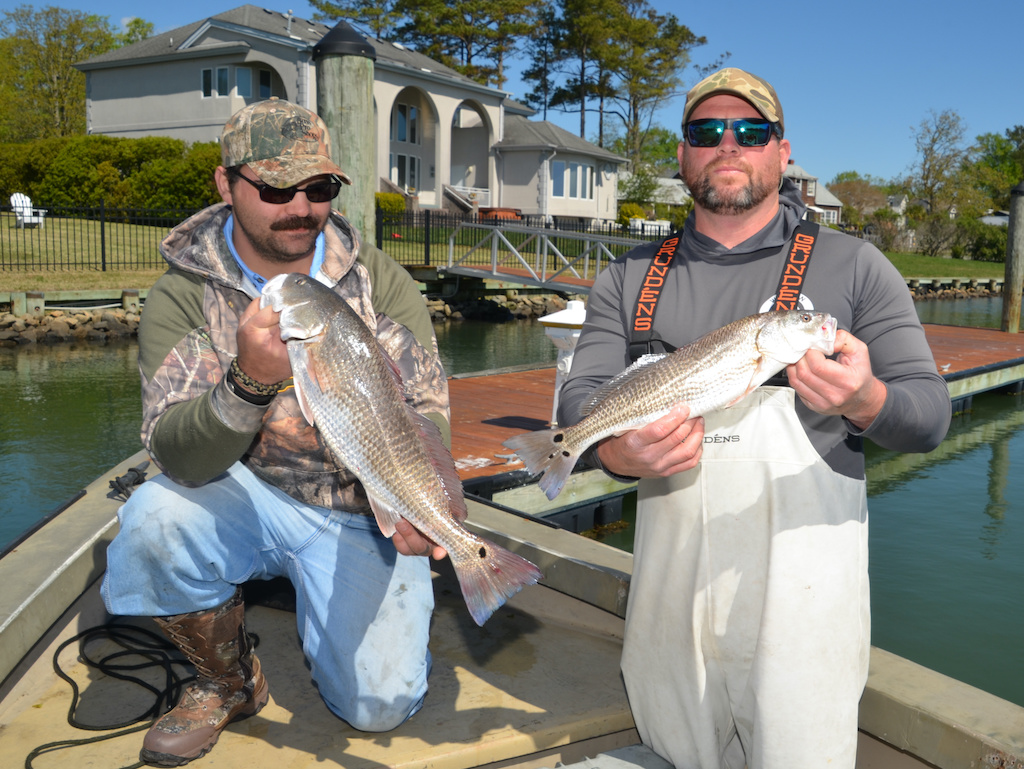
“The Virginia Beach area has much to offer fishermen, both inshore and offshore,” Bourne insists. “Besides the inlet, we have easy access to the Atlantic Ocean and Chesapeake Bay. In the spring, we find a good fishery for puppy Drum. Many Redfish stay in the inlet all year long.”
Numerous docks from multiple houses dot the inlet’s shorelines. Redfish commonly hunt around docks. The barnacle-encrusted pilings also create excellent cover for Sheepshead, Flounder, Black Drum, and other species. We pulled up near a dock and put our baits as close as possible to the pilings standing in four to five feet of water. Moments later, our reel drags began screaming for relief as Redfish stormed off with our enticements!
“Bait fish like to hide around the pilings under the docks,” Bourne confirms. “Redfish get under the docks and use those areas as good places to stalk their prey. When fishing for Reds, I like moving water, either an incoming or outgoing tide. I mostly use live shrimp or fresh-cut fish for them. When we catch one, we usually find several Redfish under the same dock.”
As water warms in the spring, crabs emerge from the mud. Redfish like nothing better than a tasty crab. For “Bull” Reds, fish a whole crab. Crack the top shell to let succulent juices ooze out. For more bites, pop off the top shell and break the body into two halves. Crab halves also entice giant Black Drum.
More Inshore Opportunities in Virginia Beach
With powerful jaws and strong teeth, Sheepshead love to snip barnacles off any hard objects, such as dock or bridge pilings, reefs, jetties, and other structures. Frequently, they barely nibble at a bait! With their human-like teeth, they can easily bite baits off hooks without touching steel. When hooked, though, these powerful fish can provide tackle-busting excitement for anglers of all ages.
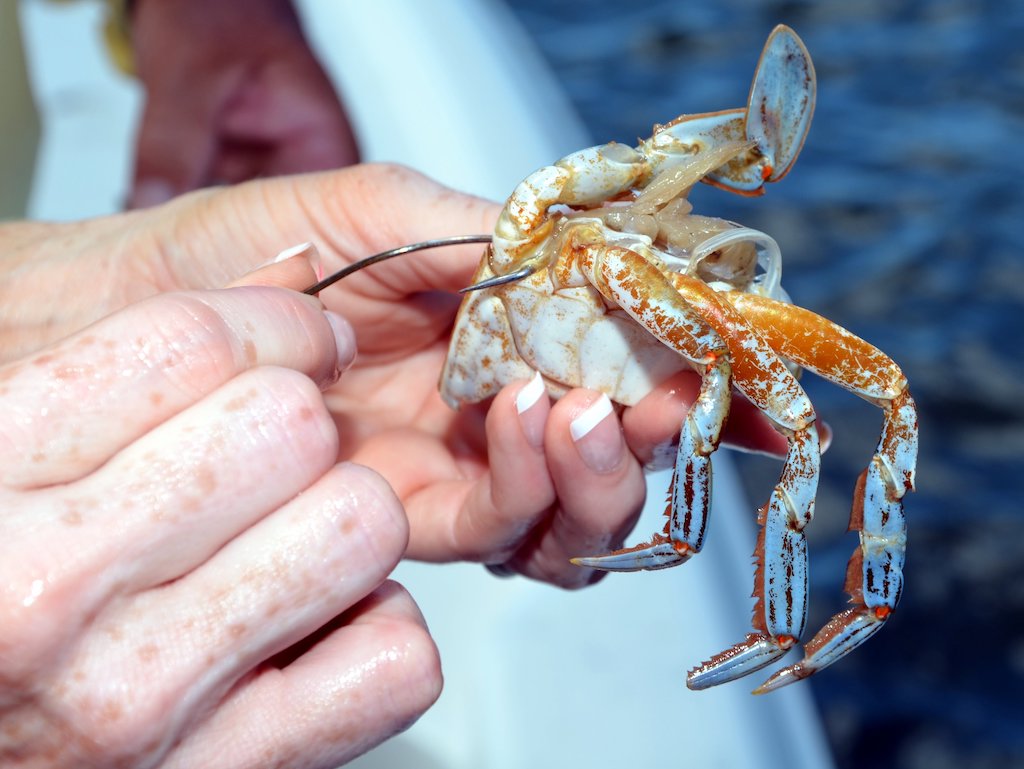
Sheepshead occasionally hit artificial temptations, but really they favor natural baits. They relish live or fresh shrimp, fiddlers, crab pieces, clams, squid, and other items. They sometimes hit minnows or other fish, but prefer crustaceans. Sometimes called “Sheepshead candy,” hook a small crab through the shell by the rounded rear “swimmer fin” so it can still move easily. A crab piece also works well. Just make sure to put baits as close to structures as possible.
Flounder also like to ambush bait around the docks. These fish love shrimp, minnows, and other morsels. They also hit some lures, especially jigheads sweetened with plastic grubs. This time, drag baits along the bottom.
“In the inlet, we usually see a pretty steady Flounder bite during the summer,” Bourne says. “The Speckled Trout bite picks up in the spring and fall. In May, we usually get a good Trout bite.”
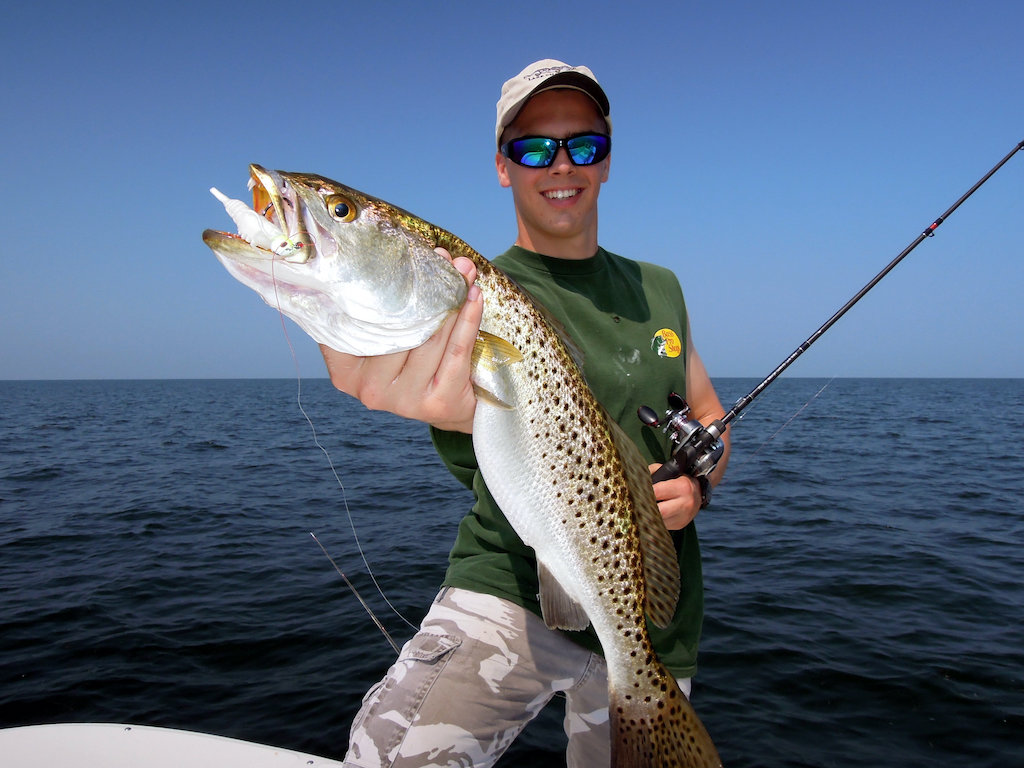
Fast, vicious predators, toothy Trout like moving baits. Anglers catch them on various artificial or natural enticements. Shrimp, minnows, and anything that looks like them can tempt Trout. Topwaters that mimic mullet or other bait fish provoke strikes from larger – but fewer – Trout.
“In the past few years, we’ve been getting more Gray Trout, or Weakfish,” Bourne observes. “That shows the species is making a recovery. We target Gray Trout the same way we target Specks. They often feed on the same forage. Many times, we’ll catch a Speck and a Gray back-to-back on the same baits.”
Virginia Beach’s Nearshore Action
Like birds, many fish species migrate. They head north in the summer and south in the winter. When fish migrate along the Atlantic and Chesapeake Bay coastlines, they must pass Rudee Inlet. As water warms in spring, look for Cobia along the coast. These vicious predators habitually hang near jetties and buoys. They also hover under floating objects.
Cobia
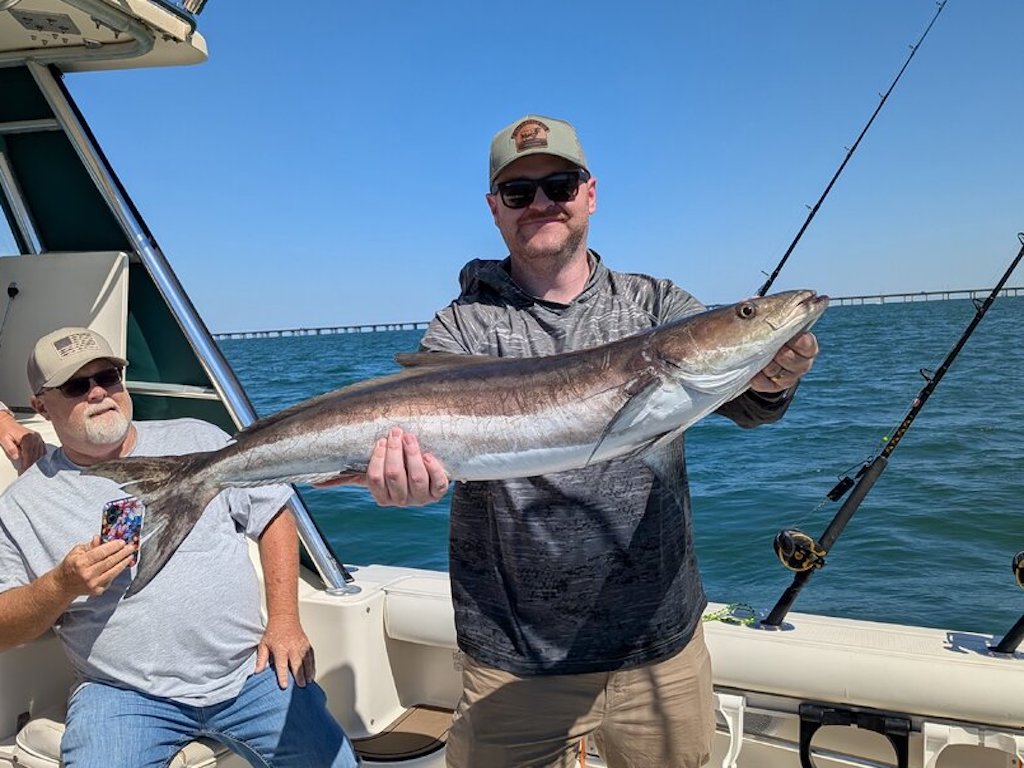
“By mid-May, we start looking for Cobia,” Bourne claims. “They don’t come into the inlet, but they stay just outside, attacking bait balls or swimming along with Rays. When we spot a Cobia, we toss a 2 oz bucktail jig or a live bait to it. Menhaden, spots, or croakers make great live bait, but Cobia really love eels.”
Rig an eel on a 7/0, 8/0, or 9/0 J-hook through the nose. Keep the rigged eel in a bucket or baitwell ready for action. After spotting a Cobia, attach the pre-rigged eel to a line and toss the bait to the predator.
Mackerel and Co.
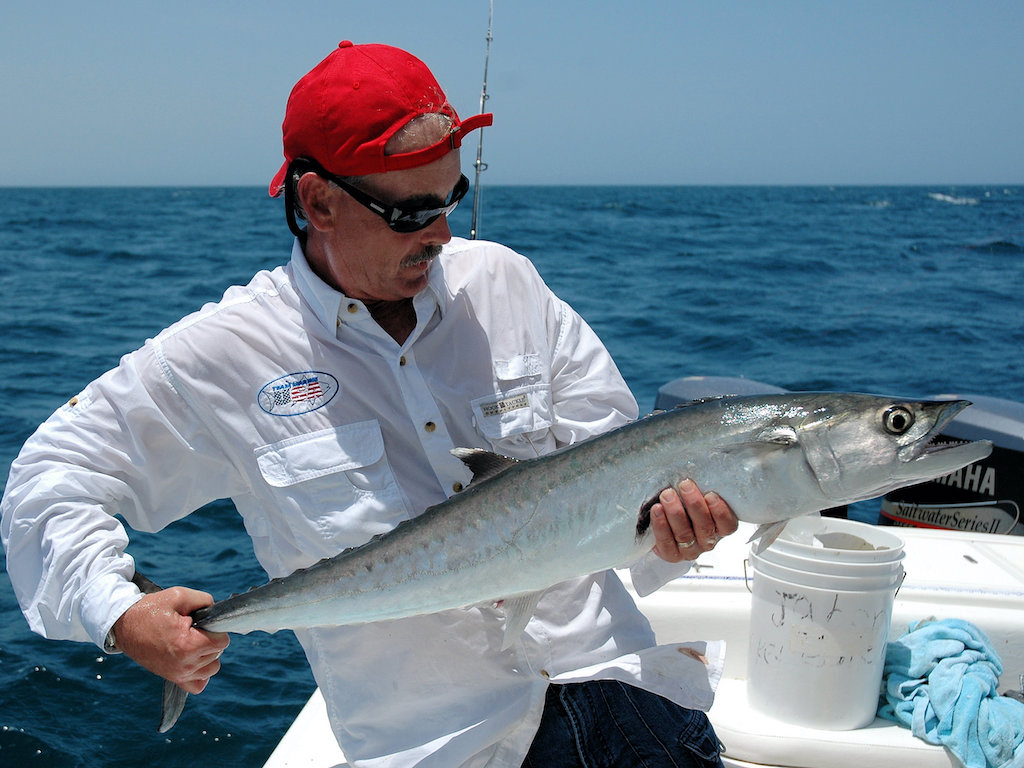
In the summer, Bluefish and Spanish Mackerel cruise the nearshore waters just outside the inlet. These toothy predators love fast, shiny baits. Any live bait or lures that mimic bait fish can work. Many anglers cast or troll chrome spoons. Add a short wire leader to keep these razor-toothed predators from slicing through the line.
“As the water temperature gets into the mid-60s, we always see Spanish Mackerel and Bluefish,” Bourne details. “We troll small Drone or Clark spoons at about seven knots. Bluefish hit a bait trolled a little slower. Later in the summer, people start targeting King Mackerel. We also see a large Spadefish migration. They hang around buoys and other structures throughout the summer.”
Bull Redfish Steal the Virginia Beach Spotlight
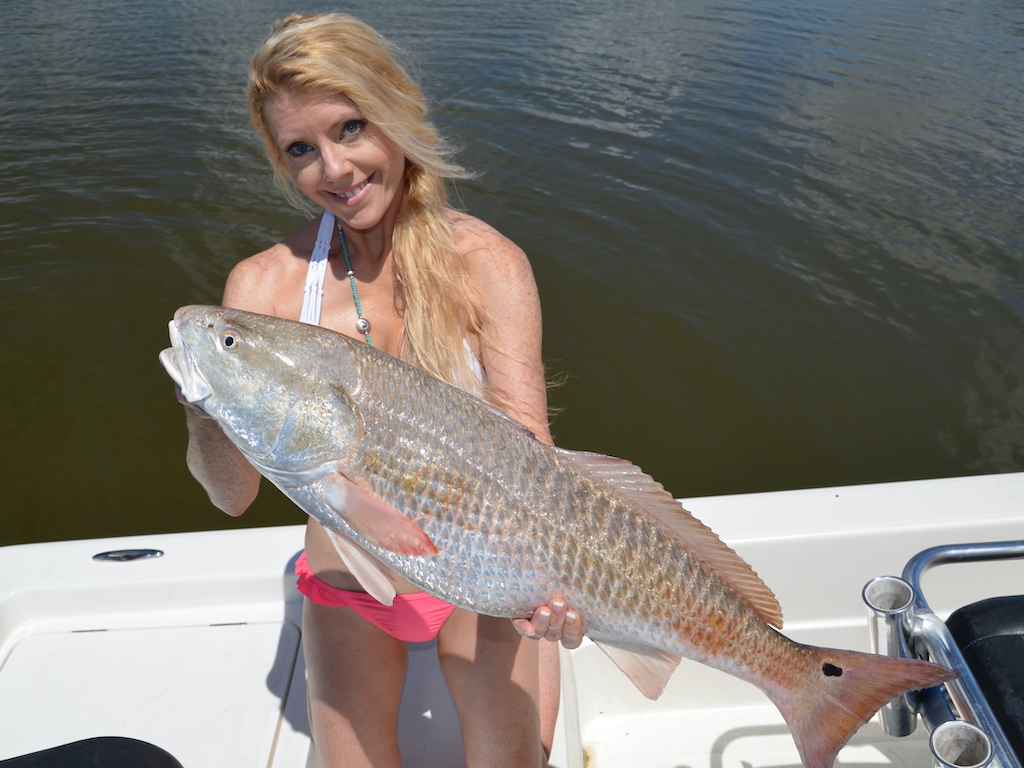
In late summer and early fall, giant Bull Reds gather in enormous spawning schools just outside the inlet. When rampaging Bulls gather, they terrorize anything that moves, especially menhaden, mullet, and other bait fish. Few baits come close to the exhilaration of a topwater bait. Many anglers throw large “walking” baits that zigzag from side to side. For schooling Bulls, lure placement matters much more than type or color. Toss baits just in front of the school. Then, pop it and hang on!
“In late summer, we see giant Bull Reds in huge schools where Chesapeake Bay meets the Atlantic Ocean,” Bourne states. “We sight fish for them. In the fall, the fish prepare to migrate and get together in big schools as they get ready to depart. The ones that will stay hunker down in the inlet throughout the winter.”
Virginia Beach’s Offshore Game Fish
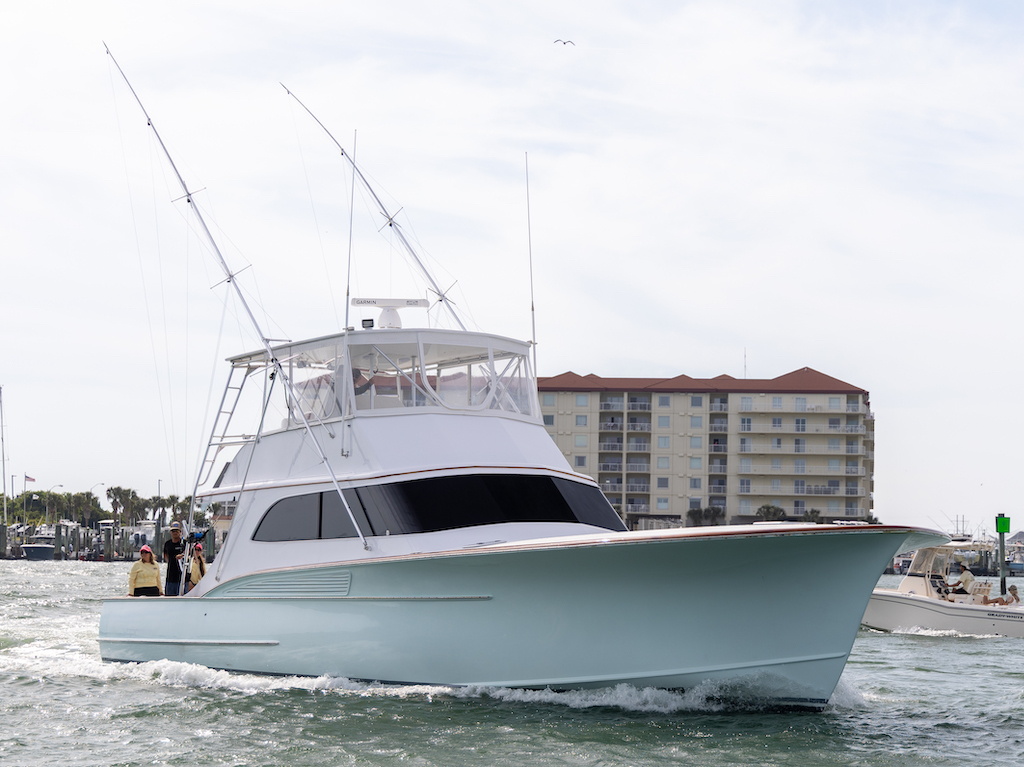
Bigger boats also run out of Virginia Beach into the Atlantic Ocean. Thousands of years ago, ancient rivers flowed through the coastal plain into the Atlantic, where the depth dropped rapidly. When the last Ice Age ended about 12,000 years ago – and the massive ice sheets melted – the sea level rose significantly. The shelf and drop-off now provide outstanding fishing for multiple species.
Tunas
“From Virginia Beach, the continental shelf ends about 63 miles out,” notes Captain Jay Brooks, owner of Smoke Show Sportfishing in Virginia Beach. Capt. Jay is a Marine veteran who runs a 54′ custom Carolina sportfisher. “How far we run from Virginia Beach depends on the time of year. During a June or July day trip, we usually run 60 to 70 miles from shore and focus on Yellowfin Tuna. Every now and then, we’ll catch a Bigeye Tuna.”
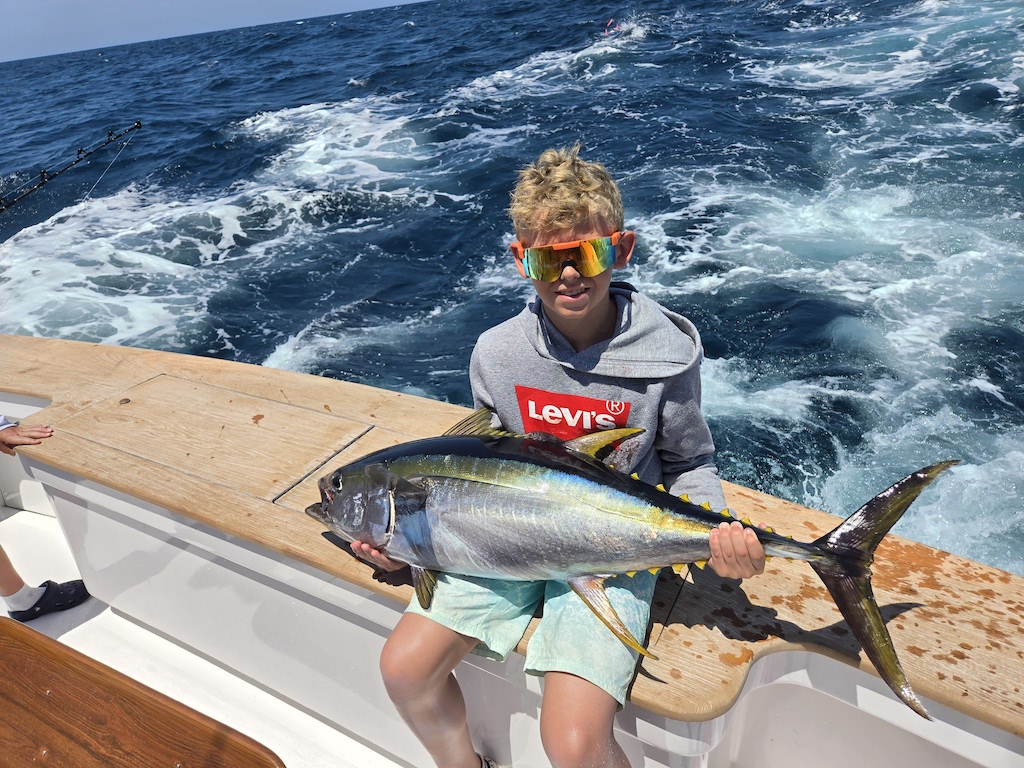
For Yellowfin, Brooks uses his electronics to locate bottom structures in 600 to 1,800 feet of water where the continental shelf drops off. Then, he puts out 10 to 12 rods at a time with a mix of plastic squid baits and fresh ballyhoo. He also looks for temperature changes.
“We look at currents and water temperature,” Brooks explains. “A hard break typically creates a 4- or 5-degree temperature difference, butted up against cooler water. That’s usually where the bait fish stay. When water temperature pushes up into shallower water, that’s where we want to fish. A hard break that holds good numbers of bait fish will draw in Tuna.”
Marlin
Brooks might also catch Wahoo and Mahi Mahi in the summer. As the year progresses and Marlin become more prevalent, he switches to templating Billfish around the deep canyons scarring the ocean bottom.
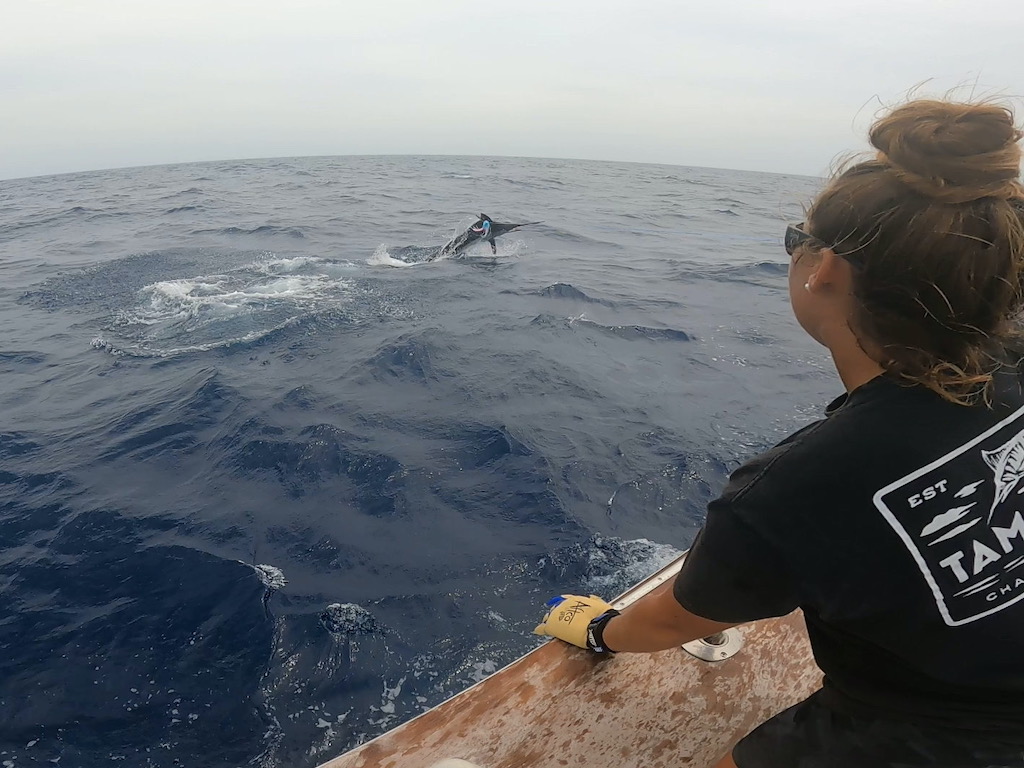
Even milennia ago, rivers flowed into the Atlantic just like today. Over eons, those rivers carved deep channels. After the great ice sheets receded, the rising sea submerged these ancient river channels. Now, these canyons provide great places to look for Marlin, Tuna, and other big game fish.
For instance, the Norfolk Canyon runs about 35 miles long. It starts to drop at about 500 feet deep and plunges to about 6,600 feet deep. Just to the north, people can also fish the Washington Canyon and others. These canyons provide great places to look for Blue Marlin.
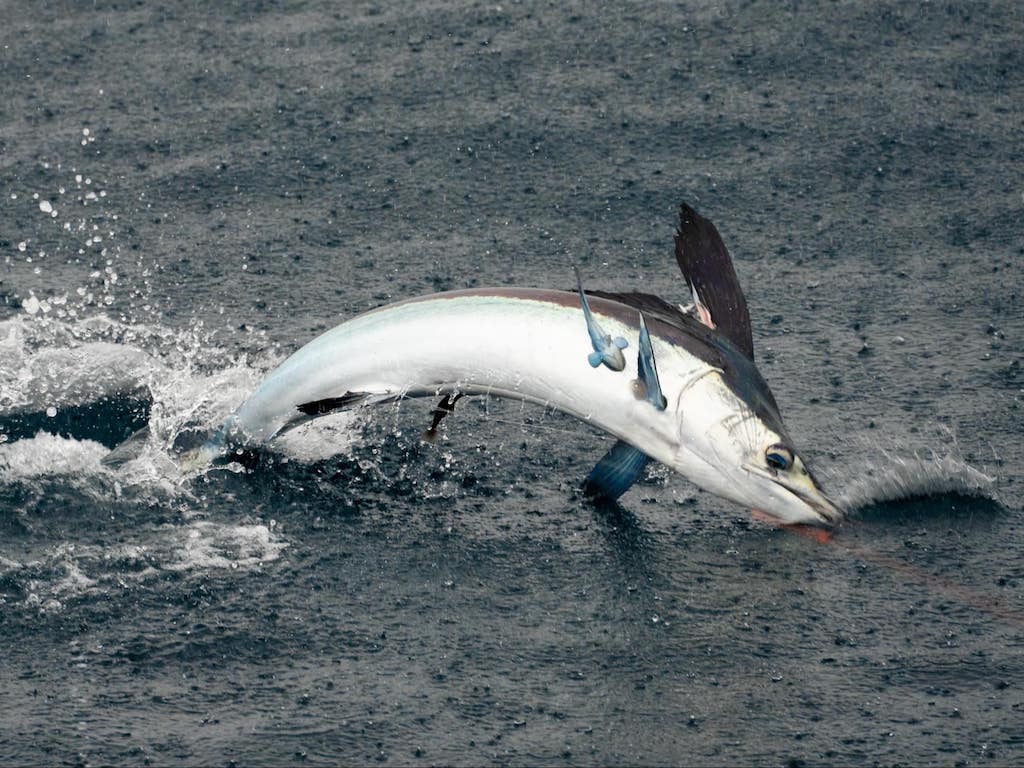
“From mid-July until late September or early October, we fish for Marlin,” Brooks remarks. “People have caught “Grander” Blue Marlin out of Virginia Beach. The biggest we ever caught weighed about 350 pounds! Sometimes, Bluefin Tuna come through the area. In 2026, we caught a 621 lb Bluefin. When they come up near the surface, we troll with large ballyhoo.”
For Marlin, Brooks puts out two teasers and a dredge to replicate a squid school. He pulls some ballyhoo on circle hook rigs. When the fish takes the bait, let it swim away a distance before setting the hook so the circle hook can do its job.
More Virginia Beach Billfish
“Going deeper into the fall, we’ll continue Marlin fishing until the Yellowfin push back through as they’re moving south,” Brooks advises. “When the Yellowfin bite gets slow, we’ll switch to Swordfish. People can catch Swordfish all year long, but the fall and winter are the best times to catch Swords around here. Our biggest Swordfish weighed 241 pounds. A typical one weighs about 100 pounds.”
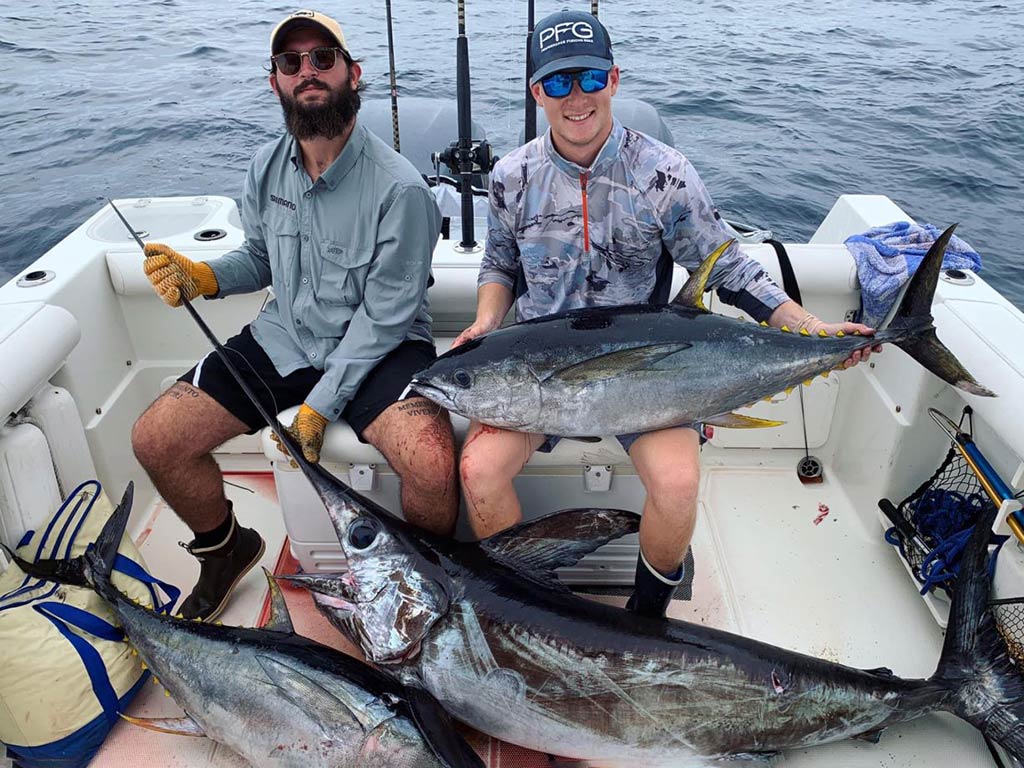
For Swordfish, drop a bait to the bottom in 1,000–2,000 feet of water. Suspend another bait about 100 feet off the bottom. Brooks uses a bobber on another rod. The bobber looks like a crab trap buoy. To keep track of the float as it floats away from the boat, Brooks attaches a flag to it. When a Swordfish takes the bait, the bobber might go down or could lay over on its side.
“It’s pretty impressive when that bobber goes down,” Brooks says. “Once that bobber lays over, that means there’s no more pressure on it and the fish is swimming to the surface! For bait, we use eels and fish strip baits. Sometimes, we’ll use a plastic eel that looks like a giant plastic worm.”
Bottom Bouncing for Rare Treats
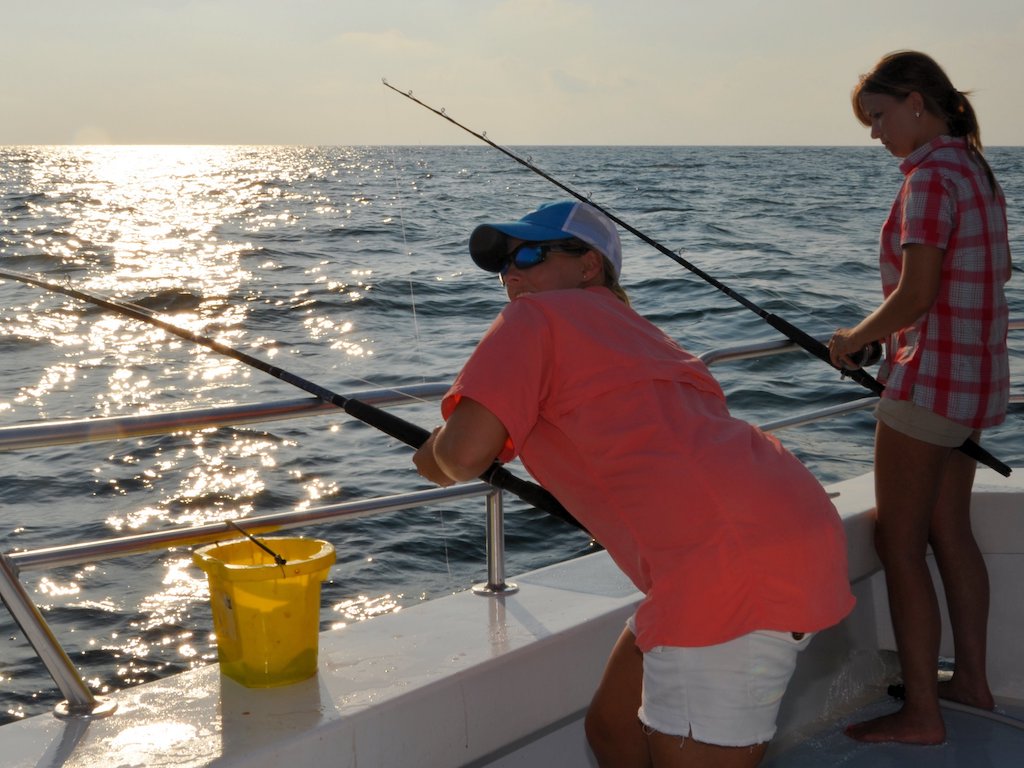
Captains running out of Virginia Beach fish the bottom all year long, but some of the best action occurs in the winter. Brooks catches Blueline Tilefish in 300 feet of water on cut squid. He catches Golden Tilefish on whole squid in 700 to 1,000 feet of water. Sea Bass also hit cut squid.
“We have fantastic bottom fishing,” Brooks comments. “Sea Bass usually range from 80 feet to about 300 feet deep. When it gets really cold, Bass go deeper. As the water warms in the spring, they move farther inshore, so we focus on wrecks closer to shore. Blueline Tilefish are absolutely delicious. No matter what species we catch, we always try to have a good time. That’s the biggest thing about fishing, the total experience with whatever species we catch.”
While in the Virginia Beach Area…
During the season, Bourne also offers sea duck hunts on Chesapeake Bay. While in the area during America’s 250th anniversary, you simply must visit some historical sites. Check out First Landing State Park, where English colonists first set foot in Virginia in 1607. Just up the James River, tour a replica of Jamestown, the first successful English colony in North America.
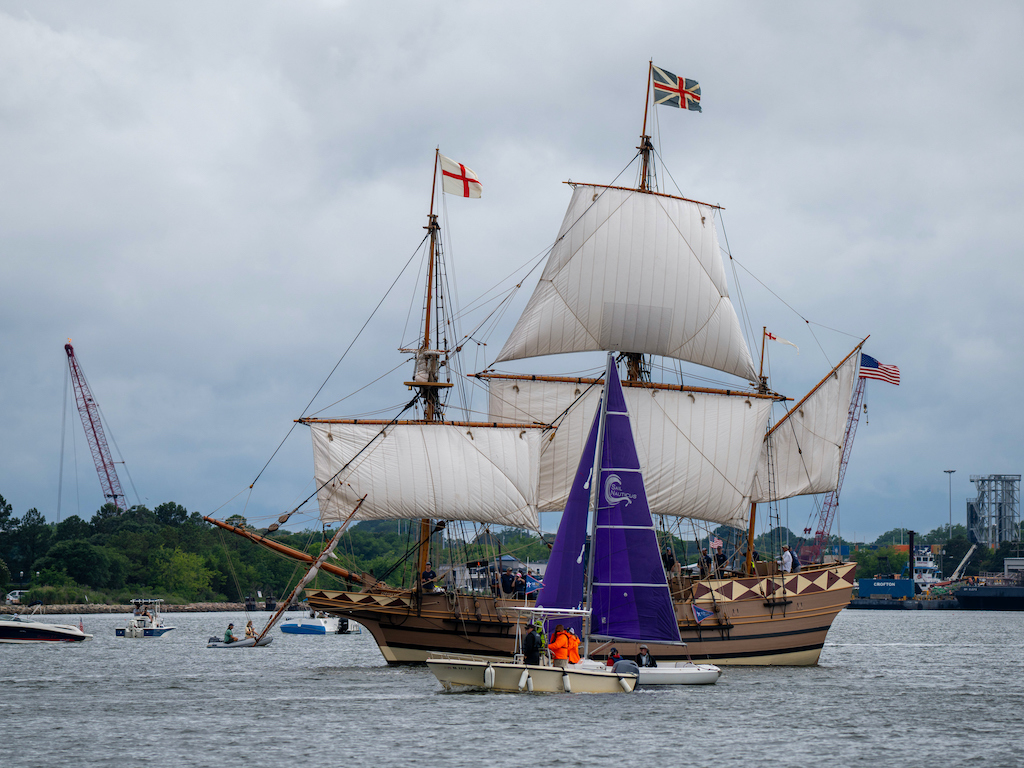
A short drive from Jamestown, you can explore the Yorktown battlefield. Here, General George Washington and his French allies defeated the British Army in the last major battle of the American Revolution, paving the way for independence.
And as if that wasn’t enough, walk in the footsteps of Thomas Jefferson in Colonial Williamsburg. This site tries to give visitors a true 18th-century experience. What better way to round off your visit to “The Old Dominion”!?
Have you ever been fishing in the Virginia Beach area? What did you catch? Did you make a full vacation out of it? Let us know in the comments below!
The post Virginia Beach Opportunities: Great Variety from the Inlet to the Atlantic for 2026 appeared first on FishingBooker Blog.
https://ift.tt/CVe30iF
0 Comments
Enregistrer un commentaire