Our Wyoming fly fishing expert, Dave Zoby, shares his tips on how to handle high temperatures when Trout fishing – and when to choose to leave your rod at home.
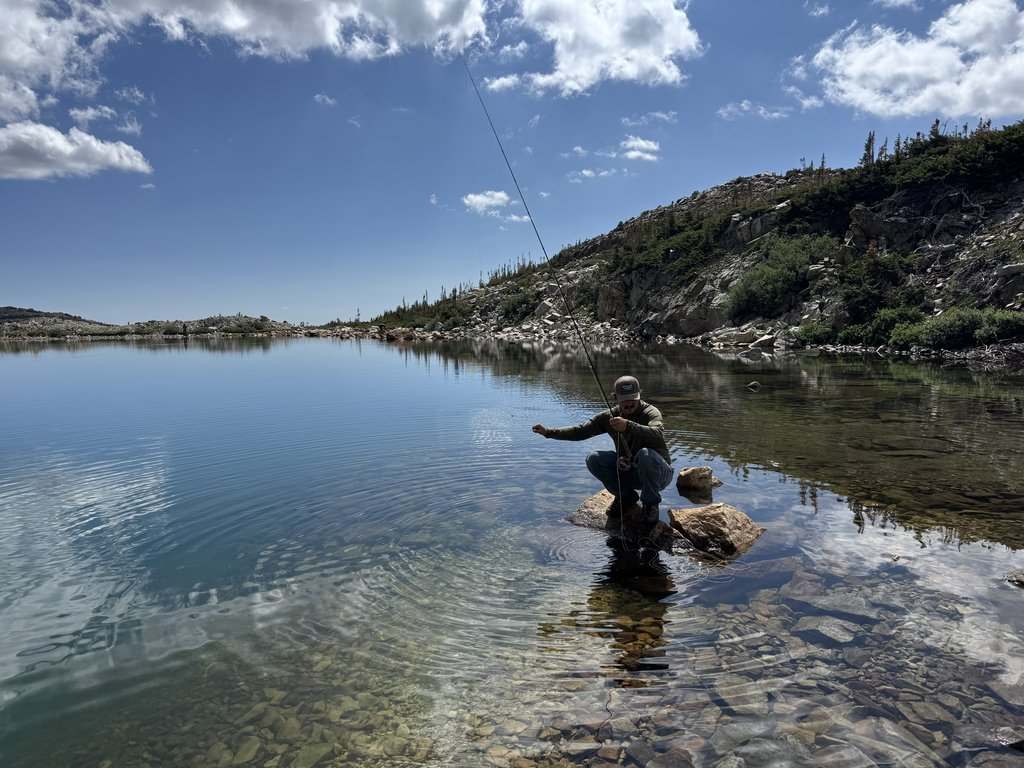
This is one of those summers where drought and extreme heat have caused the kind of headlines no one likes to read. All over the Rocky Mountain West – from Colorado to Montana, from Idaho to Utah – state agencies are asking anglers to change their habits and locations. State fish and wildlife offices are constantly updating information on waterbody closures and special regulations. With temperatures rising to as much as 104°F in places like Casper, WY, and 109°F in Billings, MT, guides and anglers are changing their tactics. Some are taking days off. Others are fishing alpine lakes instead of their prairie streams, where water temps are getting dangerously high for Trout.
Heat-related Regulations and Adapting to Them
Agencies are now closing entire river systems to protect cold-water species. In Yellowstone National Park, for example, the famous Madison, Gibbon, and Firehole Rivers – along with their tributaries – are completely closed to fishing as of the writing of this piece. Actually, the Park has also restricted Trout fishing from 2 p.m. to sunrise.
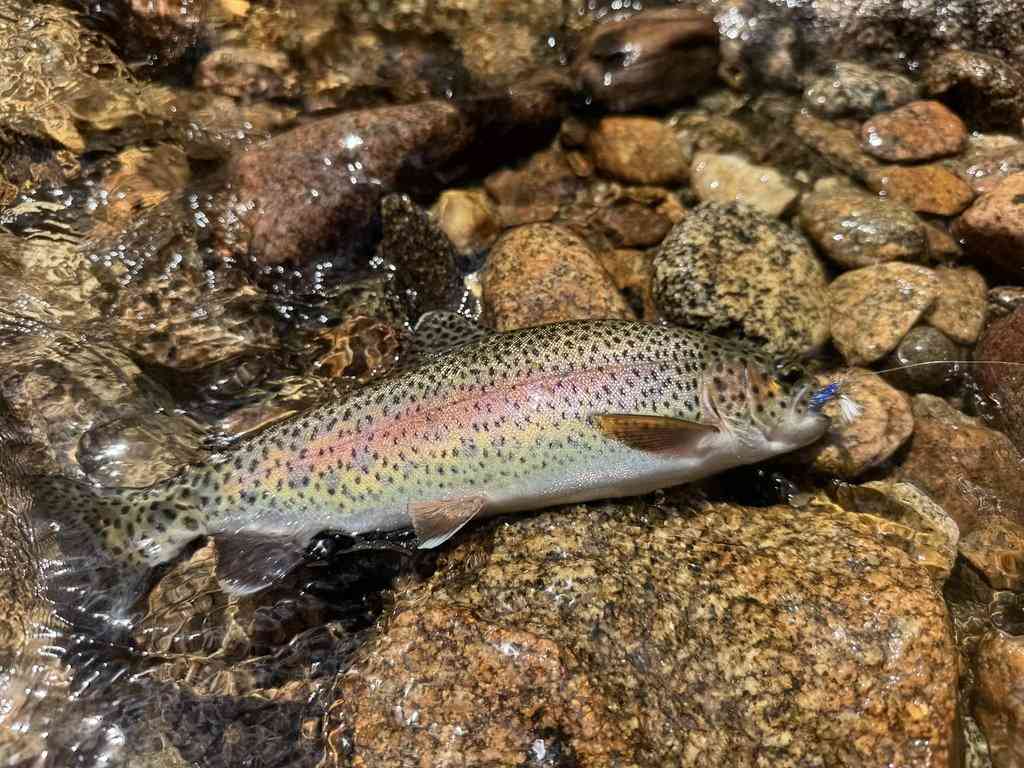
In my home state of Wyoming, guides like Mason Baker of Two Dogs Guide Service in Laramie, WY, have shifted away from the Laramie Plains Lakes in favor of the high country, where alpine lakes dot the landscape. Recently, he advised me to avoid my favorite prairie lake. Instead, he led me on a high-country scramble to a lake at 11,000 feet, where we fished for Golden Trout.
The situation has become so dire on the Front Range of Colorado that Colorado Parks and Wildlife has authorized fish “salvages,” where the state waives limits and encourages anglers to keep as many fish as they want. Anecdotally, my sources say they have never seen water temps this high or reservoirs so low. It’s already been a deadly summer, and we have weeks to go before the cool temps give us some relief.
Should you go fishing?
But there are things you can do to continue pursuing your passion.
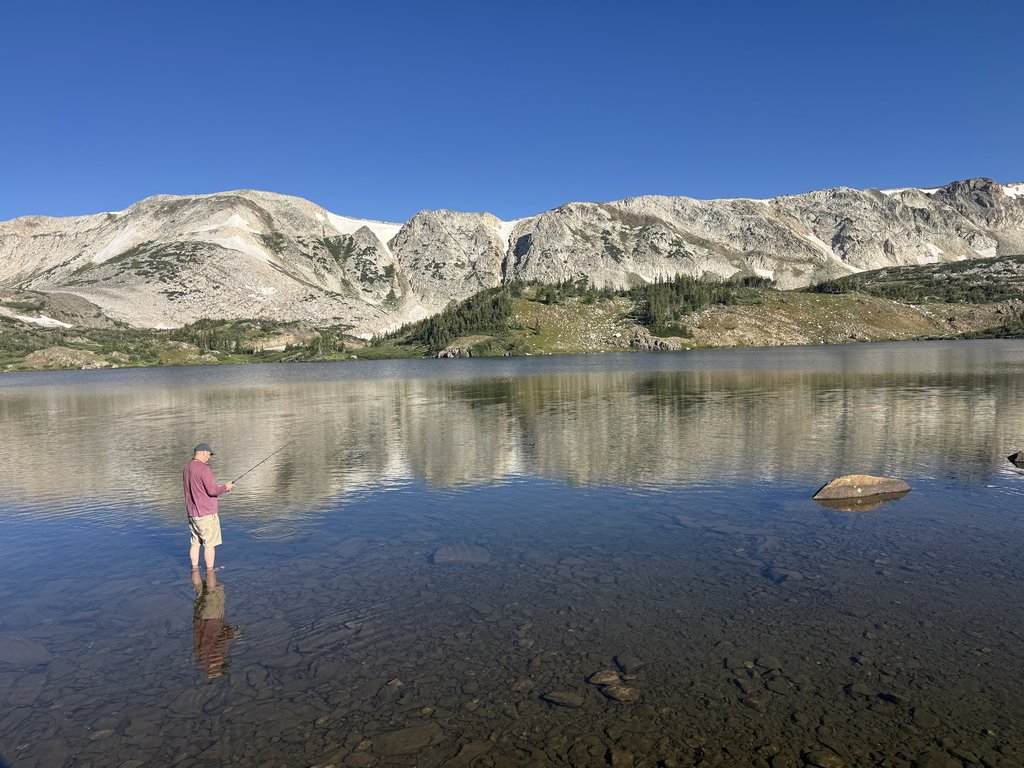
You can always stay home and cut the grass. Get to those home improvement projects you’ve been putting off. Or put away your fly rod for a few weeks and focus on warm-water species like Walleye and Bass.
However, say a college buddy or a family member is coming to visit you in Wyoming or Montana. Say you promised the kids that you’d take them Trout fishing. If you do go out, state fish and wildlife biologists say there are several practical steps you can take to lessen your impact on already stressed fish.
First of all, know the “hoot owl” closures. The term comes from the early 1900s, when loggers worked the cooler morning hours to avoid fires and heat stroke. For fishing, agencies often put hoot owl restrictions in place to take pressure off Trout during extreme heat waves. In Wyoming, for example, streams like the Encampment and Deer Creek are only fishable from sunrise to noon. Montana and Colorado also use hoot owl restrictions to protect some of their most vulnerable rivers. It’s the angler’s responsibility to know the regs – rules can change, so always check with your state fish and wildlife agency before heading out.
How to Fish in the Heat – and When to Go Home
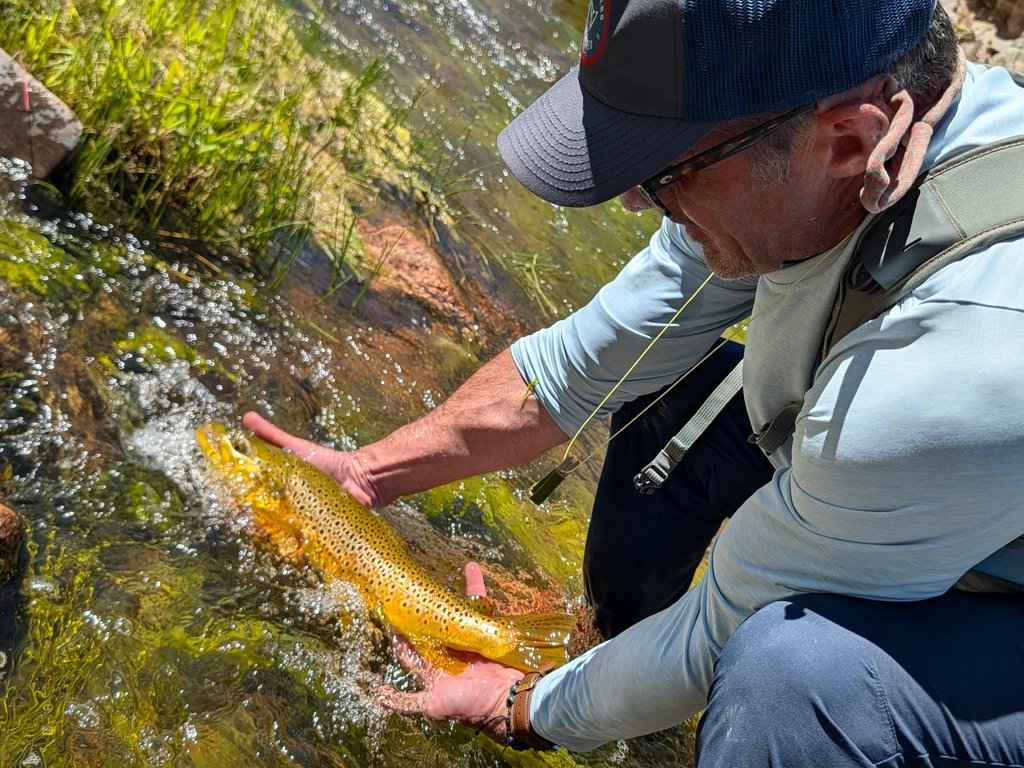
Two useful techniques when water temps climb are barbless hooks and a heavier leader. The idea behind both is to land fish quickly and release them without much fanfare. Keep them in the net or in the water, wet your hands before you touch them, and do not put your fingers in the gills. These simple practices can mean the difference between a fish surviving and a fish dying. One of my friends abandons catch-and-release this time of year. He fishes until he catches his limit, then stops. The general rule: if you land a Trout and it cannot hold itself upright, consider taking it home for supper, because its chance of survival is low.
Pocket thermometers are useful this time of year. Some clip to your vest so that you can take periodic readings throughout the day. There is also a net with a thermometer on its handle. In my society of anglers, the rule is this: if the temperature breaks 68°F, pack it in and go. Fish another day.
Into the Mountains
But far and away, the best idea is to put on your hiking boots and climb. For every 1,000 feet you ascend, the air temperature can drop as much as 5.4 degrees. You can leave Laramie on an 85-degree day and climb to an alpine lake where it’s a cool 68°F. Anglers know this as the lapse rate.
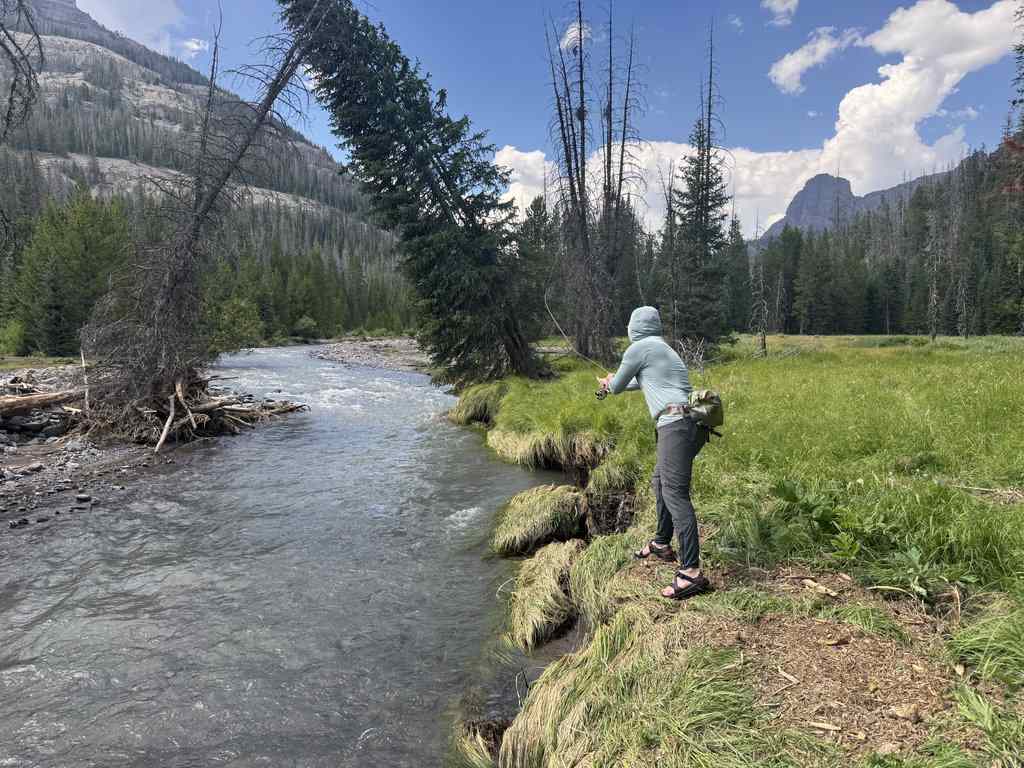
In Montana, Colorado, and Wyoming, some high lakes hold Golden Trout – a hard-to-catch species that lives above the treeline. Brook Trout thrive at 9,500 feet in the Wind River Range. The highest lakes even hold Splake, a hybrid of Lake Trout and Brook Trout. Probably the best fish I caught all summer was a male Brook Trout I spotted finning up in a snow-fed tributary, surrounded by wildflowers. I had to belly-crawl through the mountain laurel to approach the stream. He was rising to caddisflies when I dropped an Olive Elk Hair Caddis in his feeding lane. The cool weather, the mountain sunflowers, and the thunderheads gathering in the distance – being up high with these fish was the place to be. The Brook Trout was cool to the touch, and he sped off as soon as I removed the hook.
For more advice on how to go Trout fishing in the hot weather, check out the official website of the Wyoming Game & Fish Department.
Have you been fishing in hot weather recently? How did you prepare? Please share your experience with us in the comments.
The post Beat the Heat: Advice on Trout Fishing in Hot Weather appeared first on FishingBooker Blog.
https://ift.tt/mulXa2D
0 Comments
Enregistrer un commentaire