They usually sound bigger than they look. Usually…
KER-SPLOOSH!
This one was unusual.
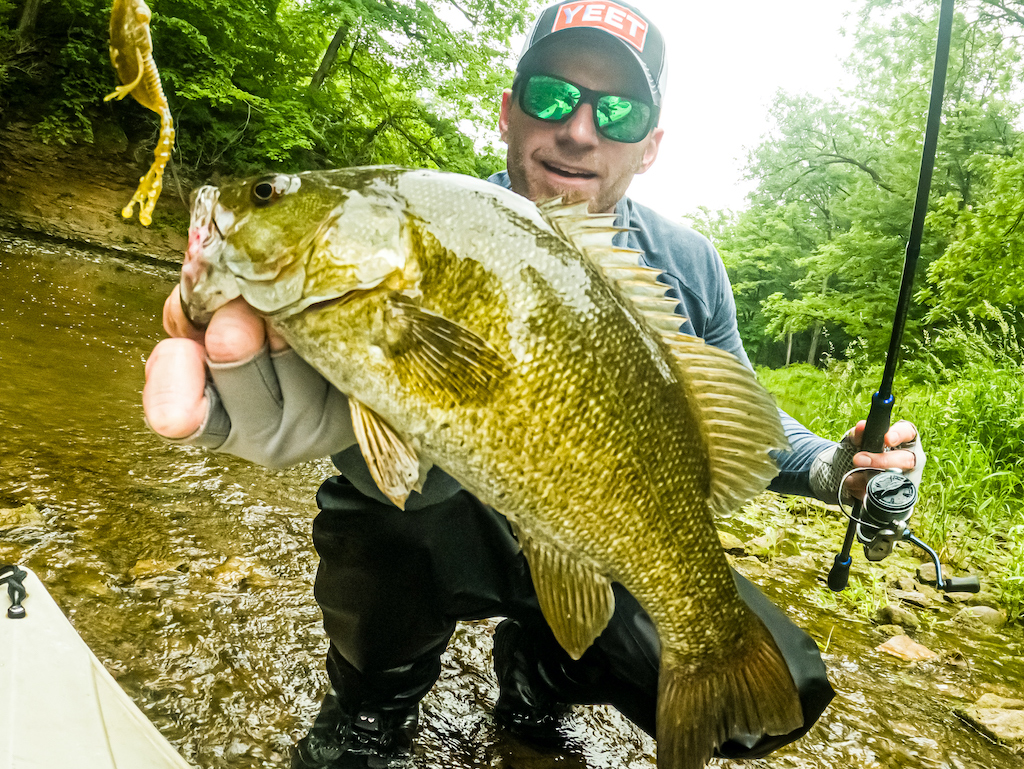
The popper disappeared beside an exposed root, the rod loaded up, and a thick bronze shape rolled through the clear water before racing towards the center of the pool. I pulled back, making sure to keep the light line away from the abrasive rocks, and watched a heavy Smallmouth Bass tear across the creek. A creek narrow enough to throw a stone (or hard bait) across.
That’s one of the strange things about tributary fishing in the late spring and early summer… The water looks small. But the bigs are here!
Unusual.
Gear Considerations
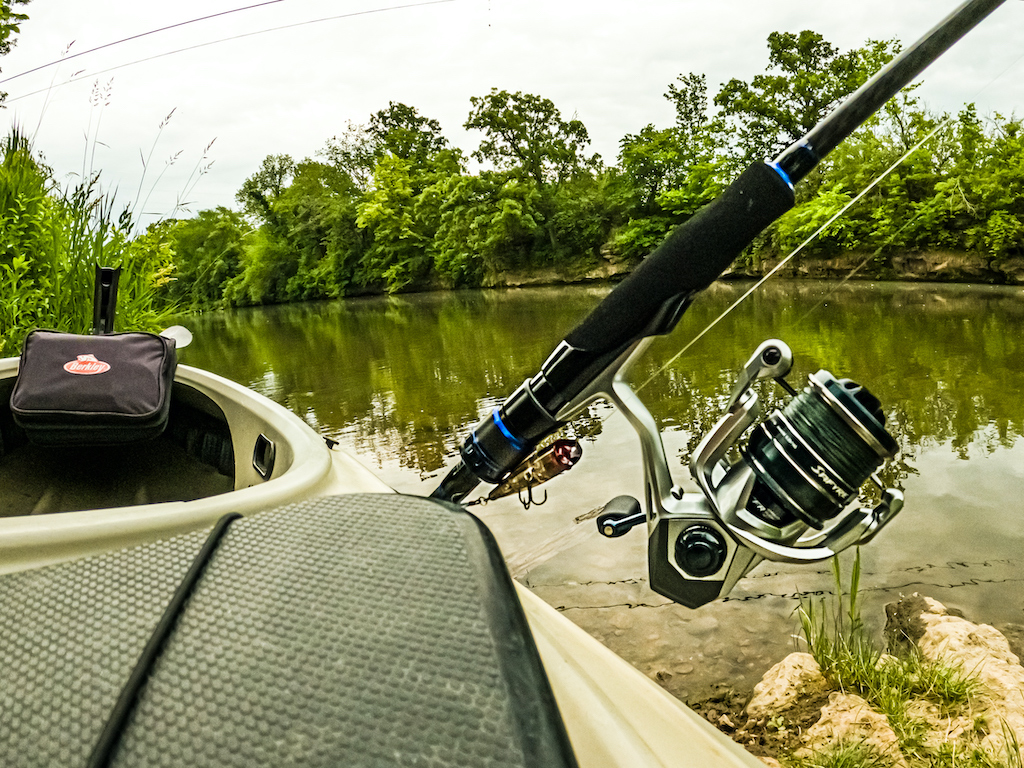
I arrived right after sunrise with a single spinning rod. A 7′ Okuma Tournament Concept Bass Rod in medium +, with a 2500-size Safyre reel. The slightly smaller reel is perfectly balanced for me, and the M+ rod weight offers a bit more oomph for these big, strong fish – without making you feel like you’re fishing with a pool cue. 15 lb braid casts well, is barely visible, and strong. But I like to take it a step further and add a light 6–10′ fluorocarbon leader for abrasion resistance and even more stealth. Not enough to wreck the action of my presentation, mind you, but enough to avoid spooking a spooky fish.
Waders were a good call in the cool creek water. It pushed against my shins, flowing towards the mighty river behind me as I worked my way up through the riffles, runs, and pools. Water ran over rocks and gravel, collected in the dark outside bends, and slowed behind fallen timber. The long brown algae waved at me, hanging off the rocks and flowing like wet hair underwater. With each passing step, it seemed to clear up more and more. The increased visibility allowed me to see every hiding spot. Every problem. And occasionally, every fish.
The Smallmouth were here – visiting. By the end of the trip, I would catch them on top, on bottom, and at every depth in between. But the most important lesson is not what they ate.
It’s why they’re there.
Why Smallmouth Bass Enter Tributary Creeks
Not all river Smallmouth Bass make the same seasonal movements. Some remain in the main river, while a handful live in the smaller streams throughout the year.
But when a productive creek is connected to a larger river, late spring and early summer can create a temporary window of insanely good fishing opportunities. Big, fat, quality Bass will move in and concentrate within these smaller (and easier to access) creeks and streams.
The best part? Most anglers simply focus on larger water year-round.
Spawning habitat is a major reason for this activity.
Smallmouths like to build nests in clean gravel, rock, or firm substrate areas. In the Midwest, spawning can stretch from May through June, depending on where you’re at and what the weather is doing. A tributary creek with a suitable bottom composition, manageable current, and protected pockets may provide exactly what a spawning Bass needs.
The current matters. But so does relief from it.
Smallmouth Bass use seams, eddies, outside-bends with holes, undercut banks, wood, and larger rocks as resting and feeding positions. These types of areas allow them to stay close to current (which they love) without fighting it.
Diverse creeks can also compress all of this available habitat…
Large rivers can scatter fish across miles of varied current, depth, and cover. In a smaller tributary, the best features are closer together. You can move and cast to premium location after premium location quickly – and often, without the need for a small boat or kayak!
Does that mean the fishing is automatic? No. But it certainly ups the odds.
Start on Top
My first presentation was a pop ‘n drop – a small floating popper with a rear frog hook, split ring, and light dropper line with a 3″ slow-sinking stickbait on an Eagle Claw offset octopus hook. It sounds complicated. But I promise it’s not.
The popper calls fish in and stays above the stringy brown algae that covers the rocks. The soft plastic follows slightly underneath and sinks slowly. It’s a subtle, second chance to catch a Bass that came over just to take a look. It also mimics feeding, as the plastic follows behind the popper as if one is chasing the other.
Both can trigger a strike.
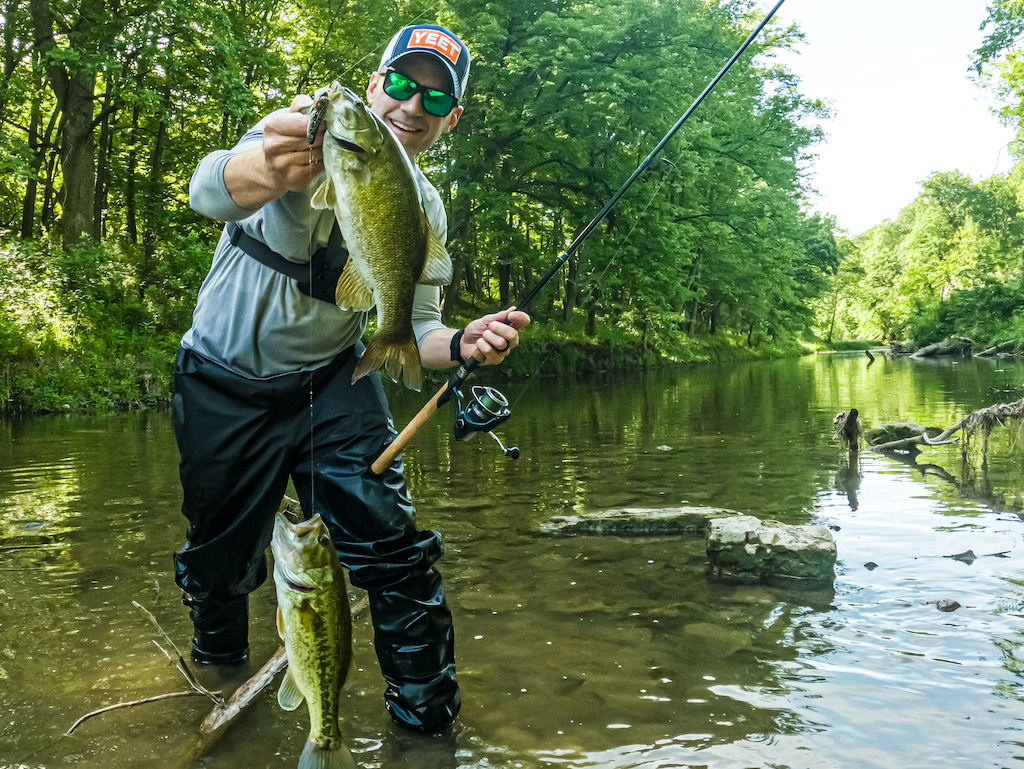
My first quality Smallmouth crushed the popper itself. This is common, as the popper tends to select for larger fish.
I was working the bait along an outside bend, using the current to drift into an area softly instead of dropping right on someone’s head. There was shade, overhead protection, along with some wood that had been carried here when the current was stronger earlier in the year. There was enough depth for the fish to hide, but the rhythmic bloop-bloop-bloop of that popper drifting by pulled her out of hiding.
After a particularly aggressive pop, I watched as the rings of the ripples disappeared. Seconds passed, but it felt longer. I noticed a shadow below the bait that was moving slowly, carefully…
Boom!
The bait continued to produce all morning. I picked up numbers on the trailing stickbait and a few more quality bites on the popper. As the sun rose higher into the sky and the topwater bite weakened, it didn’t mean the fish weren’t there, it just meant it was time to change it up a bit.
Follow Them Down
Usually, when the topwater bite slows, I’ll grab some sort of moving bait and go subsurface. In creeks, this usually means a small swimbait or an inline spinner. Occasionally, a jerkbait will get the nod, or even a squarebill crankbait. At times, all can work! But on this particular day, the bite slowed so much, and the overall depth was so shallow, I decided to follow them straight to the bottom.
Let me tell you about a new secret weapon…
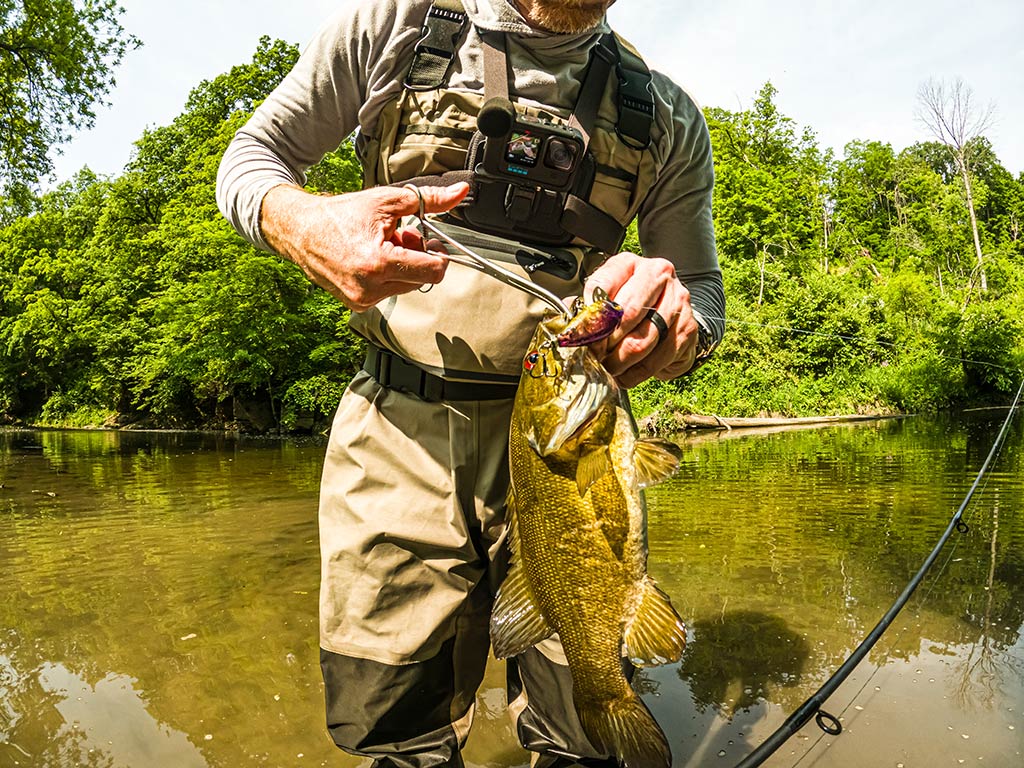
The jig worm is one of my all-time favorites for mopping up Smallmouth Bass. However, I recently came across an absolutely killer little crawfish imitator, called the Fishlab Flippin’ Frog.
These baits are geared towards Largemouth Bass. I just happened to have a few with me because I was incorporating the 80/20 Bass fishing rule. But when you put the 3.5″ model (in green pumpkin) on a light Texas Rig and twitch-twitch-twitch the bait along the bottom, the body shape and the movement of the legs looks exactly like a fleeing crayfish. It is also extremely snag-resistant.
When you pair this rig to the M+ rod I mentioned earlier, you have more than enough backbone to get solid hooksets – even though you may need to “texpose” the hook point when fishing around stringy brown algae – and enough sensitivity to feel your way along the bottom, and around cover. It’s a beautiful thing.
This crayfish imitation caught fish. A lot of fish.
Short drags, little pops, “running” across the pool from the far bank back to me. The Smallmouth, which are visual feeders, picked up the bait, tracked it, and then shot across the pool to demolish my offering.
The most productive pools were not featureless holes. Fish related to current breaks within them. The downstream side of a rock, a subtle drop near an outside bend, the edge of faster water, or a piece of wood creating a softer pocket. Take it from me: once you get a bite, slow down and work the area.
The fish bit. Again, and again, and again.
But Timing Is Everything
The combination of the right place, the right time, and the right bait produced so many fish that I lost count. But this amazing window is a temporary thing. In years past, I’ve come back into this same creek again and again in August, September, and October, expecting to have the same results, only to be disappointed.
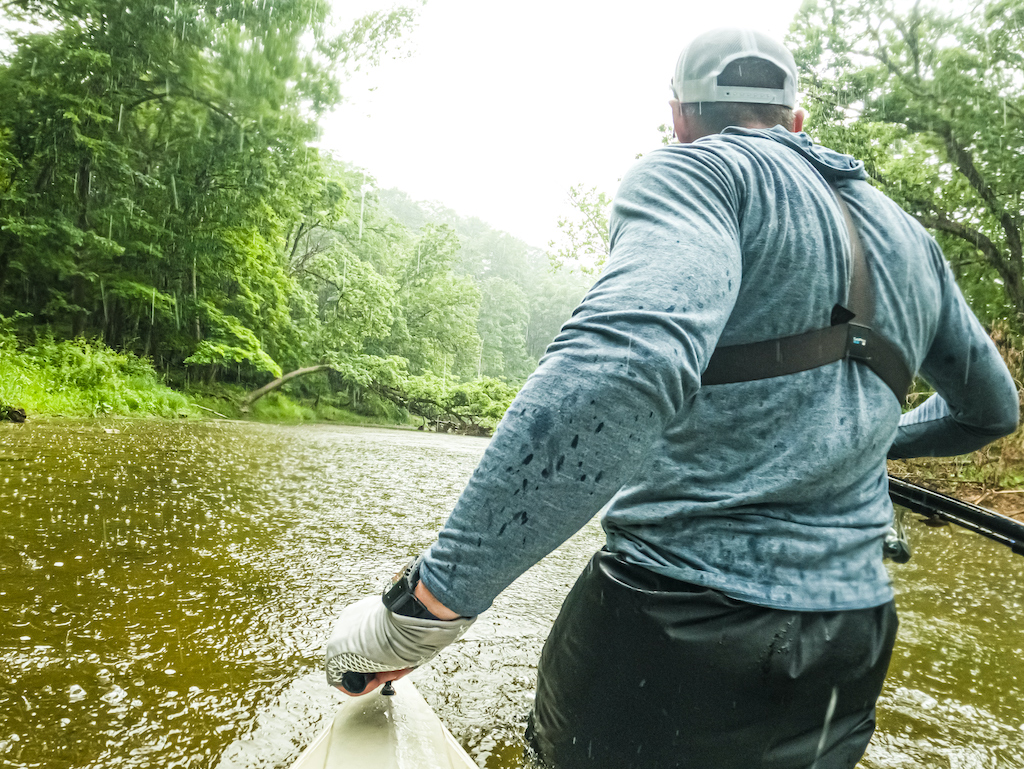
Unfortunately, as the weather warms, the creek levels drop, the current slows, the fry disperse, and the bigger fish move back to the deeper, more stable habitat within the main river.
I’m sharing this with you because I learned about this window the hard way.
If you have a great morning like the one I mentioned above, plan to go back! But when the fish tell you they’re gone… It’s time to move on to deeper, larger water. Until next year, at least.
Legendary Late Spring Smallmouth Bite
Plan for it. Find it. Be ready for it.
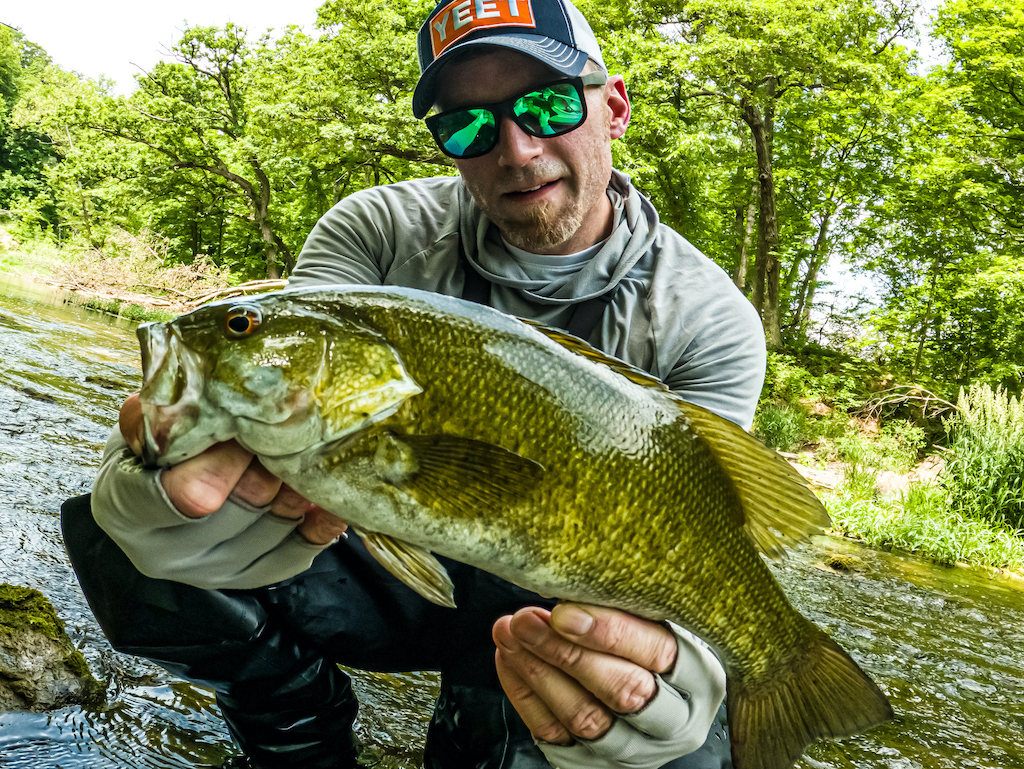
Next season, as the conditions align, make sure you’re one of the few anglers that wades into the cool, crisp creek water away from all the other Bass anglers chasing fish on the big water. Pack light, carry only what you need, and prepare to enjoy an adventure in solitude that you will remember for years to come.
The creek may be narrow. But the opportunity is not.
Tight lines and Godspeed, Patriots!
Do you like to target large Smallmouth Bass in small creeks? What are your best tips? Share with us in the comments below!
The post An Expert Guide to Targeting Big Smallmouth Bass in Small Creeks appeared first on FishingBooker Blog.
https://ift.tt/oDBWNEq
0 Comments
Enregistrer un commentaire