Have you ever caught a Black Drum before and mistaken it for a Sheepshead? What about the other way around? Trust me, you’re not the first! These two species look quite similar and share a few characteristics that confuse many new anglers.
Firstly, they live inshore. Both like the shallow waters close to land, and can often be found at the same time of year. Secondly, their gray-black looks – with varying degrees of stripes – make them tricky to tell apart if you don’t know what you’re looking for…

Thankfully, I’m here to clear things up. I’ve caught my fair share of both, and in this article, I’ll break down both Black Drum and Sheepshead so you can tell them apart. By the time you’re ready for your next inshore adventure, you’ll be in no doubt of what you’re targeting – and what ends up on the end of your line. Let’s get started!
Black Drum vs. Sheepshead: Looks and Character
As I already mentioned, it can be difficult to tell these two fish apart. Young Black Drum (as pictured above), in particular, look pretty similar to Sheepshead. They have silver and white-striped chunky bodies with a high arched back. But, as they grow older/bigger, the stripes fade and their colors turn more into an overall dark gray or black – hence their name!
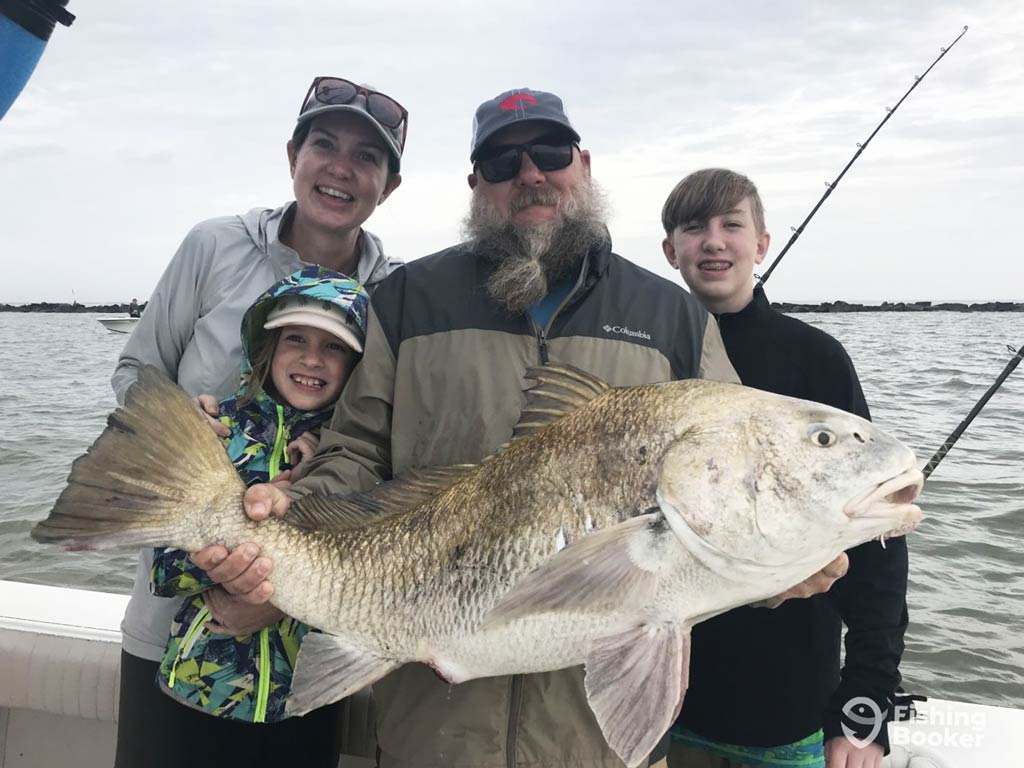
Black Drum have a rounded head with a small mouth designed for feeding on hard prey. Most fish caught weigh under 30 pounds, going as low as 5 pounds. But they can – and do – grow much larger, with trophy-sized catches exceeding 100 pounds! They can travel solo, but you’ll most often find them in schools. And the most noteworthy thing? Just like their cousins, Red Drum, they make a drumming sound to attract mates, warn rival males, and confuse predators.
What sets Sheepshead apart is their pointy, spiked fins as well as their heads. Black Drum have heads that look similar to Croaker, while Sheepshead have larger mouths and big teeth resembling Parrotfish. While we’re on the teeth, Sheepshead are instantly recognizable if you manage to get a peek inside their mouths. They boast rows of human-looking teeth that many first-time anglers find pretty scary!

Sheepshead are also considerably smaller than adult Black Drum. You’ll find that they average 2–8 pounds, maxing out at a little over 20 pounds. They’re more shy and tricky than Drum, requiring a little more skill and luck to land.
Black Drum vs. Sheepshead: Habitats
While these fish overlap quite a lot when it comes to locations, there are a few differences. You’ll find them both in shallow, inshore waters, so estuaries, bays, jetties, bridges, channels, and pilings are your go-to areas. That being said, you’ll want to focus on different depths and underwater structures…
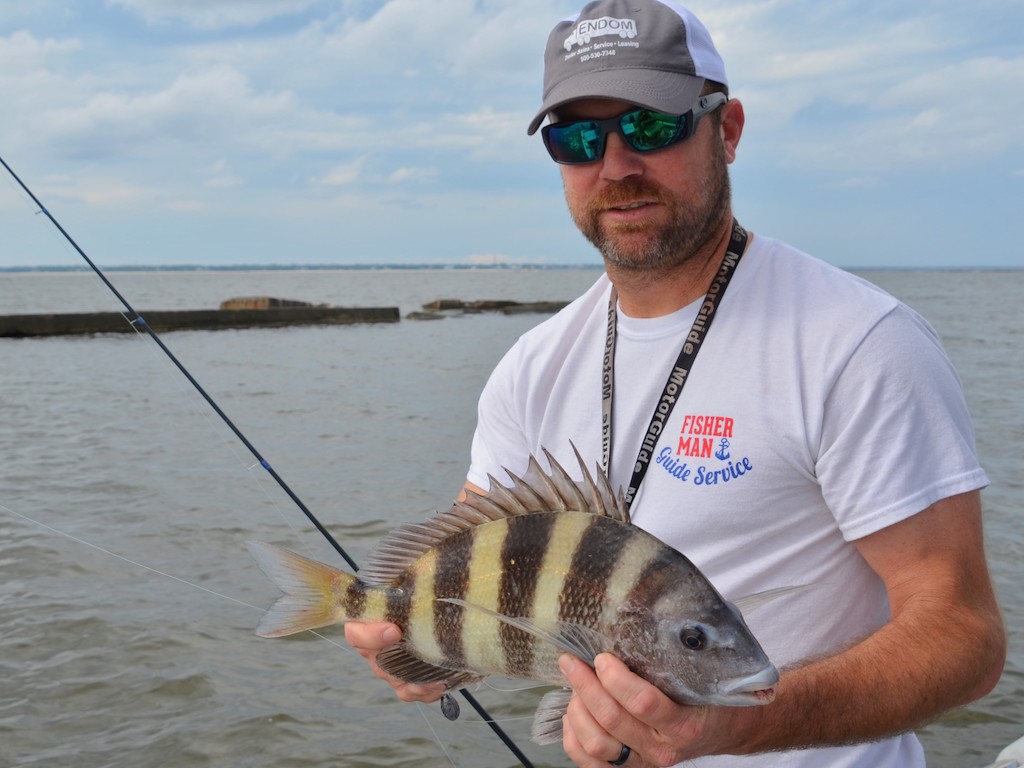
Black Drum are bottom-heavy feeders, lurking around the seabed. As Sheepshead have strong, human-like teeth, they spend most of their time crunching on crabs, barnacles, and other crustaceans along any structure where this all gathers.
You’ll find both fish anywhere from the Gulf of America up to the Chesapeake Bay – from Galveston to New Orleans, and from Georgia through the Outer Banks. In Florida, you’ll find that Black Drum are more rare the further south you go – such as my local waters around Naples – but both are staples across the state.
Black Drum vs. Sheepshead: Seasons
So when can you expect to hook up to some Black Drum and Sheepshead? Let’s start with Black Drum. The best time to find and catch these tough game fish is during their peak spawning season. This typically runs from late winter into early spring. While in most areas it’s possible to catch Black Drum year-round, this is their hottest bite and when the big ones are out and about. It might be a bit chilly out there, so bundle up first!

These “Big Uglies” are known for feeding throughout the day in murkier waters, but they’re most active during dawn and dusk hours, as well as in the night. They also tend to bite when there’s a good flowing current, especially on a higher incoming tide.
Sheepshead, on the other hand, have a peak season often ranging between late fall and early spring, but they too can be caught year-round. Like Black Drum, the Sheepshead bite is most productive during the cooler, low-light hours of the day. Strong tidal movement is also a big factor, as the moving water helps dislodge crabs, shrimp, and barnacles from structure for “Convict Fish” to devour.

So, if you want to target both of these fish at the same time, spring is the best time of year to cast a line inshore. You can also try your luck later on in the year, as the waters start to cool down again. While the hot summer months bring warmth that both species – and anglers – like, it’s a bit too hot, so they head further out from shore to find cooler temperatures.
Diet, Feeding Habits, & Techniques
First things first. Natural baits are typically key for both of these species. Since both Black Drum and Sheepshead spend most of their time feeding along the bottom and structure, you’ll want to present your baits where they hang out. But what works best?
Black Drum

Something interesting about Black Drum is that they have relatively poor eyesight. The good news is that it means they have a strong sense of smell and whisker-like barbels. Live bait, therefore, works best due to the strong odor and natural scent and texture they provide. Some of the most productive Drum baits include blue and fiddler crabs, shrimp, clams, mussels, and sand fleas. If you want to go artificial, stick to scented imitation plastics such as Berkley’s Gulp shrimp.
Bottom fishing with a knocker or fish-finder rig is a popular approach around channels, oyster bars, bridges, and deep holes and cuts. Throwing your bait down in a current with weight is key. Let it sit and wait for them to come and pick it up, or give it some light taps – especially if using artificials. Once they pick it up, give a few seconds for them to eat, then reel your line in tightly to get a good hookset. If you don’t know how big the fish on the end of your line is, make sure to hold on!
Sheepshead

Sheepshead are notorious bait thieves, living up to their prison-jumpsuit looks. They’ll rip the bait off your hook before you get a chance to hook into them! Once you feel the line get a little tight, set the hook quickly, and reel them in away from structure. If you get the hook set and can keep the line tension balanced, you should be able to easily get them in. A simple bottom rig fished close to structure is the best technique. You’ll want to gently place your bait or lure directly alongside pilings, oyster beds, and other structure – and stay alert for even the slightest bite!
Their strong teeth allow them to easily crush and consume their food, making small crabs, shrimp, and barnacles some of the most effective Sheepshead baits. In fact, a great technique for attracting them is scraping barnacles off pilings.
Black Drum and Sheepshead Fishing Regulations
Before you head out there, it’s important to note that fishing regulations and rules are put into place to protect the fisheries. Each state will have a different set of guidelines, so you’ll want to check with your local Fish and Wildlife Commission. But here are a few good rules of thumb:
- You’ll probably need a valid saltwater fishing license before heading out.
- Note: Many states don’t require a license if fishing with a licensed guide
- Keep an eye on the daily bag and size limits.
- These vary from state to state – and from season to season. But these fish are rarely closed for harvesting, with generous bag limits.
Black Drum vs. Sheepshead: Head-to-Head
Black Drum vs. Sheepshead: Which will you target next?

By now, you should have a solid understanding of what sets Black Drum and Sheepshead apart. As you can see, while they share similar looks and inshore habitats, they offer different fishing experiences.
Black Drum produce powerful battles, while Sheepshead are known for challenging bites. Overall, neither species is “better” than the other – they’re unique in their own ways. I recommend targeting both and seeing for yourself which one hooks you more (pun intended)!
Have you caught Black Drum or Sheepshead? Which one is your favorite? And if you haven’t caught them yet, what sounds more interesting to you? Reach out in the comments below!
The post Black Drum vs. Sheepshead: An Angler’s Guide to Two Prized Inshore Fish appeared first on FishingBooker Blog.
https://ift.tt/X3Cuiv5
0 Comments
Enregistrer un commentaire