The Oregon coast is rugged and stunning – and it offers a string of coastal river systems and estuaries that make excellent Salmon habitat. From the mighty Rogue River to the many smaller streams and rivers, the state offers great fresh waters to explore.
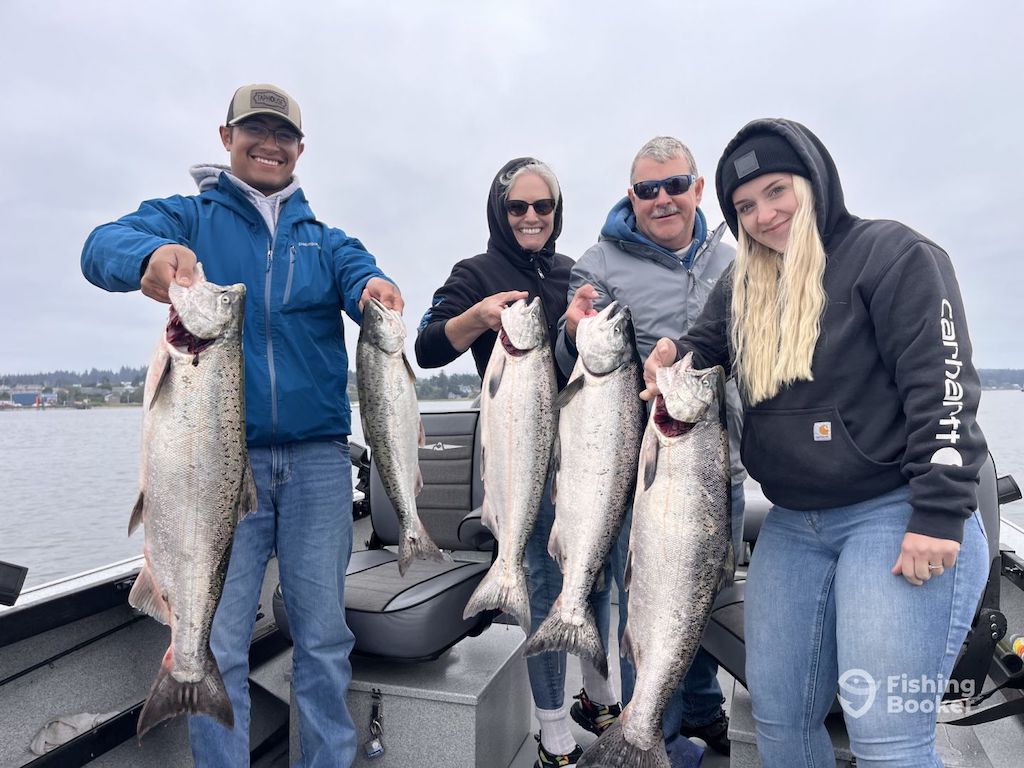
Additionally, the coastline has excellent access from ports and marinas that are close to productive Salmon grounds. If you haven’t fished Oregon, come out here! It’s one of my favorite states to road-trip and fish for these anadromous species.
Before I dive into the ins-and-outs of Oregon’s Salmon seasons, you should know that they change annually. As do limits. While some years can see the same seasons and limits, they’re prone to close abruptly or experience changes in low-return years. Always reference the current data from the Oregon Department of Fish and Wildlife before your trip.
Oregon Salmon Seasons by Species
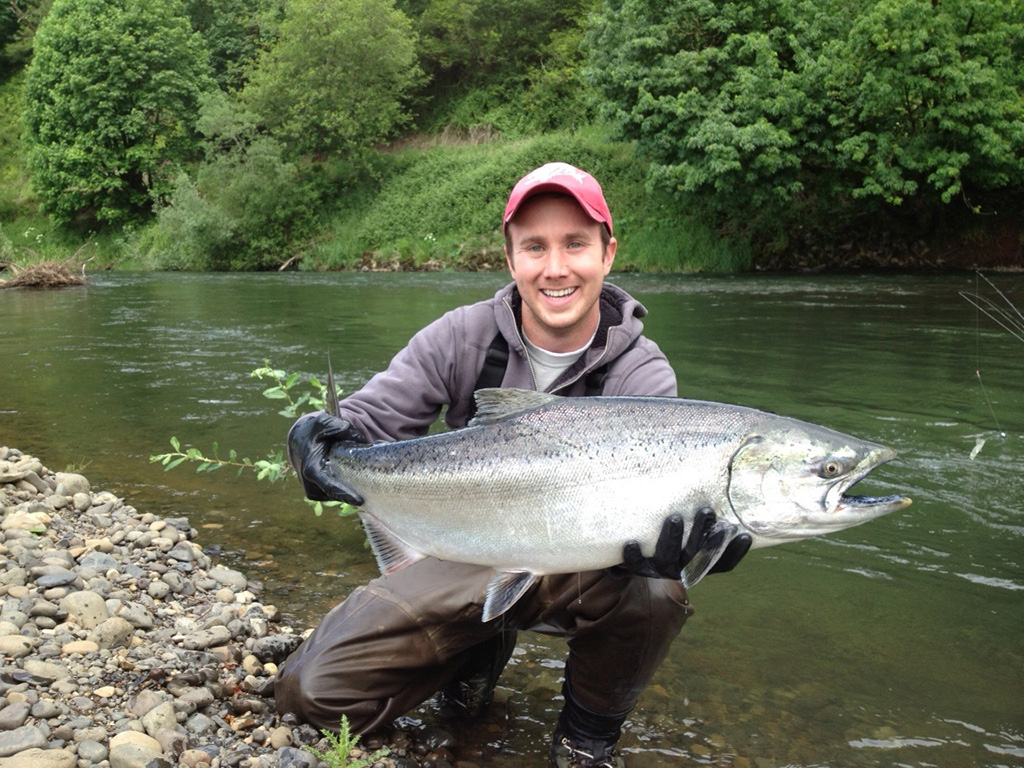
First things first. Which Salmon species can you find in Oregon? The good news is: All of them! Well, all of the ones native to the Pacific Northwest, anyway. That means Chinook, Coho, Pink, Chum, and Sockeye Salmon, depending on when you visit. There’s also the added bonus of some landlocked Salmon – Kokanee – too!
I’ll break down the seasons by each species in a second. But, in general, Oregon’s Salmon are spring- or fall-run fish. That being said, they are in the river systems throughout the spring, summer, and fall.
Regarding management, the state is divided into zones. Some zones have permanent regulations, while others have quotas and specific regulations for rivers and even sections of rivers. Reference the regulations according to each zone for river level regulations to make sure you’re fishing within the law.
Chinook “King” Salmon Season in Oregon

Where better to start than with Oregon’s state fish? Chinook are the primary target for many anglers here. And spring Kings or “Springers” are a big draw for coastal and inland fishing. These fish are available in rivers through summer and fall with variance based on region and run timing. Adult Kings are considered longer than 24 inches and anything smaller qualifies as a Jack.
Coho “Silver” Salmon Season in Oregon

Cohos are the most regulated Salmon in Oregan with strict seasons and quotas. These include being only open for fin-clipped hatchery fish and have short harvest seasons. They’re hard-fighting, great eating fish, and anglers across the state love their seasons. An adult Coho Salmon measures longer than 20 inches. Anything shorter is considered a Jack.
Pink Salmon Season in Oregon
Anglers encounter very few Pinks in Oregon. Look to odd-numbered years for maximum opportunity, as this is when they spawn in river systems. When Pink Salmon are present, they flood into near tidal zones for spawning. They’re tricky to target and are more of an incidental catch in Oregon.
Chum Salmon Season in Oregon

Like Pink Salmon, Chum populations are limited here. Anglers can catch them, however, and it’s important to correctly identify the fish. They tend to color quickly in freshwater and Chum are managed as catch-and-release-only fish most years. The odds of catching one aren’t great but they do migrate and spawn in a few river systems.
Sockeye Salmon Season in Oregon
It’s hard to beat a fresh Sockeye Salmon filet and anglers fishing the Columbia River system can encounter healthy runs some years. Sockeye migrate through the Columbia and Snake River systems, with many fish ending their journey in Idaho. They peak around June and July, and you can catch them right in Portland!
Kokanee Salmon Fishing
The previous Salmon species are all ocean-run but there is one exception in Oregon. Kokanee are effectively a landlocked Sockeye that are managed for recreational fishing in lakes. They also run through river systems that are lake-connected when spawning. Kokanee are distinct from ocean-run Salmon and don’t overlap in the regulations. They’re a distinct species, similar to Trout and Bass when it comes to rules.
Oregon Ocean Salmon Seasons
Oregon coast Salmon fishing seasons for saltwater typically run from late spring and early summer through early fall. They do not divide spring and fall seasons, but there are the following divisions:
Leadbetter Point to Cape Falcon

The Columbia River dominates this zone, with waters shared between Oregon and Washington. It’s open from June 20 to September 30 with a two Salmon per day limit. Note that only one Chinook can be retained daily, and Coho must have a clipped and healed adipose fin for retention.
The area has a Coho quota and may close if that number is reached. There is also a closure within the Columbia River control zone, which has a separate set of rules.
Cape Falcon to California Border
All Salmon except Coho are open March 15–August 31 with a two Salmon per day limit. Coho are open June 6–August 31 but anglers can only retain fin-clipped Coho with a two Salmon per day limit.
Humbug Mountain to California Border

Regulations for this region are extended from Cape Falcon to the Humbug Mountain region. Effectively, the last region incorporates this area but it has a dividing line to ensure Salmon are not landed in California. Anglers must land all Salmon within the Oregon boundary.
Cape Falcon to Humbug Mountain
There is a fall season for this region, that’s open September 1 through October 31 for all Salmon except Coho, with a two Salmon per day limit. Coho are open for non-mark selective fish between September 1–30 with a two-per-day limit.
Keep in mind, these seasons and limits are specific to ocean environments. Most Salmon are caught from boats, although some may be caught from shore. Once Salmon enter river systems, regulations change. Some rivers and regions are subject to permanent regulations (apply to all fisheries in the region) and others have water-specific regulations…
Columbia River Salmon Seasons

The river of most importance in Oregon is, naturally, the Columbia. Every angler fishing in the Columbia River Basin requires an endorsement on their license. This is easy to purchase and it applies to the Columbia River and all tributaries. River regulations begin at the mouth (Buoy 10) and move upstream.
The river has a dividing line (center river) with Washington on one side and Oregon on the other. Anglers must have a license for the side they are fishing and the regulations from that state also apply. Some anglers purchase licenses in both states, making it possible to fish both sides of the river.
Some stretches of river are closed, especially near dam sites and those areas falling within tribal zones. Note the boundaries and fish accordingly. The mouth is popular for Salmon as they first enter the river system here.
When do Salmon spawn in Oregon?
Spawning activity runs across the entire year in different river systems. Spring-run fish tend to spawn in summer through fall, while fall-run fish spawn in fall and winter. In long river systems, Salmon spend more time migrating, while short coastal rivers have quicker turnaround.
This means anglers might encounter spawning Salmon through much of the year, although spawning grounds do not cover the entire river. It’s best to find and target fish well ahead of spawning activity. They are better eating when fresh, and it’s a good idea to leave spawners alone.
Is your Salmon gear ready to fish in Oregon?
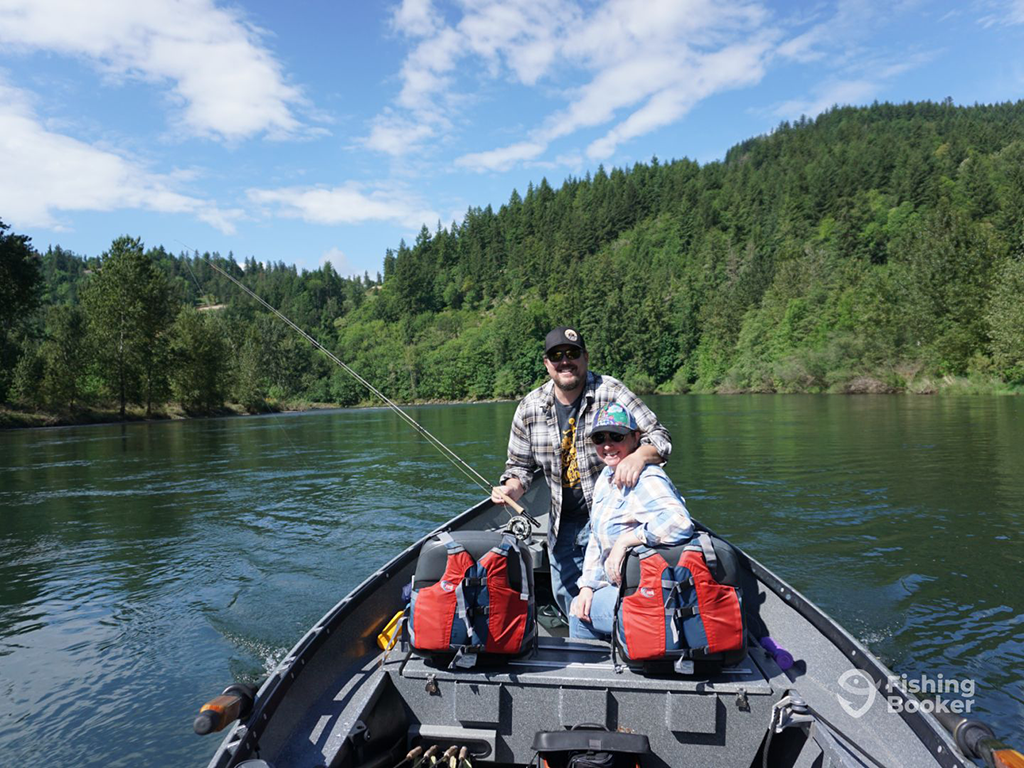
There are many ways to catch a Salmon… Trolling ocean bays and river mouths is a favorite. Back trolling deep river runs is also great. Salmon will also eat swung or stripped flies, especially when fresh out of saltwater. And they’ll hammer cast-and-retrieve lures! One thing is for sure, you’ll have plenty of chances to hook up to some if you get your timing right. So grab your gear, check the regulations, and hit the water!
Are you an Oregon Salmon expert? We’d love to hear your strategies and big fish stories in the comments below!
The post Oregon Salmon Seasons: An Expert’s Guide to Species and Dates for 2026 appeared first on FishingBooker Blog.
https://ift.tt/1UO6Zl9
0 Comments
Enregistrer un commentaire