In 1699, two French brothers, known to history as Iberville and Beinville, sailed into the Gulf looking to establish a colony near the mouth of the Mississippi River.
They stopped at an island populated by odd wild “cats” – creatures these Europeans had never seen before. Today, we call these masked ring-tailed bandits raccoons, descendants of some that probably washed to the island by some long-ago storm where they multiplied and thrived.
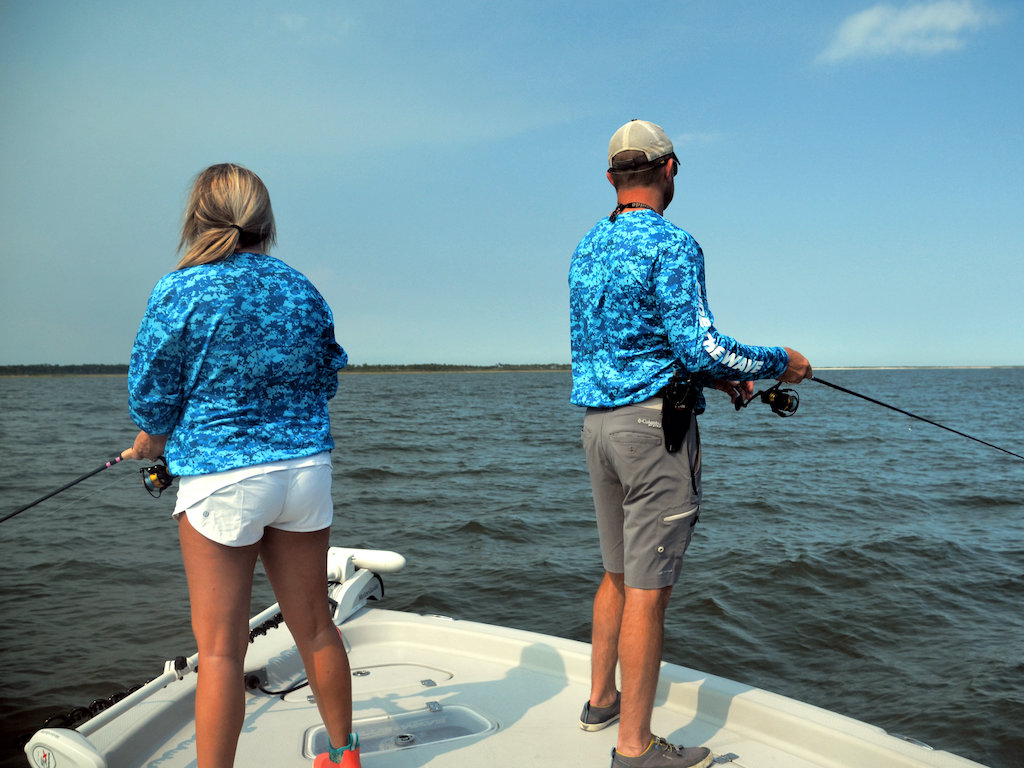
The French dubbed this spit of land “Cat” Island. And the name stuck. Now, somewhat shaped like a lopsided Hammerhead Shark about to devour nearby Ship Island, Cat Island covers about 2,200 acres in the Mississippi Sound, about 7 miles south of Long Beach, MS.
A Different World
Much of the island belongs to the Gulf Islands National Seashore – or the Mississippi Cat Island Coastal Preserve. The rest remains private. Sandy white beaches mark most shorelines. Two small marshy bayous, one on the north side and one on the south, run through the island, giving homes to various fish species. Visitors to these bayous often spot alligators, numerous birds, and other animals.
“For being so close to the mainland, Cat Island is a whole different world,” comments Sonny Schindler with Shore Thing Fishing Charters, the only service with overnight accommodation on Cat Island. “It has pretty, white sand beaches with an oak and pine maritime forest in the middle of the island. Plus, there are swamps, marshy bayous, and sloughs. Those bayous have grass, shell banks, little drains, and small ponds. The habitat is diverse and complex.”
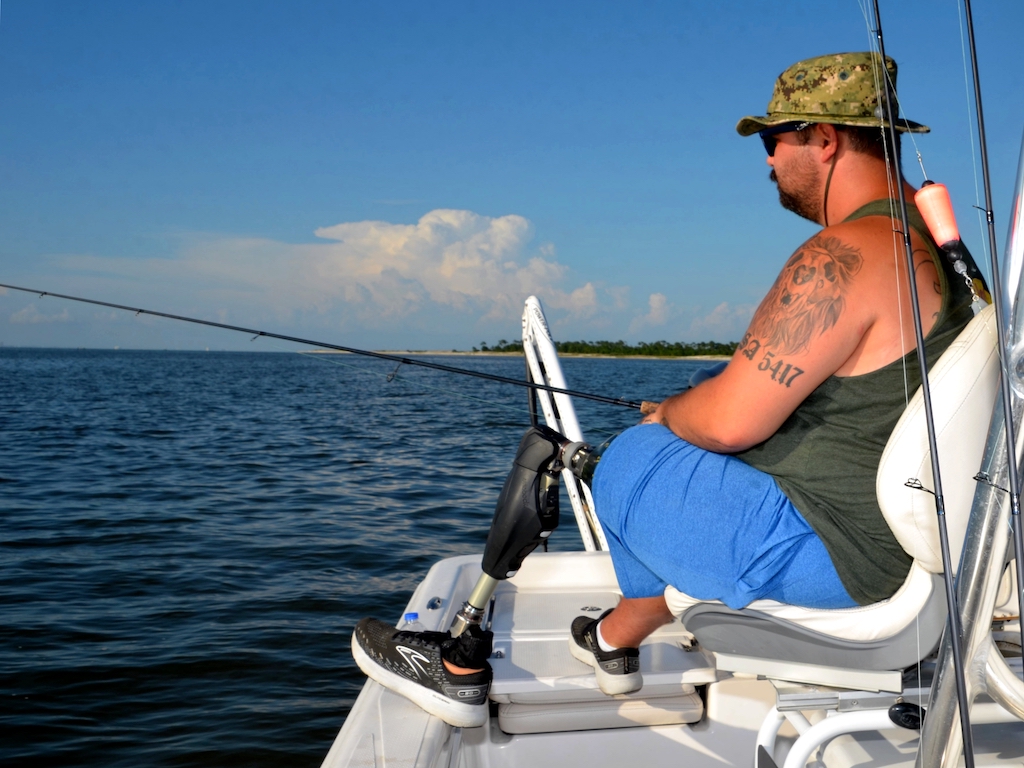
Despite a small coastline situated between the legendary saltwater fish havens of Louisiana and Florida, the Mississippi Coast can provide outstanding action for various salty species. Some more popular species include Speckled Trout, White or Sand Trout, Redfish, Flounder, Whitin (aka Gulf Kingfish), Sheepshead, Black Drum, Croaker, Spanish Mackerel, Bluefish, Cobia, and many other species all year long, depending on the season.
Cat Island is one of several islands in a chain of barrier islands, separating the Mississippi Sound to the north from the Gulf to the south. The sound stretches about 90 miles along the Mississippi coast from Lake Borgne to Mobile Bay in Alabama. And the Mississippi Sound averages about 12 to 20 feet deep.
“On a good day with nice weather, we can make the trip across Mississippi Sound in about 20 minutes,” Schindler says. “When it gets rough, we just take our time crossing. The waters around Cat Island are very tricky to fish. Someone not familiar with the area or not paying attention to the tides can get in trouble quickly. A boat several hundred yards from shore could swiftly get in two feet of water or less.”
Speckled Trout
Speckled Trout rank as the most popular sport fish along the Gulf Coast. Besides Cat Island, people can also fish around Horn, Deer, and Ship and Petit Bois Islands in Mississippi waters, or Dauphin Island in Alabama. In the summer, wading public beaches can produce great action for trout and several other species.
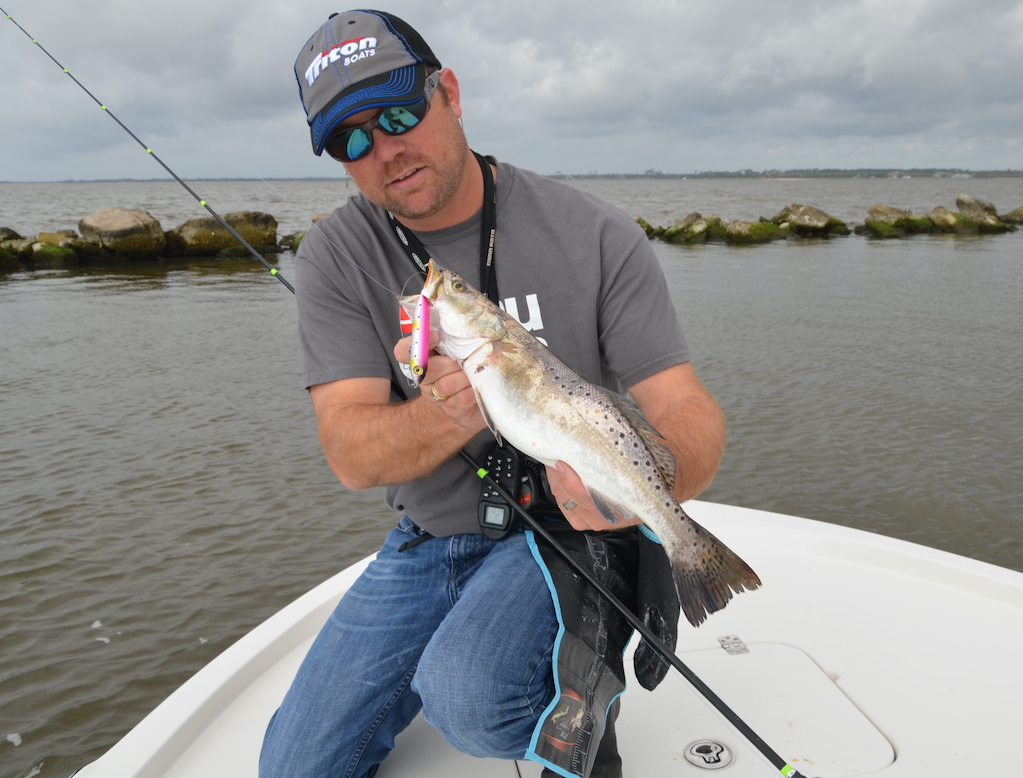
In late spring, Speckled Trout move out of the estuaries into deeper water in the Mississippi Sound and remain there until early fall. Thick seagrass beds dominate the aquamarine flats and sandbars surrounding Cat Island. These grass beds create excellent cover for many fish species.
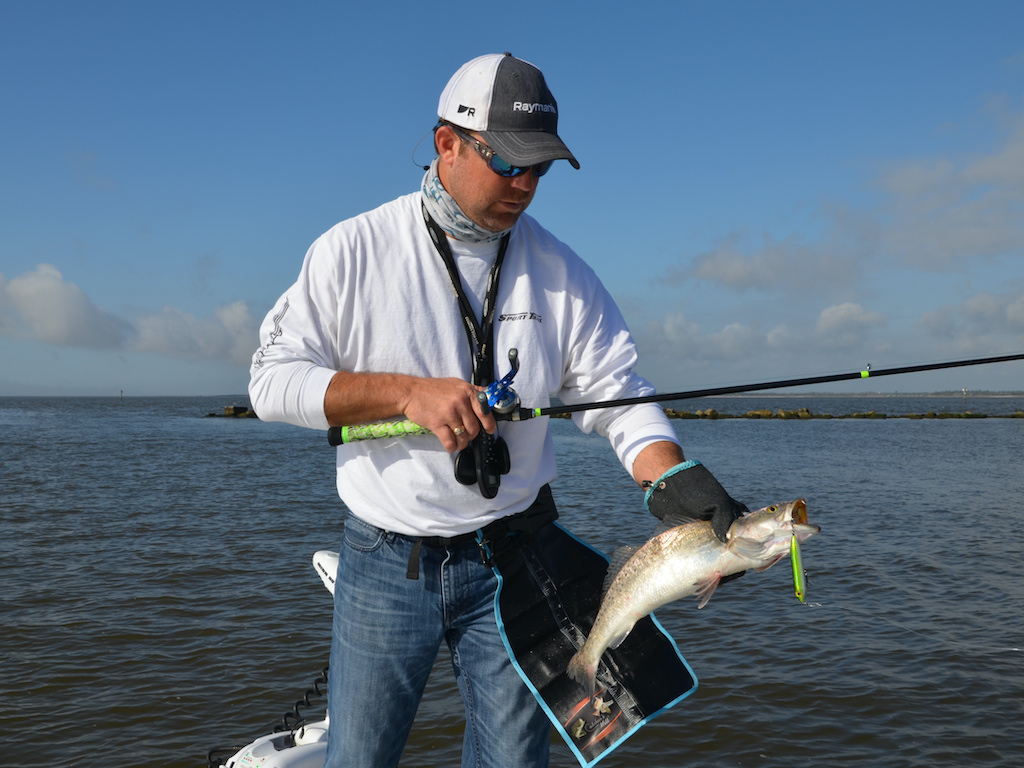
These seagrass beds attract a variety of marine life and provide some of the best places in Mississippi to catch a very large Trout. Most Trout run in the 1–3-pound range, but some hit the 4–8 pounds. Infrequently, an angler lands a Trout topping 8 pounds – and the Mississippi state record weighed 10 pounds!
“Part of what makes fishing around Cat Island so good is the amount of grass beds it has on the north and south sides,” reports Ronnie Daniels with Fisher-Man Guide Services who runs out of Pass Christian, MS. “Those grass beds hold the bait, especially during the summer.”
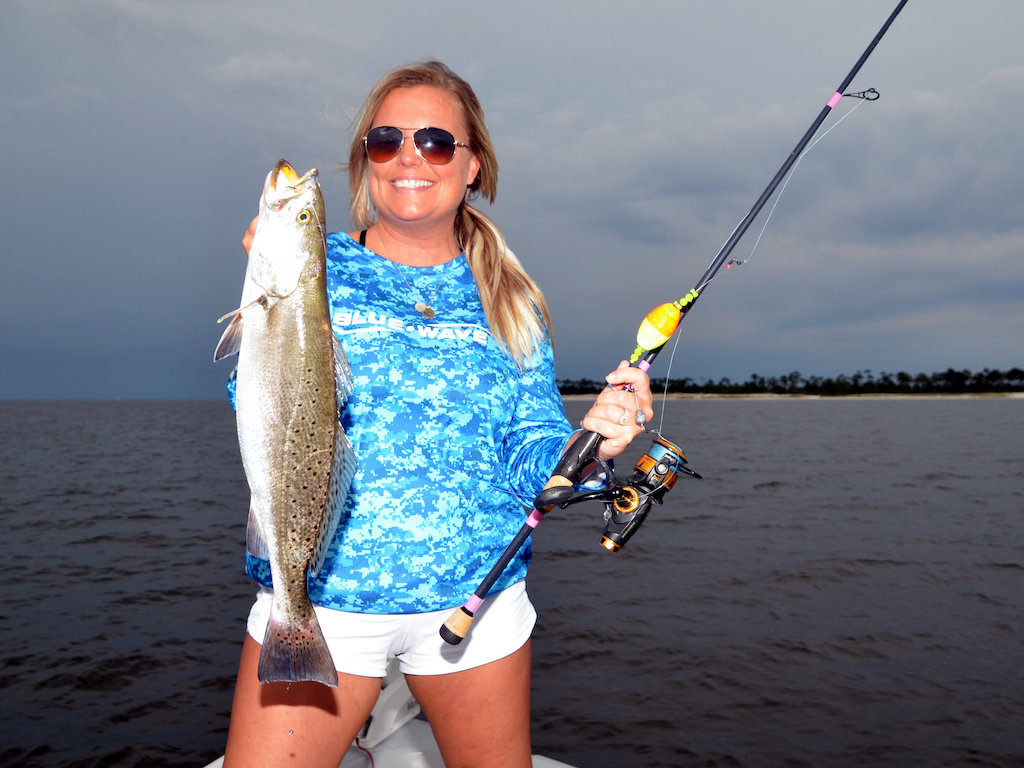
In shallow water, people can see the grass beds. Look for open pockets in the grass. Sandy openings appear lighter in color. Large Trout, Redfish, and other predators cruise the grassy edges looking for shrimp, bait fish, and other prey. Put baits in those pockets, but close to the grass!
The wave action also creates deeper troughs between sandbars. In the clear water, these deeper areas look darker. Bait regularly drops into these deeper spots, and big Trout follow. To tempt the biggest Trout, as well as Redfish, Spanish Mackerel, and other fish, many anglers use live fish.
“I like to fish water about 2.5–5 feet deep,” Daniels says. “Trout try to hide in the grass. But whenever they’re feeding, they cruise those troughs and flats looking for a meal.”
Big Fish, Big Meals
Any Trout will slurp a shrimp, but giant Specks typically eat only once a day and want a big fishy meal. A 4 lb Trout can easily swallow a 12″ mullet or other fish. Live menhaden, mullet, and croakers entice the biggest Specks as well as large Redfish, Spanish Mackerel, and other predators.
“Croakers are natural prey for large Trout,” Daniels advises. “Big Trout don’t feed all the time, so anglers need to capitalize on when they do feed by using something the largest Specks definitely like to eat. When fishing live bait, I’ll set up with the wind at my back for casting. I give the bait a few minutes. If we don’t catch anything, I’ll drift about 40 feet and do it again. We just keep working our way across the flat like that.”
Many anglers dangle live croakers, mullet, and other bait fish under a popping cork. Others fish live bait on a free line or use a Carolina rig. Daniels fishes a modified Carolina rig with a rattling chatter weight when using live bait fish. Lighter than lead sinkers, a rattling chatter weight keeps the bait down just enough so seagulls and other birds won’t grab it.
Frightened bait fish instinctively race to cover. Periodically pull the bait fish out of the grass. Other than that, don’t create any additional action. The struggling fish provides enough enticement for any passing Trout, Redfish, or other predators. Every time a croaker kicks, it sends out vibrations and rattles the weight.
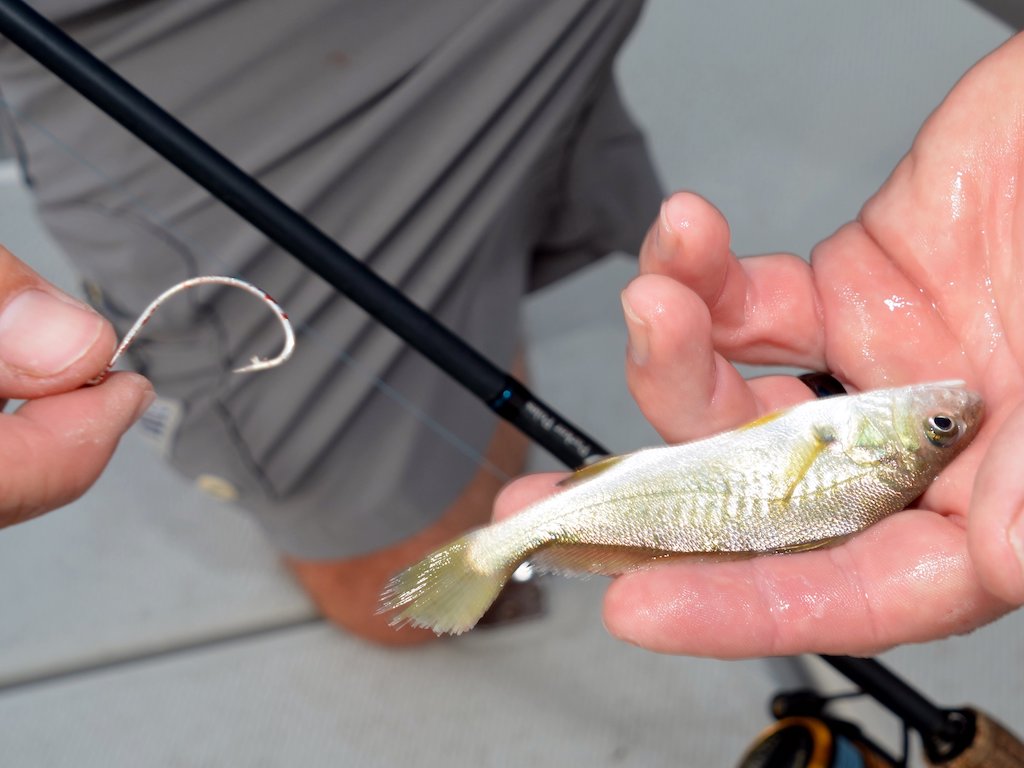
“If the croaker has been sitting there a little while and I don’t feel much movement, I’ll just kind of bounce the rod tip to rattle that weight,” Daniels remarks. “By bouncing that rod tip, we get him up out of that grass and swimming again. That puts him back into the strike zone.”
When fishing live bait fish, hold the rod tip at about a 90-degree angle to the bait. When a Trout bites, the angler will feel a thump on the line as the predator shocks the croaker before attempting to eat it. Any fish must swallow another fish head first to fold the fins down and avoid choking.
“The worst thing anyone can do when fishing with live bait is to set the hook too soon,” Daniels instructs. “That just pulls the bait out of that Trout’s mouth. It takes a little bit of patience to be successful with a large live bait. When the Trout thumps a bait, point the rod tip at the bait. That will put enough slack in the line for the Trout to take down the bait and swim off for 2 or 3 seconds. When the Trout pulls the line tight, set the hook.”
Stay on Top of the Action
For sheer exhilaration, few angling experiences compare to giant fish exploding on surface enticements. During calm days, many anglers work topwater baits over the grass beds for big Trout. Monster Specks erupt from the grass beds to obliterate floating temptations. Bull Reds also regularly hit topwaters. Sometimes, a powerful Jack Crevalle smashes a topwater temptation, giving the angler an incredible fight on light tackle.
“For big Trout, I like throwing topwater baits, especially early in the morning or late evening,” Daniels opines. “Anglers can catch big Trout on jigs or suspending baits, but topwaters tend to draw strikes from larger fish. With the amount of larger Trout around Cat Island, the bigger the lure, the better in my opinion. My favorite topwater bait is a bone Super Spook with silver flakes on it. It has a big profile, so larger fish will go after it. I can cast it quite a distance.”
Suspending or slow-sinking baits also catch big Trout. Let the lure slowly sink to the tips of submerged grass. Let them hover just over the vegetation. Occasionally twitch it. In the summer, huge Trout don’t want to move far or fast to grab something to eat.
Redfish Action
Anglers can catch Redfish on the same baits anywhere they find trout. Giant “Bull” Reds terrorize bait fish around the islands in late summer or early fall when they come closer to shore to spawn. Bulls love whole or cracked crabs. Live or cut mullet also entice Redfish. Large schools of ladyfish also come to the islands in the summer. Redfish love a good ladyfish chunk.
“In late summer, we see absolutely unbelievable acres and acres boiling with ladyfish.” Schindler recalls. “Ladyfish hit just about anything. We’ll catch some ladyfish and chop them in halves or quarters. Drifting a live or cut ladyfish on a free line through those gigantic schools is almost a guarantee to catch something. That’s a great way to fish with youngsters because they get to fight some huge fish.”
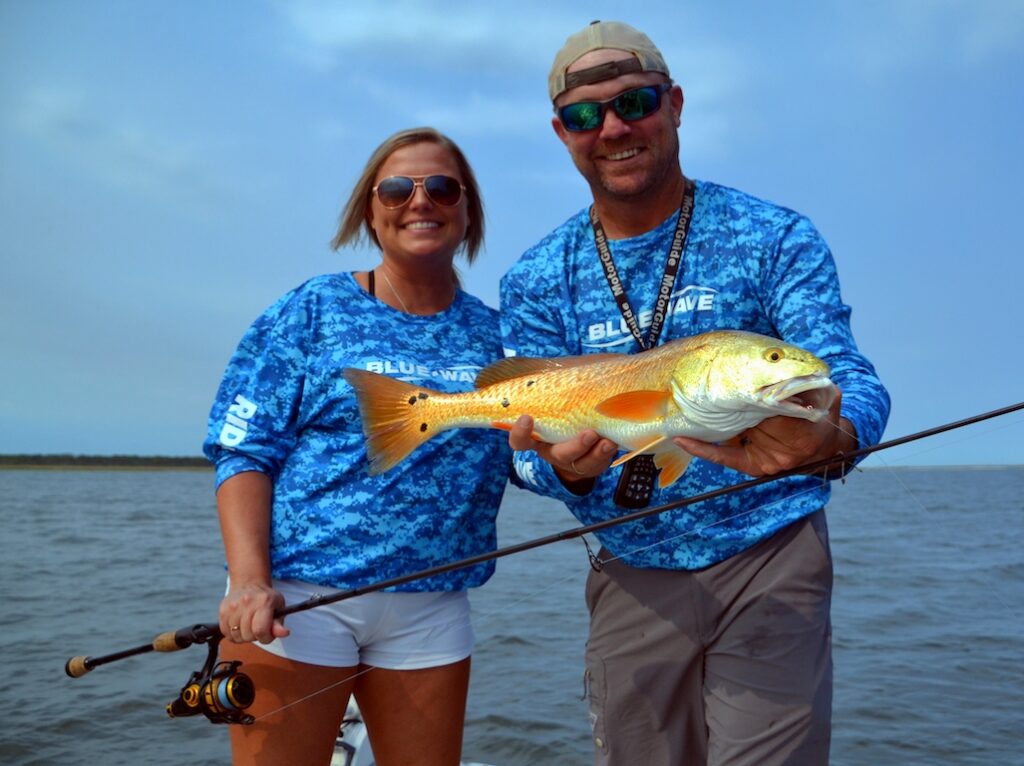
For Flounder and smaller Redfish, head to the two bayous flowing through the island. The grass-lined shorelines hold both species. Watch the banks for protruding tails, “v-shaped” wakes, bait fish jumping, or other fishy indicators. Anglers can also catch some Trout or other species in the bayous.
“Those bayous are just as pretty as the southeastern Louisiana marshes,” Schindler states. “Everything relies on the tide. I like to go in the bayous on a rising tide and get out before the tide switches. Water pours out of those places fast. If people are back deep in one of the bayous, they can get in trouble quickly.”
In shallow water, a popping-cork rig offers a great way to tempt Trout, Redfish, Flounder, and other species. A popping-cork rig essentially consists of a float suspending a bait. When jerked, the cork pops the water, simulating a fish striking prey on the surface.
Anglers can fish various live, natural, or artificial enticements under popping corks. Good baits include live shrimp or bait fish, fish chunks, or crabs. Soft-plastic shrimp imitations like a D.O.A., Vudu Shrimp, or Gulp! also work well.
“Redfish can be offshore or in the bayous on the island,” Daniels explains. “Flounder most likely hang around in the mouths of cuts and some of the main points or sand flats. People can definitely work off the end of some of the cuts and pockets on the island for both species. A popping cork is always a good way to work those areas. Use a leader just a little shorter than the grass is deep.”
Flounder Pounders
Flounder migrate twice a year. In the fall, “Flatties” leave the shallows and head to the Gulf to spawn and spend the winter. They make a last stop around Cat Island to feed before continuing their southward migration. They return to the estuaries in the spring. During the summer and early fall, some people walk the beaches gigging Flounder at night.
“We get covered up with Flounder in late fall,” Schindler says. “We’ve caught Flounder in the 5–6-pound range. That usually happens in late October and November.”
More Places and Species
Besides the islands, people can fish numerous artificial reefs placed in the Mississippi Sound and the bays. Anglers paddling kayaks can reach some of the artificial reefs closest to shore. Some reefs extend above the water. The state used debris after Hurricane Katrina ravaged the coastline in 2005 to build Katrina Reef and others. Other popular artificial inshore reefs include Jailhouse Reef, also comprised of material from an old jail destroyed by a hurricane, Bayou Caddy Reef, and Taylor Reef.
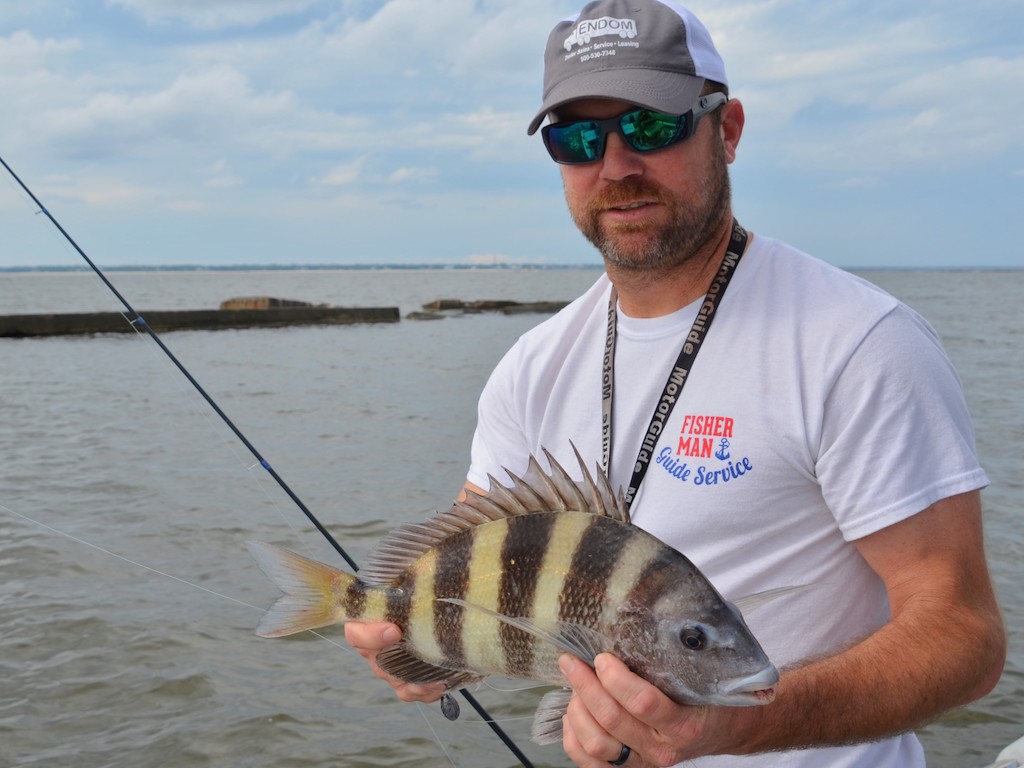
“Each reef is a fish oasis,” Schindler details. “The reefs get lots of pressure, but they all hold big Speckled Trout, Redfish, and especially Sheepshead. I wish the state would line the entire coast with artificial reefs because they are such good places to fish. We don’t have a lot of other natural structure on the beaches.”
All year long, Sheepshead hang around any type of hard structures covered in barnacles. People sometimes see Tarpon rolling during the warmer months. Some anglers looking for exciting action fish crack crabs to battle massive Black Drum. From spring through the fall, watch for Tripletail hovering under any floating objects in the Mississippi Sound. Along the mainland coast, people can also fish Bay St. Louis, the Back Bay of Biloxi, and their tributaries or the Pearl and Pascagoula River Delta marshes for Trout, Redfish, Sheepshead, and Flounder.
People returning from fishing might head to Pass Christian Harbor and bring their fresh catch to Shaggy’s Pass Harbor restaurant. The staff at the restaurant will cook the catch for you. What better way to end the day?
Are you encouraged to come and explore Cat Island’s fishing wealth? Maybe you’ve been before? Either way, we’d love to hear from you in the comments below!
The post Coastal Cornucopia: Cat Island Fishing with Mississippi Experts appeared first on FishingBooker Blog.
https://ift.tt/4X5h9ts
0 Comments
Enregistrer un commentaire